
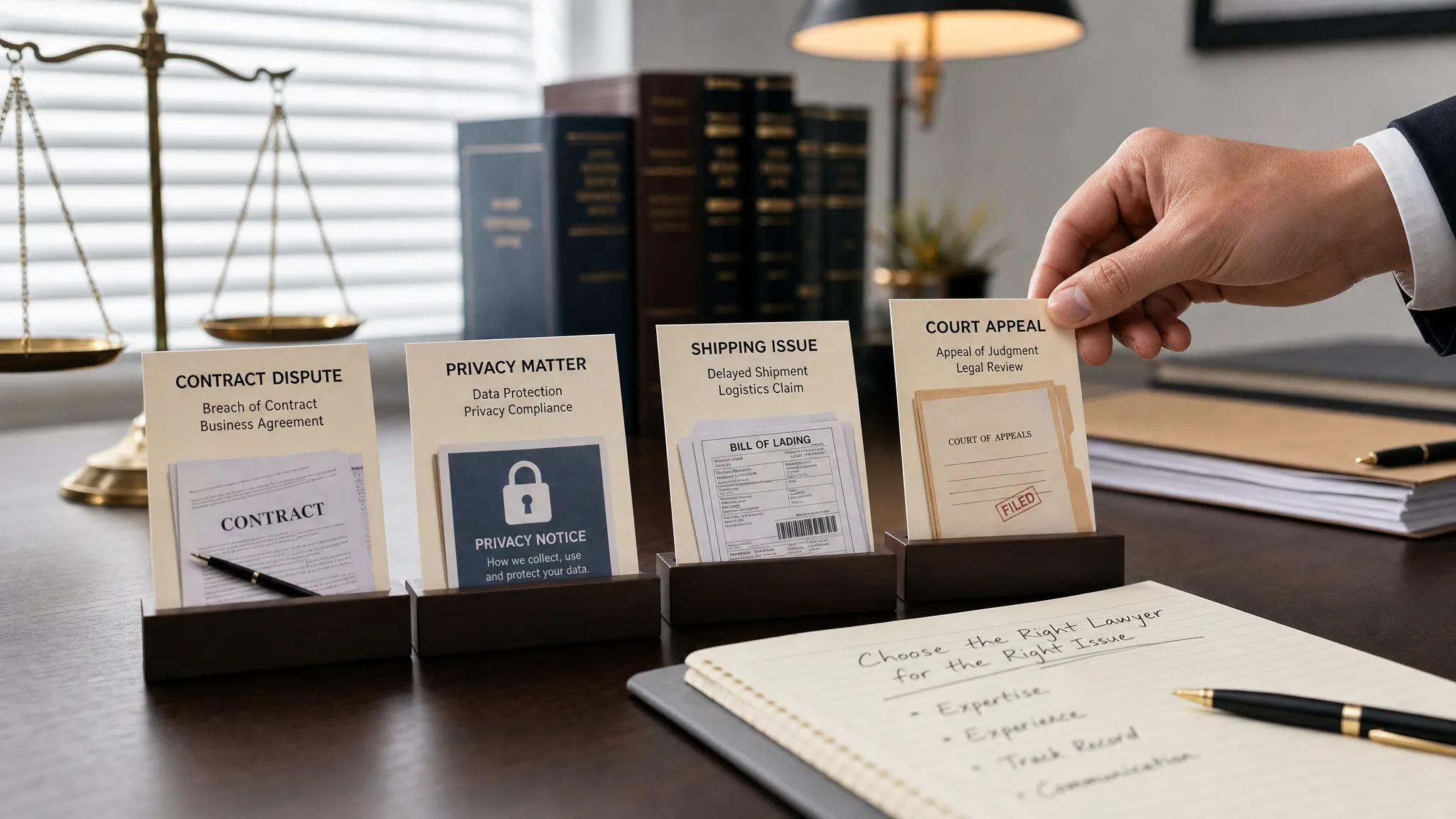
Searching for the best lawyers in Jamaica usually begins when the stakes are high. You may be facing a commercial dispute, a regulatory deadline, an employment issue, a privacy concern, a shipping matter, an appeal, or a contract that carries serious financial consequences. In moments like these, choosing a lawyer should not feel like guesswork.
The phrase best lawyers in Jamaica can be misleading if it is treated as a popularity contest. The better question is: which lawyer is best suited to your legal issue, risk profile, timetable, and desired outcome? A brilliant trial advocate may not be the right fit for a data protection compliance project. A commercially minded adviser may be ideal for a business transaction but not for urgent litigation.
This guide gives you a practical way to choose with confidence, whether you are an individual, business owner, executive, overseas client, or organisation operating in Jamaica. It is general information, not legal advice for any specific matter.
What the best lawyer means for your matter
The best lawyer for you is not always the most visible name, the nearest office, or the person with the longest list of services. Legal matters are too fact-specific for that. The right choice depends on the match between your legal problem and the lawyer’s experience, judgement, communication style, and capacity to act.
In Jamaica, local legal knowledge matters. Court procedure, professional norms, regulator expectations, business culture, and practical timelines can all affect strategy. At the same time, many Jamaican matters now have cross-border dimensions, especially in banking, shipping, intellectual property, data privacy, investment, and international commercial disputes.
Use the following criteria as a starting point:
Selection factor | What to look for | Why it matters |
Practice fit | Experience in the specific area of law involved | A lawyer strong in one field may not be suited to another |
Strategic judgement | Ability to explain options, risks, and likely steps | You need more than legal theory, you need a plan |
Professional standing | Proper qualification and ethical conduct | Trust and accountability are essential |
Communication | Clear timelines, updates, and plain-language explanations | Poor communication creates confusion and unnecessary risk |
Resources and support | Capacity to manage deadlines, evidence, documents, and hearings | Complex matters often require coordinated support |
Fee transparency | Clear discussion of billing structure and likely cost drivers | Confidence improves when expectations are realistic |
A lawyer does not have to be famous to be effective. The best fit is often the one who understands the legal terrain, listens carefully, and gives advice that is both legally sound and commercially realistic.
Start by defining the legal outcome you need
Before comparing lawyers, define the problem as precisely as possible. Many clients begin with a broad label, such as litigation, business law, immigration, privacy, or contract review. That is useful, but it is not enough.
A dispute about a breached commercial agreement is different from an urgent injunction. A data privacy review is different from responding to a breach. A shipping claim is different from a routine contract negotiation. An appeal is different from a first-instance trial because appellate work focuses heavily on legal error, record review, and written advocacy.
Before your first consultation, write down the answers to these questions:
What happened, and when did it happen?
What result do you want, such as compensation, compliance, protection, settlement, registration, enforcement, or dismissal of a claim?
Are there urgent deadlines, hearings, limitation periods, regulatory notices, or business consequences?
Which documents, emails, contracts, policies, notices, or court papers are relevant?
What would a practical success look like, even if the matter does not end perfectly?
This preparation helps a lawyer quickly assess the matter and helps you evaluate whether their response is focused, realistic, and informed.

Verify professional standing and ethical fit
Confidence starts with the basics. A person offering legal services in Jamaica should be properly qualified and authorised to practise. Attorneys in Jamaica are subject to professional regulation, including oversight connected to the General Legal Council. If you have concerns, use official sources and ask direct questions about admission, standing, and professional responsibilities.
Ethics are not a formality. Your lawyer may handle confidential records, sensitive financial information, business strategy, employee data, personal documents, or privileged communications. You should feel comfortable that the lawyer understands confidentiality, conflicts of interest, professional independence, and the duty to advise you honestly.
Be cautious if a lawyer guarantees a result, discourages you from asking questions, avoids discussing fees, or seems willing to take action without understanding the facts. Strong lawyers are confident, but they are also careful. They explain uncertainty rather than pretending it does not exist.
Look for evidence of relevant experience
When people search for the best lawyers in Jamaica, they often look for broad excellence. In practice, relevant experience is more valuable than general prestige. You want someone who has worked with similar legal issues, similar documents, similar industries, or similar procedural settings.
For example, commercial litigation and banking litigation require careful attention to evidence, pleadings, remedies, settlement leverage, and the economics of the dispute. Data privacy and compliance matters require an understanding of governance, risk, operational controls, and regulatory expectations. Intellectual property matters may involve registration strategy, enforcement, licensing, brand protection, or disputes. Admiralty and shipping matters may involve specialised rules, documentation, time sensitivity, and international coordination.
Ask experience-based questions that invite substance rather than marketing language. Good questions include:
Have you handled matters with similar legal or commercial issues?
What are the main risks you see at this early stage?
What information would you need before advising on strategy?
What options may exist besides going to court?
Who would work on the matter, and how would responsibilities be divided?
A credible lawyer may not disclose confidential details of past matters, but they should be able to discuss general experience, process, likely challenges, and how they approach similar problems.
Assess strategy, not just confidence
The best lawyers do not simply tell clients what they want to hear. They help clients understand trade-offs. That can include the difference between a strong legal argument and a cost-effective commercial decision, or between a fast response and a more comprehensive strategy.
In litigation, for example, a lawyer should consider evidence, remedies, enforcement, settlement posture, urgency, costs, and reputational issues. In advisory work, the lawyer should consider legal compliance, operational feasibility, documentation, risk allocation, and future disputes. In appeals, the lawyer should identify legal grounds carefully rather than treating the appeal as a second chance to argue every fact.
What you hear | What it may signal |
We need to review the documents before giving a firm view | A careful, evidence-based approach |
There are several options, each with different risks and costs | Strategic thinking rather than one-track advice |
This point may be difficult, but here is how we could address it | Honest risk assessment |
I guarantee you will win | A serious red flag in most legal matters |
Let us act immediately, but we also need to preserve your longer-term position | Awareness of urgency and strategy |
Confidence is valuable only when it is grounded in analysis. A lawyer who can explain why a strategy makes sense is usually more reassuring than one who relies on bold promises.
Compare communication before you commit
Legal skill is essential, but communication shapes the client experience. Many disputes between clients and lawyers begin not because the lawyer lacked knowledge, but because expectations were unclear.
During your early interactions, notice whether the lawyer explains issues in plain language, answers the question asked, identifies next steps, and distinguishes between what is known and what still needs to be checked. If your matter is urgent, ask how quickly the lawyer can respond and what information they need from you to move forward.
You should also discuss the engagement structure. This may include the scope of work, billing method, retainers, likely disbursements, reporting frequency, and who your main contact will be. Not every legal cost can be predicted at the start, especially in contested matters, but a lawyer should be able to explain the main factors that may affect cost.
If you are comparing firms as well as individual attorneys, our guide on legal firms in Jamaica can help you evaluate practice fit and service model in more detail.
Consider whether you need a lawyer or a law firm
Some matters can be handled effectively by an individual attorney with the right focus and availability. Others benefit from a wider law firm structure, especially when the issue involves multiple practice areas, heavy document review, urgent filings, business risk, or cross-border coordination.
A company facing a regulatory compliance issue, commercial dispute, and data protection concern at the same time may need a team that can connect the dots. A party involved in appellate litigation may need strong research, drafting, and procedural support. A shipping, banking, intellectual property, or competition matter may require specialised legal knowledge and careful strategic planning.
The key is not size for its own sake. The key is whether the lawyer or firm has the right combination of experience, capacity, responsiveness, and judgement for your matter.
Use a simple confidence scorecard
When you have spoken with more than one lawyer, it can be difficult to compare them objectively. A scorecard helps you move beyond first impressions. Rate each factor from 1 to 5, where 1 means weak confidence and 5 means strong confidence.
Category | Score from 1 to 5 | Notes to consider |
Relevant experience | Has the lawyer handled similar issues? | |
Clarity of strategy | Were the options and risks explained clearly? | |
Communication | Did you understand the advice and next steps? | |
Responsiveness | Was the lawyer timely and organised? | |
Fee transparency | Were likely costs and billing arrangements discussed? | |
Ethical comfort | Did the lawyer act professionally and realistically? | |
Practical fit | Does the approach match your goals and risk tolerance? |
The highest total score should not automatically decide the matter, but it can reveal patterns. If a lawyer scores highly on reputation but poorly on communication, that is worth considering. If another lawyer is less visible but clearly understands your matter, explains the path forward, and communicates well, that may be a stronger fit.
Red flags to watch for
No selection process is perfect, but certain warning signs should make you pause. These do not always mean the lawyer is unsuitable, but they should prompt further questions before you sign an engagement letter.
Guaranteed outcomes in contested or uncertain matters.
Vague answers about experience, process, fees, or next steps.
Pressure to proceed before you understand the scope of work.
Poor responsiveness before the engagement has even started.
Dismissive treatment of your questions or concerns.
Advice that seems disconnected from the documents or facts.
No clear discussion of conflicts, confidentiality, or professional obligations.
Trust your judgement, but also rely on evidence. A polished presentation is useful only if it is supported by substance.
Frequently Asked Questions
Who are the best lawyers in Jamaica? There is no single universal answer. The best lawyer for your matter is the one with the right practice experience, professional judgement, communication style, availability, and ethical fit for your specific legal issue.
How do I verify that a lawyer can practise in Jamaica? You can ask the lawyer directly about their qualification and professional standing, and you can consult official sources connected to the regulation of attorneys in Jamaica, including the General Legal Council.
Is the most expensive lawyer always the best choice? No. Cost may reflect experience, urgency, complexity, or firm structure, but price alone does not prove quality. Focus on value, relevant expertise, strategic clarity, and transparent billing.
Should I choose a Kingston lawyer? Kingston has many legal professionals and firms, but location should not be your only criterion. Practice fit, responsiveness, and experience with your type of matter are usually more important than proximity alone.
Can a lawyer guarantee success? A responsible lawyer should not guarantee a result in a contested matter. They can assess strengths, weaknesses, risks, options, and likely process, but outcomes often depend on facts, evidence, law, procedure, and decisions by courts, regulators, or other parties.
What should I bring to an initial consultation? Bring key documents, contracts, correspondence, court papers, notices, timelines, names of involved parties, and a short summary of what you want to achieve. Organised information helps the lawyer give more useful preliminary guidance.
Choose legal support with confidence
Choosing among the best lawyers in Jamaica is not about finding a name on a list. It is about finding the right legal partner for the issue in front of you. When you define your goal, verify professional standing, test relevant experience, assess strategy, and compare communication, you are far more likely to make a confident decision.
Henlin Gibson Henlin provides client-focused legal services in Jamaica across areas including commercial litigation, data privacy, compliance and risk law, intellectual property, admiralty and shipping, appellate matters, arbitration and mediation, banking litigation, civil litigation, and competition law and policy.
If you need practical legal guidance for a serious matter, contact Henlin Gibson Henlin to discuss your next step with an experienced legal team.