
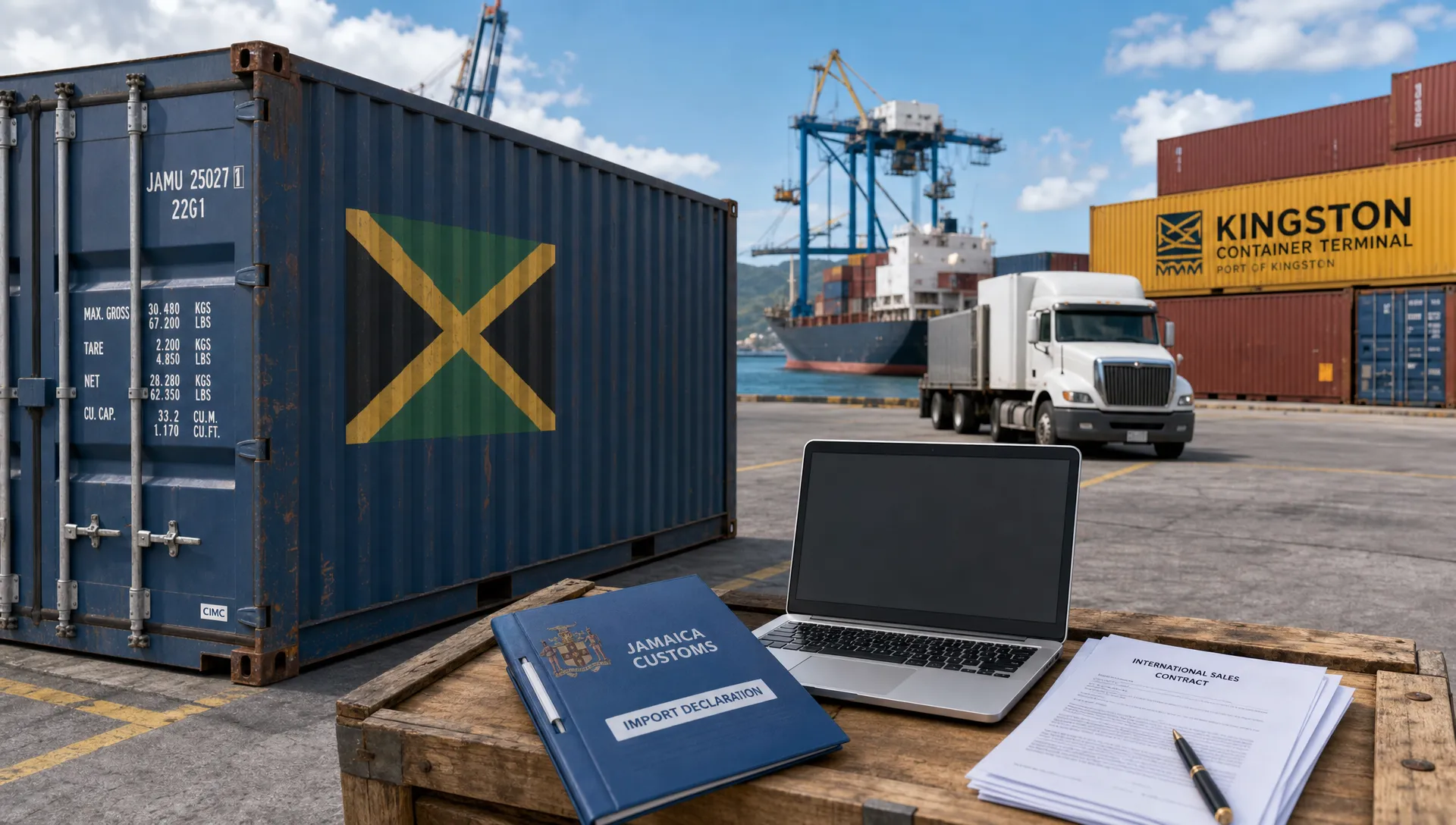
Cross-border contracts can help Jamaican businesses reach new buyers, secure foreign suppliers, license technology, ship goods, and participate in international projects. They can also expose a business to unfamiliar courts, foreign tax rules, currency movements, customs delays, privacy obligations, and enforcement challenges.
The point is not to make every international agreement longer. It is to make the important terms clearer. A short contract that leaves the wrong issues open can become expensive when something goes wrong, especially if the other party, the goods, the servers, or the bank account is outside Jamaica.
This guide highlights eight cross-border contract terms Jamaican businesses should review before signing. It is general information only and should not be treated as legal advice for any particular transaction.
Why cross-border contracts need closer review
Domestic contracts usually operate within a familiar legal and commercial environment. Cross-border contracts do not. A Jamaican company may be dealing with a supplier in the United States, a software vendor in Europe, a shipping provider in Asia, or a distributor in the Caribbean. Each layer adds practical questions.
Which law applies? Where would a dispute be heard? How will a judgment or arbitral award be enforced? Who bears exchange rate risk? What happens if goods are delayed at port? Can customer data be transferred overseas? Who owns the intellectual property created during the relationship?
These questions are not technicalities. They affect pricing, leverage, risk allocation, and the cost of enforcing your rights.
Contract term | Main risk if unclear | What to check before signing |
Parties and authority | You contract with the wrong entity or an unauthorised signer | Legal names, registration details, signing authority, group company guarantees |
Governing law | Unexpected legal rules apply | Chosen law, mandatory local laws, consumer, employment, data, and regulatory rules |
Dispute resolution | Expensive or impractical enforcement | Courts, arbitration, mediation, seat, venue, language, service of notices |
Payment and tax | Margin loss or cash flow disputes | Currency, exchange rates, bank charges, taxes, withholding, late payment interest |
Delivery and risk | Loss, delay, or insurance gaps | Incoterms, transfer of title, delivery point, customs, insurance |
Data and confidentiality | Privacy breaches or unlawful transfers | Data roles, security duties, transfer terms, breach notice, confidentiality scope |
Intellectual property | Ownership disputes | Pre-existing IP, new work product, licences, brand use, improvements |
Termination and remedies | You cannot exit or recover losses effectively | Termination triggers, cure periods, force majeure, liability limits, survival clauses |
1. Parties, authority, and contract documents
Start with the basics. Cross-border groups often operate through subsidiaries, affiliates, trading names, holding companies, or regional branches. The company you negotiated with may not be the company that will sign the contract, issue invoices, hold assets, or perform the service.
Review the full legal name, place of incorporation, registered address, and company number where applicable. If a foreign parent company is providing comfort or a guarantee, make sure that obligation is actually written into the contract and signed by the correct entity.
Authority also matters. A signature block alone does not prove that the signer has power to bind the company. For high-value transactions, it may be appropriate to request evidence of authority, such as board approval, a power of attorney, or a certificate from an officer of the company.
You should also confirm which documents form the contract. Many disputes arise because the purchase order, quotation, master services agreement, statement of work, online terms, invoice conditions, and email acceptance all say different things. The contract should state the order of priority if documents conflict.
This is particularly important in contractor, supply, and project arrangements. The same discipline that helps local businesses reduce disputes in well-drafted contractor contracts becomes even more important when a counterparty is overseas.
2. Governing law
A governing law clause states which legal system will be used to interpret the contract. Without a clear clause, the parties may spend time and money arguing about which law applies before they even reach the substance of the dispute.
For a Jamaican business, Jamaican law may be preferred where the business wants a familiar legal framework and local counsel. A foreign counterparty may insist on the law of its home jurisdiction, or on a perceived neutral law such as English law or New York law. The right answer depends on bargaining power, transaction type, enforcement strategy, and regulatory context.
Do not assume the chosen law controls everything. Mandatory rules can still apply, especially in areas such as consumer rights, employment law, data protection, competition law, financial regulation, sanctions, import controls, and tax. For example, a contract with a foreign law clause may still create obligations under Jamaica’s Data Protection Act, 2020 if personal data is processed in a way that brings the arrangement within its scope.
Also watch for contracts that split governing law across different documents. A master agreement may choose one law, while an online service schedule or purchase terms choose another. That inconsistency can create avoidable disputes.
3. Jurisdiction, arbitration, and mediation
Governing law answers the question, “Which law applies?” Jurisdiction answers a different question, “Where will disputes be heard?” In cross-border contracts, this distinction is critical.
A jurisdiction clause may require disputes to be heard in the courts of Jamaica, the courts of another country, or a non-exclusive forum that allows proceedings in more than one place. The clause should be commercially realistic. If the counterparty has no assets in the chosen country, a court judgment may still need to be enforced elsewhere.
Arbitration is often considered for international contracts because arbitral awards may be easier to enforce across borders than court judgments, depending on the countries involved. The New York Convention on the Recognition and Enforcement of Foreign Arbitral Awards is a key framework for international enforcement of arbitration awards. If arbitration is chosen, the clause should address the seat of arbitration, arbitral institution or rules, number of arbitrators, language, confidentiality, and interim relief.
Mediation can also be valuable, especially where the parties want to preserve a commercial relationship. A staged clause may require negotiation or mediation before litigation or arbitration begins. That can save cost, but the timing should be clear so that one party cannot use mediation requirements simply to delay enforcement.
Poor dispute clauses are a common contributor to commercial conflict. If your business is assessing wider exposure, it may help to review the types of commercial litigation risks Jamaican businesses should watch before finalising a cross-border agreement.
4. Payment, currency, tax, and banking details
Payment terms in an international contract should do more than state the price. They should identify the currency, payment date, invoicing requirements, bank charges, tax treatment, exchange rate mechanics, and consequences of late payment.
Currency risk can materially affect profit. If costs are in Jamaican dollars but revenue is in US dollars, euros, or pounds sterling, a shift in exchange rates may help or hurt one party. The contract should say whether prices are fixed in a foreign currency, whether exchange rates are adjusted, and which rate source applies if conversion is needed.
Tax and withholding issues should be reviewed before the price is agreed. A clause saying “all taxes are the buyer’s responsibility” may not be enough if local law requires withholding or if the payment structure creates unexpected exposure. Businesses should also consider customs duties, general consumption tax, transfer pricing, and documentary requirements where relevant.
Banking details deserve special care. Cross-border payment fraud is common, especially where invoice instructions are changed by email. The contract can require verified procedures for changing bank details and can state that payment is not valid if made to an unverified account.

5. Delivery, risk of loss, title, and insurance
For contracts involving goods, delivery language can determine who pays freight, who handles customs, who bears loss during transit, and when the buyer must pay. Vague phrases such as “delivery to buyer” or “shipment arranged by seller” may not answer the key questions.
Many international sale contracts use Incoterms, published by the International Chamber of Commerce, to allocate delivery obligations and risk. The ICC’s Incoterms rules are widely used, but they must be incorporated correctly. The contract should specify the exact Incoterm, the named place or port, and the applicable version, such as Incoterms 2020.
Risk of loss and transfer of title are related but not identical. Risk may pass when goods are handed to a carrier, while title may pass only after payment. If the contract is silent, the parties may disagree about who bears the loss if goods are damaged, delayed, detained, or misdelivered.
Insurance should match the risk allocation. If the buyer bears risk during shipment, the buyer should know whether the seller must procure cargo insurance, what type of cover is required, who is named as beneficiary, and how claims are handled.
For Jamaican businesses involved in imports, exports, admiralty and shipping, logistics, or commodity trade, these clauses can be central to the economics of the deal.
6. Data protection, confidentiality, and cybersecurity
Cross-border contracts increasingly involve personal data, even where the main deal is not a technology contract. Customer lists, employee records, payment data, website analytics, support tickets, identity documents, and shipment details may all include personal information.
A data clause should identify what personal data is processed, why it is processed, where it is stored, who may access it, and whether it will be transferred to another country. It should also allocate responsibility for security measures, breach notification, retention, deletion, and cooperation with regulators or data subjects.
Jamaican businesses should consider Jamaica’s Data Protection Act, 2020 and any foreign privacy regimes that may apply, such as the GDPR where EU personal data is involved. If a vendor, platform, or consultant will process personal data, due diligence is as important as drafting. The same practical questions used to vet GDPR compliance providers can help when assessing overseas service providers that handle sensitive information.
Confidentiality clauses should also be reviewed carefully. Define what is confidential, how long the obligation lasts, which disclosures are permitted, and what happens when the contract ends. In cross-border settings, consider whether affiliates, subcontractors, professional advisers, auditors, and regulators need access.
Cybersecurity obligations should be specific enough to be enforceable. General promises to use “reasonable security” may be appropriate in some contracts, but higher-risk arrangements may need defined controls, audit rights, incident response timelines, and indemnities for avoidable breaches.
7. Intellectual property ownership and permitted use
Intellectual property clauses are often underestimated until the relationship ends. If a Jamaican business pays a foreign developer, designer, consultant, distributor, manufacturer, or marketing agency, the contract should say who owns the work product and who can use it.
Important questions include whether the supplier is assigning ownership or merely granting a licence, whether the licence is exclusive or non-exclusive, whether it is worldwide, whether it can be sublicensed, and whether it continues after termination.
Pre-existing intellectual property should be separated from newly created materials. A software vendor may own its platform, but the customer may need rights to its data, configurations, reports, templates, or custom developments. A manufacturer may need permission to use a brand only for approved production or packaging. A distributor may need limited trademark rights to market products in a specific territory.
For cross-border intellectual property law issues, registration strategy also matters. A trademark protected in Jamaica is not automatically protected everywhere. If the contract supports expansion into new markets, consider whether filings, licence recordals, enforcement duties, and brand guidelines are needed.
Watch for clauses that allow the foreign counterparty to use your name, logo, case study, or customer data for marketing without prior approval. That may be commercially acceptable in some cases, but it should be a conscious decision.
8. Termination, force majeure, liability, and remedies
A contract should make it clear how the relationship can end. Termination rights may apply for non-payment, insolvency, breach, change of control, sanctions exposure, loss of licence, data breach, repeated delay, or convenience. Cure periods should be practical, not so short that they are unfair and not so long that they leave the innocent party exposed.
Force majeure clauses deserve renewed attention in cross-border contracts. Events such as port closures, natural disasters, cyber incidents, pandemics, war, strikes, government restrictions, or supply chain disruption may affect performance. The clause should state what events qualify, what notice must be given, whether payment obligations are suspended, and when prolonged disruption permits termination.
Liability clauses should be read slowly. They may cap damages, exclude loss of profit, exclude consequential loss, limit indemnities, or restrict remedies to replacement or refund. In some contracts, a low liability cap can make the agreement commercially ineffective if the potential loss is much higher than the fee.
Indemnities should also be specific. Common indemnities cover intellectual property infringement, data breaches, third-party claims, tax withholding failures, customs violations, confidentiality breaches, and regulatory non-compliance. The contract should explain how claims are notified, controlled, defended, and settled.
Finally, identify which obligations survive termination. Confidentiality, data deletion, payment obligations, audit rights, dispute resolution clauses, IP licences, non-solicitation clauses, and indemnities may need to continue after the main relationship ends.
Practical review questions before you sign
Before signing a cross-border contract, ask a few practical questions that connect the legal drafting to business reality.
Can we enforce this contract in a country where the other party has assets?
Do the payment terms protect us from currency, tax, and banking risks?
Are delivery, risk, insurance, and customs responsibilities clear?
Do data, confidentiality, and cybersecurity terms match the sensitivity of the information involved?
Are IP ownership and brand use addressed in writing?
Can we exit the contract if performance, compliance, or sanctions issues arise?
These questions do not replace legal review, but they help business teams spot issues early, before commercial pressure makes renegotiation difficult.
Frequently Asked Questions
What is the most important clause in a cross-border contract? There is no single clause that matters in every transaction. Governing law, dispute resolution, payment, delivery, data protection, and termination clauses often carry the highest risk because they affect enforcement, cash flow, compliance, and exit rights.
Should a Jamaican business always choose Jamaican law? Not always. Jamaican law may be preferable for familiarity and local enforcement, but the best choice depends on the counterparty, bargaining power, transaction type, location of assets, regulatory issues, and dispute strategy.
Is arbitration better than court litigation for international contracts? Arbitration can be useful where enforcement across borders is a priority, but it is not automatically better. The cost, seat, rules, urgency, confidentiality needs, and location of the counterparty’s assets should be considered before choosing arbitration.
Do Incoterms cover payment and ownership of goods? Incoterms mainly address delivery obligations, costs, and risk allocation. They do not fully resolve payment terms, transfer of title, breach remedies, or all customs and tax issues, so the contract should address those separately.
Do data protection clauses matter if the contract is not a technology contract? Yes. Many commercial arrangements involve personal data, including customer records, employee information, payment details, shipment records, and support communications. If personal data crosses borders, privacy and security terms should be reviewed.
Need guidance on a cross-border contract?
International contracts should support the deal, not create hidden exposure. If your business is negotiating a cross-border supply, services, distribution, technology, shipping, finance, or commercial agreement, careful review can reduce disputes and improve your negotiating position.
Henlin Gibson Henlin provides client-focused legal services in Jamaica across commercial litigation, data privacy, compliance and risk, intellectual property, arbitration and mediation, admiralty and shipping, banking litigation, and related practice areas. Consider seeking legal advice before signing terms that may affect your business across borders.