
Choosing a patent lawyer before you disclose an invention can help preserve options that may disappear after a public pitch, product launch or online demonstration. For Jamaican inventors and businesses, the decision involves more than finding someone who handles intellectual property. You need an adviser who can assess the invention, protect confidential communications, explain Jamaican filing requirements and coordinate overseas advice where necessary. The first task is to establish that fit without circulating the technical details you are trying to protect.
Protect your options before the first conversation
Public disclosure can undermine the novelty needed for patent protection. A crowdfunding page, conference presentation, published thesis or non-confidential investor discussion may expose information that later becomes relevant to patentability. Disclosure exceptions and grace periods differ between countries, so do not assume there will be time to file afterwards.
Until you have advice, keep any initial description focused on the problem your invention solves rather than the mechanism that makes it work. You can usually identify the industry, intended market and broad technical field without providing drawings, formulas or source code.
Before sending substantive material, take these precautions:
Request a conflict check: Provide the names of the proposed applicant, inventors, business partners and relevant counterparties before sharing technical details.
Confirm the consultation arrangements: Ask whether the firm can advise you, how confidential material should be submitted and who will receive it.
Record previous disclosures: Note what was shared, with whom, when and under what confidentiality terms.
For conversations with manufacturers or potential commercial partners, understanding how to use non-disclosure agreements effectively is useful. An NDA can support confidentiality, but it is not a substitute for a filing strategy or a guarantee that every disclosure is safe.
Check a patent lawyer’s qualifications and relevant experience
Start with professional standing. For Jamaican legal advice, check the attorney’s current practising status through the General Legal Council. If foreign counsel will participate, verify their authorisation in the relevant jurisdiction as well.
Do not assume that a foreign patent qualification authorises someone to represent you in Jamaica, or that Jamaican admission permits representation before every overseas patent office.
Next, distinguish general intellectual property experience from patent-specific work. Trade mark registration, copyright disputes and patent drafting involve different tasks. Ask how much of the proposed adviser’s work concerns inventions and what role they personally perform.
Useful evidence includes an explanation of comparable technical matters, the stages they handled and their approach to difficult drafting questions. They should not need to reveal another client’s confidential information to demonstrate competence. Where appropriate, they may be able to discuss published applications or describe experience without identifying the client.
Also establish who will be accountable. The person attending the introductory meeting may not be the person preparing the specification or answering the patent office’s objections.
Test technical understanding and drafting ability
A patent lawyer should be able to understand the invention well enough to distinguish its essential features from optional details. Ask how they would develop that understanding: an inventor interview, technical drawings, experimental results or input from a specialist may all be relevant.
The specification must explain the invention adequately, while the claims define the protection sought. A polished description alone does not establish that the claims are commercially useful. Ask how the drafter considers alternative implementations and foreseeable attempts to work around the invention.
The adviser should also recognise when another form of protection fits better. Consider products such as diamond engagement rings: a distinctive decorative appearance raises different questions from a new stone-setting mechanism or manufacturing process. Registered design protection, patents and trade marks address different assets.
For information that can remain confidential, trade secret protection for Jamaican businesses may also merit discussion. Patents generally involve eventual publication, so the decision should consider whether secrecy is practical and whether competitors could reverse-engineer the product. There is no universal rule that filing is always the best commercial choice.
Require a clear explanation of Jamaican filing requirements
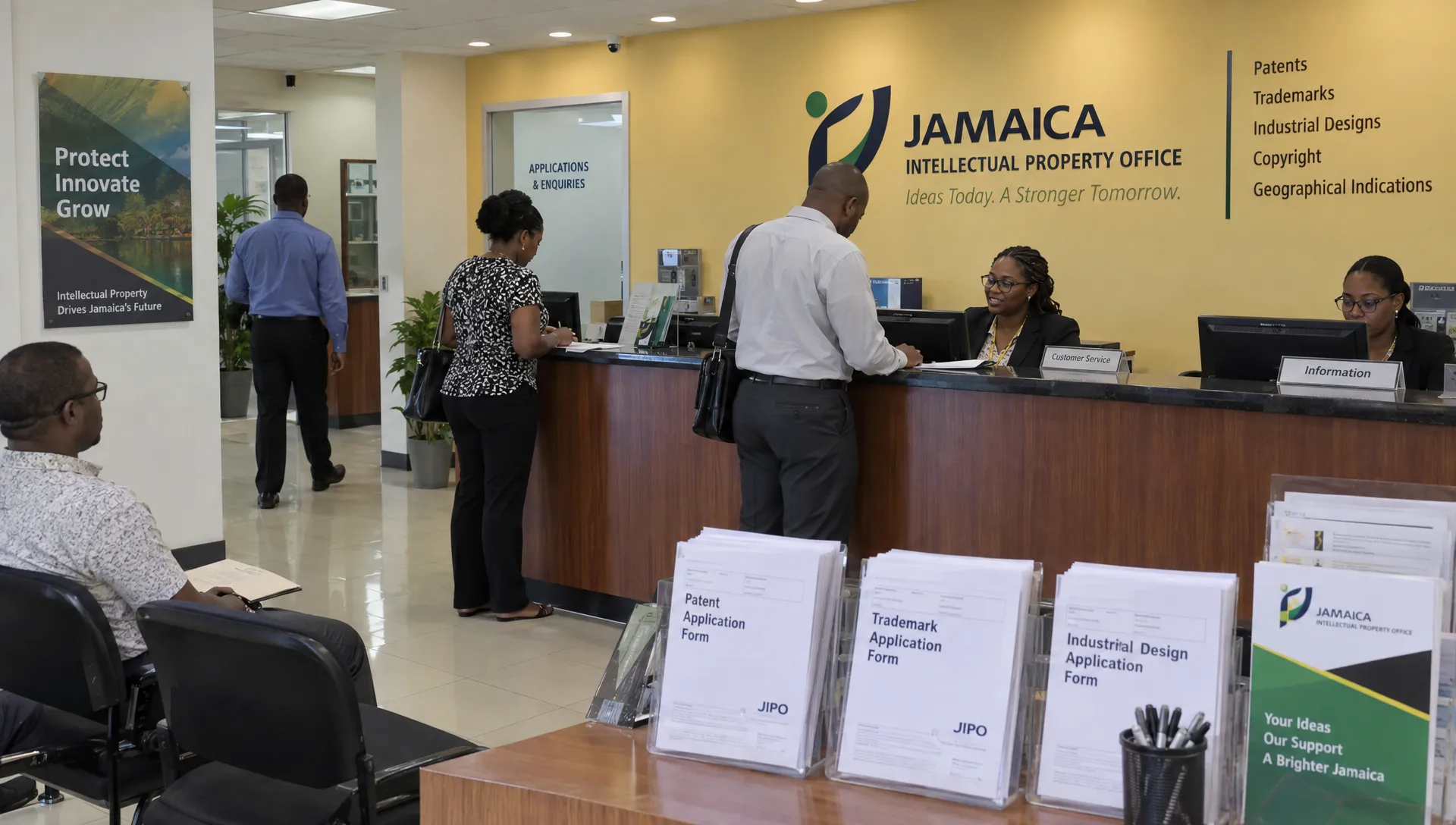
Patent applications in Jamaica are administered by the Jamaica Intellectual Property Office, commonly called JIPO, under the Patents and Designs Act, 2020. Your patent lawyer should explain the applicable requirements rather than importing assumptions from another country’s system.
The initial assessment should address novelty, inventive step and industrial applicability, as well as whether the subject matter is eligible for protection. A useful business concept is not automatically a patentable invention. The application must also disclose the invention adequately.
Ask who will prepare and submit the application, what documents are required and how official correspondence will be handled. For an applicant based outside Jamaica, have counsel confirm the applicable local-representation and address-for-service requirements before submission.
Ownership deserves attention at this stage. The inventor and applicant are not necessarily the same person. Employment terms, consultancy agreements, university arrangements or assignments may affect who is entitled to apply. Do not assume that paying a contractor automatically transfers every relevant right.
Finally, ask how the firm records deadlines and reports developments. Filing is the beginning of a process, not the end of the engagement. Examination, responses to objections and later maintenance obligations need a clearly identified owner.
Match overseas protection to your commercial plans
Patent rights are territorial. A Jamaican patent does not automatically protect an invention in the United States, the United Kingdom or elsewhere. Tell your patent lawyer where you expect to manufacture, sell, license or seek investment so that filing advice reflects the business rather than an indiscriminate list of countries.
Jamaica participates in the Patent Cooperation Treaty system. As WIPO’s PCT guidance explains, an international application provides a filing route for seeking protection in participating countries. It does not produce a single worldwide patent, and national or regional procedures still matter.
Where a later application will claim priority from an earlier patent filing, the usual priority period is 12 months. Ask for advice on the exact deadline and requirements that apply to your applications. A filing date alone does not settle whether every later claim can benefit from priority.
Request a staged recommendation identifying initial markets, later decision points and the consequences of not proceeding. Foreign associates, translations and national-stage work can materially change the budget. Establish who instructs overseas counsel, who monitors their deadlines and whether their charges will be billed separately.
Prepare a focused initial consultation
A useful first meeting should leave you with an agreed next step, not merely a general discussion about innovation. Once the firm has completed its initial checks and confirmed how to share confidential material, give your patent lawyer an organised account of the invention.
Prepare a short information pack covering:
The technical contribution: The problem, existing approaches and what your invention does differently.
Development evidence: Dated drawings, prototype records, test results and known limitations.
People and ownership: Everyone who contributed, their roles and relevant employment or consultancy agreements.
Disclosure history: Demonstrations, sales activity, publications and discussions, including confidentiality arrangements.
Commercial priorities: Intended markets, competitors, launch dates and an initial budget range.
Distinguish facts from assumptions. If you believe nothing similar exists, explain what you searched rather than presenting that belief as a completed novelty assessment. Include unsuccessful tests or unresolved technical questions where they affect how the invention works.
Ask the adviser what further information is needed before recommending a filing. A responsible answer may identify gaps rather than immediately promise protection. If a launch or presentation is imminent, give the actual date at the start of the meeting so that timing can be assessed before substantive disclosure occurs.

Compare fees by the work included
A headline filing price rarely answers the most useful question: what work does it buy? Ask each patent lawyer to separate professional charges, official fees and third-party expenses. Compare equivalent stages rather than selecting the lowest total without examining its assumptions.
The engagement letter should identify the client, scope, responsible professionals and billing basis. It should also explain what happens if the technical assessment reveals that filing is unlikely to be worthwhile.
Work stage | What to clarify before instructing |
Initial assessment | Whether eligibility, disclosure history and ownership are included |
Prior-art search | Who searches, what is covered and whether a written assessment follows |
Application drafting | Whether claims, drawings, inventor interviews and revision rounds are included |
Filing | Which official fees and administrative charges are additional |
Examination responses | Whether later objections fall outside the initial estimate |
Overseas protection | How foreign counsel, translations and local-stage work are budgeted |
Ongoing administration | Who tracks deadlines and handles maintenance instructions |
Ask separately about freedom to operate. A patentability search considers whether the invention may qualify for protection; a freedom-to-operate review considers potential infringement of other parties’ rights in relevant markets. These are different exercises, and neither should be assumed to be included in a basic filing quote.
A patent grant does not itself give permission to commercialise a product free from other people’s rights. That distinction matters when choosing which legal work to commission before launch.
Recognise warning signs before you commit
Be cautious if a patent lawyer guarantees a grant before assessing the invention or promises worldwide protection through a single registration. Patent outcomes depend on the invention, existing disclosures, applicable law and examination, not simply the quality of a sales presentation.
Another warning sign is an instruction to send all technical material immediately without explaining conflicts, confidentiality or the proposed engagement. Professional confidentiality and legal professional privilege are related but distinct. Privilege depends on the purpose and circumstances of communications; an NDA with a commercial partner does not turn those communications into privileged legal advice.
Look closely at vague responsibilities. If nobody can explain who drafts the claims, who reviews technical accuracy or who receives official notices, the proposed arrangement needs clarification.
You should also expect candid discussion of limitations. An adviser who recommends further searching, narrower claims or a different protection strategy may be providing more useful advice than one who treats every idea as ready for filing. Request the recommended next step in writing, together with its scope, cost basis and any immediate deadline.
Frequently asked questions
Should I contact a patent lawyer before showing an invention to investors? Ideally, yes. Obtain advice before a non-confidential pitch or technical demonstration. If disclosure has already occurred, provide the date, materials and confidentiality terms promptly. Do not assume either that protection is lost everywhere or that a grace period will rescue every filing.
Do I need a working prototype before seeking advice? Not necessarily. You need enough technical information to explain how the invention works and support an adequate application. A prototype or test results may be important for some inventions, particularly where feasibility or performance remains uncertain.
Can a general intellectual property attorney handle the matter? They may be able to advise directly or coordinate suitable specialists. Ask specifically about patent drafting, the relevant technical field and the jurisdictions involved. The broader IP label alone does not establish those capabilities.
Should every contributor be named as an inventor? Not automatically. Inventorship turns on contributions to the invention, not simply job titles, funding or project involvement. Identify everyone involved and let counsel assess inventorship separately from ownership and commercial entitlement.
What if I have already posted the invention online? Preserve the post, publication date and details of what was accessible. Seek advice promptly before making further disclosures. The consequences depend on the information disclosed and the laws of the countries where protection is sought.
Arrange advice before the next disclosure
Before your next pitch, publication or product demonstration, ask a patent lawyer to assess disclosure risks and the appropriate protection strategy. Bring your technical summary, ownership documents and commercial timetable, but confirm the consultation arrangements before sending sensitive material.
To discuss intellectual property advice for a Jamaican business or invention, contact Henlin Gibson Henlin. This article provides general information, not legal advice on a particular invention.