
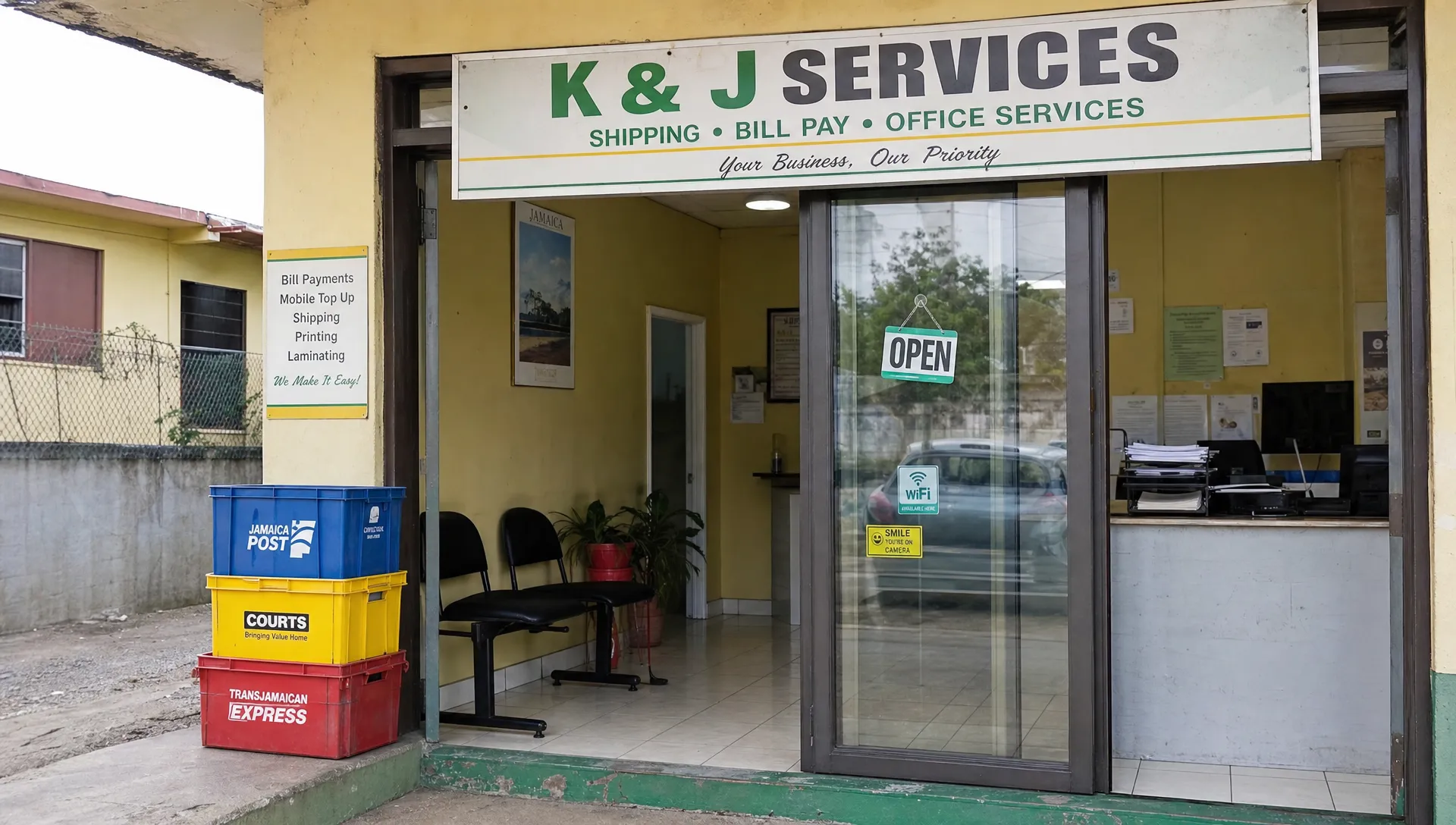
Informal business partnerships often begin with trust, speed and a shared opportunity. Two friends launch a food brand, a contractor teams up with a supplier, or a consultant shares clients with another professional without forming a company or signing a full agreement. The arrangement may feel simple, but the legal consequences can be anything but simple.
In Jamaica, a partnership can arise from conduct, not only from a written document. If people carry on a business together with a view to profit, the law may treat them as partners even if they never used that label. That matters because partners may owe duties to each other, share responsibility for business debts and become bound by promises made in the ordinary course of the business.
This article explains the main legal risks of informal business partnerships and the practical steps business owners should take before a handshake arrangement becomes a dispute.
Why informal partnerships become legally risky
A casual business arrangement can become legally significant when the parties behave like co-owners. Sharing profits, presenting a joint brand, pooling resources, negotiating with suppliers together or giving each other authority to deal with customers can all point toward a partnership relationship.
The risk is that the parties may not agree on what the arrangement means until something goes wrong. At the start, everyone may assume they are aligned. Later, one person may say the money was a loan, another may say it was capital. One may believe they own 50 percent of the business, while the other believes they were only sharing commission on a project.
Written agreements do not remove every risk, but they force the parties to answer difficult questions before money, clients and reputations are at stake.
Risk 1: Personal liability for business debts
One of the biggest risks in an informal partnership is personal liability. In a general partnership, partners may be personally responsible for partnership debts and obligations. If the business cannot pay, creditors may look beyond the business name and seek recovery from the partners themselves.
This risk can surprise people who thought they were only “helping out” or “working together on one deal.” If a partner orders stock, hires subcontractors, signs a lease or accepts credit from a supplier for partnership business, the other partner may later face a claim if the obligation falls within the apparent scope of the business.
The issue is not only debt. Liability can arise from negligence, misrepresentation, breach of contract and other business conduct. A partner who never met the customer may still be pulled into a dispute if the customer reasonably believed they were dealing with the partnership.
Where the business is growing, the parties should consider whether a company or another structure would better manage risk. Henlin Gibson Henlin’s overview of corporate structures for doing business in Jamaica explains how sole trader, partnership and corporate structures can carry different legal and financial consequences.
Risk 2: Unclear ownership of money, assets and profits
Informal partners often focus on revenue first and documentation later. That can create problems when the business starts to earn income or acquire assets.
Disputes commonly arise over who owns inventory, equipment, social media accounts, domain names, customer lists, vehicles, tools or funds sitting in a bank account. If one person paid for an asset but both used it in the business, ownership may be contested. If profits were reinvested, it may be unclear whether the reinvestment increased ownership shares or merely supported operations.
A simple table can show how quickly uncertainty develops:
Issue | Common informal assumption | Legal risk if not documented |
Start-up funds | “We both put in what we could” | Dispute over whether funds were loans, gifts or capital contributions |
Profit sharing | “We will split it fairly” | Disagreement over percentages, timing and deductions |
Business assets | “It belongs to the business” | No clarity on who owns the asset if the relationship ends |
Customer relationships | “They are our clients” | One partner may take clients or deny the other access |
Losses | “We will deal with that later” | One partner may be left paying debts alone |
These problems are not just accounting issues. They can become commercial litigation if the parties cannot agree on ownership, repayment or control.
Risk 3: Authority to bind the business
In many informal partnerships, no one clearly defines who can make decisions. That can be convenient at first, but it creates risk when one partner makes commitments the other does not approve.
A partner may negotiate payment terms, promise delivery dates, discount invoices, retain contractors or enter into a settlement with a customer. If the action appears to be within the ordinary business of the partnership, the partnership may be bound even if the other partner disagreed privately.
This is especially dangerous where one partner is more active in day-to-day operations. The quieter partner may assume they have limited exposure because they are not signing documents, but the law may focus on the relationship and the authority presented to third parties.
Practical controls should cover who may sign contracts, approve spending, access accounts, borrow money, hire staff and communicate official positions to customers or regulators. Even a short written authority matrix is better than silence.
Risk 4: Intellectual property and brand ownership disputes
Informal business partners often create valuable intellectual property before they create legal documents. A name is chosen, a logo is designed, packaging is developed, a website is launched and content is posted online. Months later, the parties may disagree about who owns the brand.
Intellectual property issues can be particularly sensitive because the person who created the work may not be the person who paid for it or the person who built the customer base. If a designer, photographer, developer or marketing consultant was involved, the partnership also needs to confirm whether rights were properly assigned or licensed.
Common trouble spots include business names, trademarks, product designs, recipes, manuals, software, databases, photographs, website copy and social media handles. If the parties separate without clear ownership terms, both may try to use the same name or claim the same goodwill.
A written agreement should state who owns existing intellectual property, who will own new material created during the collaboration and what each person can use after the partnership ends.

Risk 5: Data protection and customer information problems
Informal arrangements can also create data protection risk. If partners collect names, phone numbers, addresses, payment details or customer preferences, they may be handling personal data. Jamaica’s Data Protection Act places obligations on how personal data is collected, used, stored and shared.
A casual partnership may not have a privacy notice, data retention policy or secure process for giving staff and contractors access to customer information. If the relationship breaks down, one partner may take customer data for a competing venture or refuse to return records. That can create legal, regulatory and reputational exposure.
The risk increases for online businesses, professional services, health-related businesses, education providers, financial services and any operation that collects sensitive or high-volume customer information. Even small businesses should decide who controls customer data, who may access it, how long it is kept and what happens to it when the partnership ends.
Risk 6: Employment and contractor confusion
Informal partnerships often blur the line between partner, employee and independent contractor. A person may be introduced as a “partner” to customers but paid like a contractor. Someone else may work fixed hours under the control of the business but be treated as self-employed.
Misclassification can create exposure for wages, statutory obligations, termination disputes and workplace claims. If the business hires staff, the partners also need to decide who has authority to recruit, discipline or dismiss workers. Without clear roles, an employee may receive conflicting instructions or later claim that both partners were responsible for employment decisions.
If contractors are used, written terms should address scope of work, payment, confidentiality, ownership of work product and liability. Where the person is truly a partner, the agreement should say so and explain their rights and obligations.
Risk 7: Tax, registration and compliance gaps
A business relationship may feel informal, but tax and regulatory obligations may still apply. Depending on the structure and activity, the parties may need to address business name registration, tax registration, record-keeping, invoicing, statutory deductions, licences, sector permits and reporting requirements.
The problem is that informal partners often assume someone else is handling compliance. One person may collect revenue in a personal account. Another may pay expenses in cash. Receipts may be incomplete, and no one may track whether funds taken from the business are salary, drawings, reimbursement or profit distribution.
Poor records can make tax filings difficult and can also weaken a partner’s position in a dispute. If there is no reliable record of contributions, payments and withdrawals, the disagreement may turn into a credibility contest.
Risk 8: Partnership breakdowns can escalate quickly
Partnership disputes often become emotional because they mix money, trust and control. A disagreement over expenses can become a dispute over dishonesty. A missed payment can become an allegation that one partner is diverting income. A customer complaint can become a fight over who damaged the business reputation.
These disputes may involve injunctions, claims for accounts, breach of duty allegations, debt recovery, asset preservation and negotiations over dissolution. Henlin Gibson Henlin has discussed related warning signs in its article on commercial litigation risks Jamaican businesses should watch, including partnership conflicts and unclear contracts.
The longer the parties operate without clear terms, the harder it becomes to unwind the relationship cleanly. Courts and counsel may need to reconstruct the arrangement from emails, WhatsApp messages, invoices, bank transfers and witness accounts. That is usually more expensive than putting terms in writing at the start.
What a written partnership agreement should cover
A partnership agreement does not need to be overcomplicated, but it should be specific enough to prevent predictable disputes. For many businesses, the most useful clauses are the ones that answer practical questions about money, authority and exit rights.
A well-drafted agreement should usually address:
The purpose and scope of the business relationship
Each partner’s capital contributions, assets and responsibilities
Profit sharing, loss sharing, drawings and expense approval
Decision-making rules and signing authority
Ownership and use of intellectual property
Confidentiality, customer information and data protection duties
Bank accounts, accounting records and financial reporting
Restrictions on competing activity and conflicts of interest
Dispute resolution, including negotiation, mediation or arbitration
Exit rights, valuation, buyout mechanics and dissolution
The terms should match the business. A short project between consultants may not need the same document as a long-term venture buying assets, hiring staff and trading under a shared brand. Where the relationship is closer to a joint venture, the parties may also benefit from reviewing the firm’s guidance on managing legal risk in joint ventures.
When an informal partnership may be the wrong structure
A partnership is not automatically wrong. For some small ventures, it may be practical and cost-effective. The concern is using a partnership unintentionally or using it where the risk profile calls for something more formal.
A company may be more suitable where the business will take on significant debt, employ staff, sign long-term leases, seek investment, hold valuable intellectual property or operate in a regulated sector. A company can offer a clearer legal identity and may limit shareholder liability, though directors and shareholders can still face risk in certain circumstances.
A contractual collaboration may be better where the parties only want to work together on one project without becoming co-owners of a continuing business. In that case, the contract can define deliverables, payment, confidentiality, customer ownership and termination without creating broader partnership obligations.
The key is to choose the structure deliberately rather than allowing conduct to create legal consequences by accident.
Warning signs that legal advice is needed
Business owners should seek advice before a dispute becomes entrenched. Early advice can help preserve evidence, clarify legal rights and prevent a commercial disagreement from becoming a larger claim.
Warning signs include:
A partner is using business funds without agreement
A partner is signing contracts or making promises without authority
Customers, suppliers or employees are receiving conflicting instructions
One person is withholding accounts, passwords or records
There is no agreement on who owns the brand, website or customer list
The business is taking on debt, staff, leases or regulated obligations
One partner wants to leave, sell their share or start a competing business
If any of these issues arise, the next step should not be a heated message thread. It is often better to pause, gather records and get legal advice on the best route forward.
Frequently Asked Questions
Can a partnership exist without a written agreement in Jamaica? Yes. A partnership may be inferred from how people conduct business together, particularly where they share profits and act as co-owners. A written agreement is still strongly recommended because it clarifies rights, duties and exit terms.
Am I liable for a partner’s debts if I did not sign the contract? You may be exposed if the obligation was incurred for partnership business and the other person had actual or apparent authority to act for the partnership. The facts matter, so legal advice should be obtained quickly if a creditor makes a claim.
What is the difference between a partnership and a joint venture? A partnership often involves an ongoing business carried on in common for profit. A joint venture may be limited to a specific project or transaction. The labels are less important than the actual terms and conduct of the parties.
Should friends or family members still sign a partnership agreement? Yes. Personal trust does not answer legal questions about ownership, authority, profits, losses and exit rights. A written agreement can protect the relationship by reducing misunderstandings.
Can mediation or arbitration help resolve a partnership dispute? Yes. Mediation can help parties negotiate a practical settlement, while arbitration can provide a private decision-making process if the parties have agreed to it. The best option depends on the agreement, the urgency and the type of relief needed.
Protect the business before the relationship is tested
Informal partnerships are common because they are fast and flexible, but they can expose business owners to personal liability, ownership disputes, tax problems, data protection issues and expensive litigation. The safest time to clarify the relationship is before the business grows, before money accumulates and before trust breaks down.
Henlin Gibson Henlin assists businesses with commercial arrangements, dispute resolution, corporate risk and related legal services in Jamaica. If you are entering, operating or exiting an informal business partnership, seek tailored advice before small uncertainties become costly legal problems.