
Counterfeit goods do more than divert sales. They confuse customers, damage trust in legitimate products and can expose a business to regulatory, consumer and reputational fallout. For Jamaican brand owners, regional distributors, franchise operators and overseas companies selling into Jamaica, the right response is not just a raid or a stern letter. It is a coordinated brand protection strategy built around registration, monitoring, evidence and timely enforcement.
In Jamaica, counterfeit activity can appear in several forms: fake branded apparel in retail stalls, imitation cosmetics sold online, copied labels on food or beverages, replacement parts presented as genuine or unauthorised imports moving through informal channels. The legal tools available depend on what rights you own, where the goods are located and how quickly you can prove that the goods are not genuine.
This guide explains the practical steps businesses can take to protect their brand from counterfeit goods in Jamaica, with a focus on prevention and enforcement that stands up commercially and legally.
What makes a product counterfeit?
A counterfeit product usually involves the unauthorised use of a brand identifier, such as a registered trademark, logo or packaging design, in a way that makes consumers believe the product is genuine. It may be a close imitation of the product itself, but the central legal issue is often the misuse of brand identity.
Not every lookalike product is automatically counterfeit. Some disputes involve unfair competition, copyright infringement, design infringement, passing off or breach of contract rather than classic counterfeiting. That distinction matters because the evidence, remedies and urgency may differ.
A counterfeit goods problem may involve several rights at once:
Trademarks protect names, logos and other signs that distinguish your goods or services.
Copyright may protect original artwork, labels, manuals, photographs and marketing materials.
Industrial designs may protect the appearance of a product where registered and applicable.
Patents or utility models may be relevant where the product’s technical features have been copied.
Passing off may assist where a business has goodwill in a mark or get-up, even if registration is incomplete.
For a wider foundation on these rights, Henlin Gibson Henlin’s overview of intellectual property rights in Jamaica is a useful starting point for brand owners assessing what they already own and what still needs to be protected.
Start with a clean IP registration strategy
The strongest anti-counterfeiting action usually begins before the counterfeit appears. A registered trademark gives a brand owner a clearer legal basis to object to unauthorised use, seek court relief and engage with enforcement channels.
In Jamaica, trademark registration is handled through the Jamaica Intellectual Property Office. Brand owners should review whether their core marks are registered in the correct classes and whether the registration covers the goods actually being sold. A company may have registered its name for retail services, for example, but failed to register the same mark for cosmetics, beverages, clothing or electronic accessories. That gap can make enforcement harder.
A practical trademark audit should look at names, logos, product lines, slogans, packaging and any sub-brands used by distributors or franchisees. It should also check ownership. If a founder, designer, overseas parent company or former distributor owns the registration, the business may face avoidable problems when trying to enforce.
International businesses should also align their Jamaica strategy with their wider portfolio. Jamaica’s participation in the WIPO Madrid System may be relevant for businesses managing international trademark filings, though local legal advice remains important for classification, opposition risk and enforcement planning.
Build anti-counterfeiting into commercial contracts
Many counterfeit disputes begin as supply chain problems. A distributor over-orders packaging. A manufacturer sells overruns. A former sales agent keeps using product images. A retailer mixes genuine stock with unauthorised goods. Contracts will not stop every bad actor, but they help define what is authorised and what is not.
Distribution, manufacturing, franchise and licensing agreements should be clear on who may use the brand, where goods may be sold, what quality controls apply and what happens to unused labels or packaging at the end of the relationship. Contracts should also include inspection rights, record-keeping obligations and prompt reporting requirements for suspected counterfeits.
Confidential manufacturing specifications, supplier lists and authentication methods should be protected internally as well. If your brand protection depends on private product details, the guidance in Henlin Gibson Henlin’s article on trade secret protection for Jamaican businesses is relevant to the operational side of anti-counterfeiting.
Make genuine products easier to identify
Enforcement is faster when brand owners can prove what is genuine and what is not. That proof should not depend on one person’s memory or a vague statement that “the packaging looks wrong.”
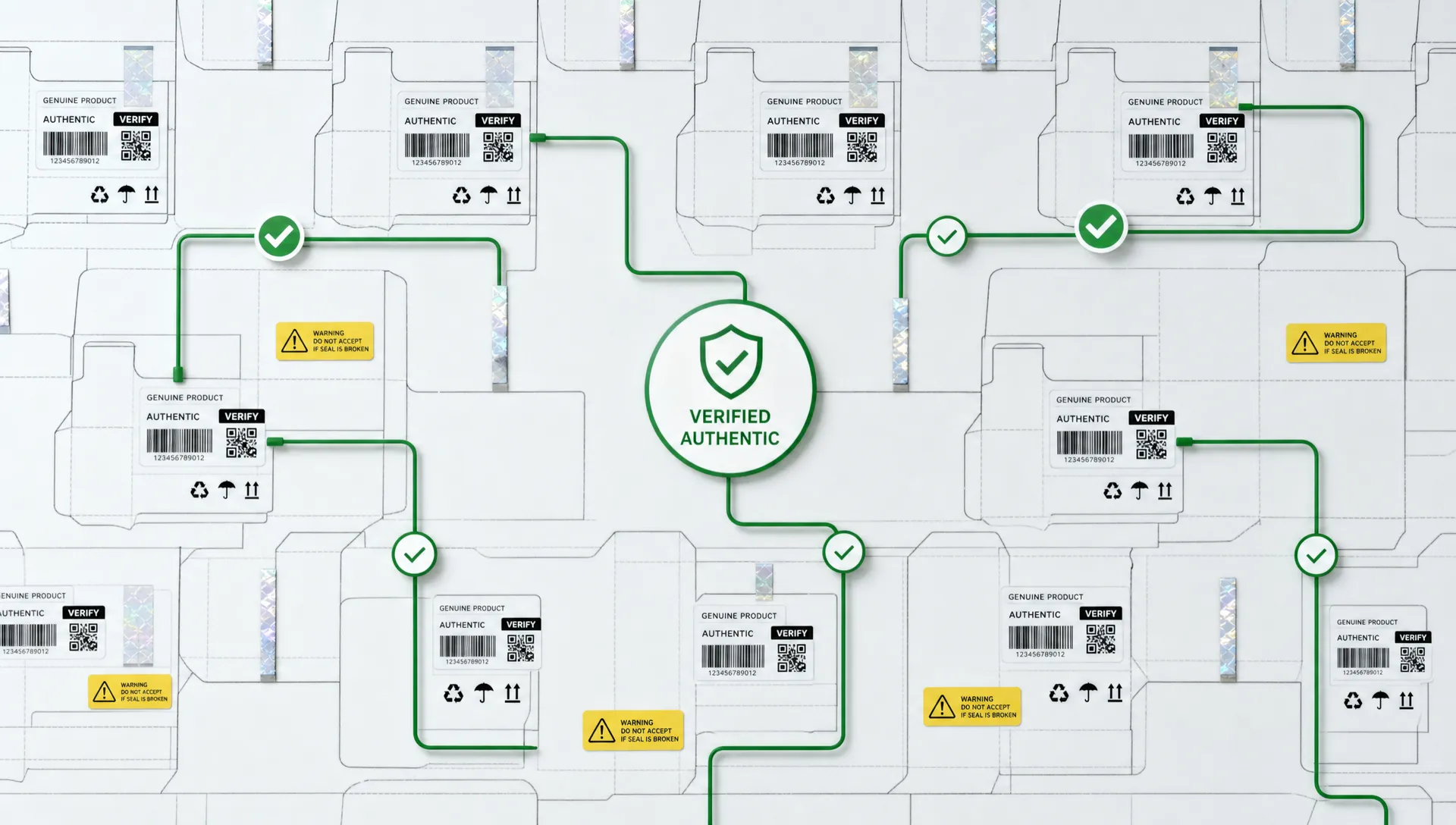
Businesses should keep dated samples of genuine packaging, product photographs, batch records, authorised distributor lists and changes to labels over time. If a product has security features such as QR codes, batch numbers, holograms or tamper-evident seals, staff and external partners should know how to verify them.
This is especially important for goods that may affect health or safety, including cosmetics, food products, pharmaceuticals, electrical goods, automotive parts and children’s products. Counterfeits in these categories can create legal exposure beyond IP infringement because defective or unsafe goods may trigger consumer complaints, regulator attention and claims from injured customers.
Monitor the Jamaican market before the problem spreads
Counterfeiting is often easier to control early, before goods are widely distributed. Monitoring should cover both physical and digital channels. In Jamaica, that may include retail shops, informal markets, Instagram pages, WhatsApp sellers, classified ads, online marketplaces, trade fairs and import activity.
Useful warning signs include unusually low prices, sellers using official product photographs without authorisation, packaging that differs slightly from genuine stock, customer complaints about quality and distributors reporting unfamiliar stock in the market. A single complaint may not justify litigation, but it may justify a controlled purchase and further investigation.
The person collecting evidence should avoid arguments with the seller, threats or informal seizures. Poorly handled investigations can contaminate evidence or expose the business to counter-allegations. A quiet, documented purchase is often more useful than a public confrontation.
Preserve evidence before sending threats
Many brand owners want to send an immediate cease and desist letter when they find counterfeit goods. That may be appropriate, but only after preserving evidence. Once a seller is warned, websites can be deleted, stock can disappear and the source of supply may become harder to trace.
A basic evidence file should include the product purchased, proof of payment, screenshots, seller details, delivery records, photographs of packaging and side-by-side comparisons with genuine goods. Keep the original item secure. If the matter may go to court, chain of custody can matter.
Where the suspected counterfeit is found online, screenshots should capture the full page, date, seller name, product description, price and contact details. If a test purchase is made, keep messages, courier records and the packaging used for delivery. Counsel can help decide when further investigation is needed and when it is time to move to enforcement.

Choose the right enforcement route
There is no single enforcement route for every counterfeit goods problem. A street-level seller, a repeat importer and a former distributor require different strategies. The best response depends on urgency, evidence, value of the brand, health or safety risk and whether the source of goods can be traced.
The main options include civil action, customs engagement, criminal referral, platform takedowns and negotiated undertakings. These options can overlap. For example, a brand owner may preserve evidence, issue a demand, notify an online platform and prepare civil proceedings if the seller refuses to comply.
Enforcement option | When it may help | Practical considerations |
Cease and desist letter | The seller is identifiable and the goal is fast removal | Works best when supported by registration details and evidence |
Civil claim | The infringement is serious, ongoing or commercially damaging | May support injunctions, damages, account of profits, delivery up or destruction |
Interim injunction | Goods are spreading quickly or harm is immediate | Requires urgency, strong evidence and careful court preparation |
Customs engagement | Suspect goods are being imported or detained at the border | Brand owners should be ready to identify genuine versus fake goods quickly |
Criminal referral | Conduct appears deliberate, large-scale or dangerous | Requires coordination with enforcement authorities and proper evidence |
Online takedown | The goods are promoted through social media or e-commerce channels | Faster than court in some cases, but not always enough to stop the supplier |
A legal demand letter should be precise. It should identify the rights being relied on, the conduct complained of, the evidence held and the remedies required. Overstating the claim can weaken credibility. If a recipient pushes back, the business should assess the commercial and litigation risk before escalating. Henlin Gibson Henlin has also addressed broader commercial litigation risks Jamaican businesses should watch, which can help frame that assessment.
Border control and imported counterfeits
Jamaica’s role as an import market means counterfeit goods may enter through shipping, courier and passenger channels. Border action can be highly effective because it targets goods before they disperse into shops, warehouses and online resale networks.
Brand owners should prepare customs-facing materials in advance. These may include trademark registration certificates, product photographs, lists of authorised importers, packaging guides and contact details for someone who can make quick authenticity decisions. Delays can matter when goods are perishable, storage costs are increasing or a shipment is about to be released.
Engagement with the Jamaica Customs Agency should be handled carefully and with legal advice where a formal request or follow-up action is needed. A business should be ready to explain the basis for suspecting infringement and the steps it will take if goods are detained or identified as counterfeit.
For brands moving goods by sea or dealing with shipping documents, enforcement may also intersect with carriage, warehousing, liens and importer liability. In higher-value cases, the shipping chain may reveal who ordered, financed or controlled the shipment.
Do not ignore consumer and regulator risk
Counterfeit goods are often discussed as an IP issue, but the consumer angle can become just as serious. A customer who believes they bought the genuine product may complain to the legitimate brand when the fake item fails. If the product causes harm, the reputational damage may be immediate even if the brand did not manufacture or sell the item.
Brands should have a clear internal process for handling suspected counterfeit complaints. Customer service teams should know how to request photographs, batch numbers, receipts and seller information without making admissions or blaming the consumer. Public messaging should be accurate and measured.
This is also where consumer protection planning matters. If your business sells directly to customers, manages warranties or operates customer-facing promotions, the discussion in Henlin Gibson Henlin’s article on consumer law attorneys and business risk may help you manage the wider legal exposure.
Common mistakes brand owners make
Brand owners often wait until counterfeits become visible before reviewing their legal position. By then, the business may discover that the trademark is unregistered, the wrong company owns it or its contracts do not give enough control over packaging and distribution.
Another mistake is treating every seller the same. A small retailer may not know the goods are fake, while the importer or supplier may be the real target. Sending broad threats to low-level sellers can alert the network and make source tracing harder.
Businesses also underestimate the importance of evidence quality. A blurry photograph, an angry message exchange or an unverified social media post is rarely enough. A disciplined file with purchases, dates, seller details and product comparisons gives counsel more options.
Finally, some businesses focus only on enforcement and neglect prevention. Anti-counterfeiting works best as a system: registered rights, controlled supply chains, trained staff, reliable evidence and a proportionate enforcement plan.
A practical 90-day brand protection plan
If your business has not yet built an anti-counterfeiting programme in Jamaica, start with a short, focused review. The aim is to identify the biggest gaps and create a response plan before the next incident.
Timeframe | Priority | Output |
Days 1 to 30 | Audit trademarks, packaging, contracts and authorised sellers | A list of legal and operational gaps |
Days 31 to 60 | Create evidence protocols and product authentication guides | Staff know how to document suspected counterfeits |
Days 61 to 90 | Build monitoring and escalation procedures | The business can decide when to warn, investigate or litigate |
This plan does not need to be complex. A well-run small brand can protect itself with clear ownership records, good contracts and disciplined monitoring. Larger businesses may need more formal customs engagement, distributor training and litigation readiness.
Frequently Asked Questions
Do I need a registered trademark to act against counterfeit goods in Jamaica? A registered trademark is usually the strongest starting point, especially for fast enforcement. Depending on the facts, unregistered rights and passing off may still be relevant, but they can require more evidence of reputation and consumer confusion.
Can I stop counterfeit goods at the Jamaican border? Border action may be possible where suspect goods are being imported and the brand owner can provide clear evidence of its rights and product identification materials. Businesses should prepare in advance because quick authenticity decisions may be needed.
What should I do if I find my products being counterfeited on social media? Preserve screenshots, seller details, messages, prices and delivery information before reporting the page or sending any warning. A controlled purchase may also help prove that the seller is offering counterfeit goods.
Is a cease and desist letter enough? Sometimes. A letter may resolve a small or first-time infringement, but repeat sellers, importers and organised counterfeit networks may require stronger action, including civil proceedings, customs engagement or referral to enforcement authorities.
Can counterfeit goods create liability for the genuine brand owner? The brand owner is not automatically liable for goods it did not make or sell, but consumer complaints and reputational damage can still affect the business. Clear complaint handling, public messaging and evidence collection are important.
Protect your brand before counterfeiters define it for you
Counterfeit goods can spread quickly, but a prepared brand owner has options. The key is to secure IP rights early, control the supply chain, monitor the market and preserve evidence before taking action.
Henlin Gibson Henlin advises businesses on intellectual property, commercial litigation, compliance and risk management in Jamaica. If counterfeit goods are affecting your brand or you want to strengthen your enforcement position before a problem arises, seek tailored legal guidance at an early stage.