
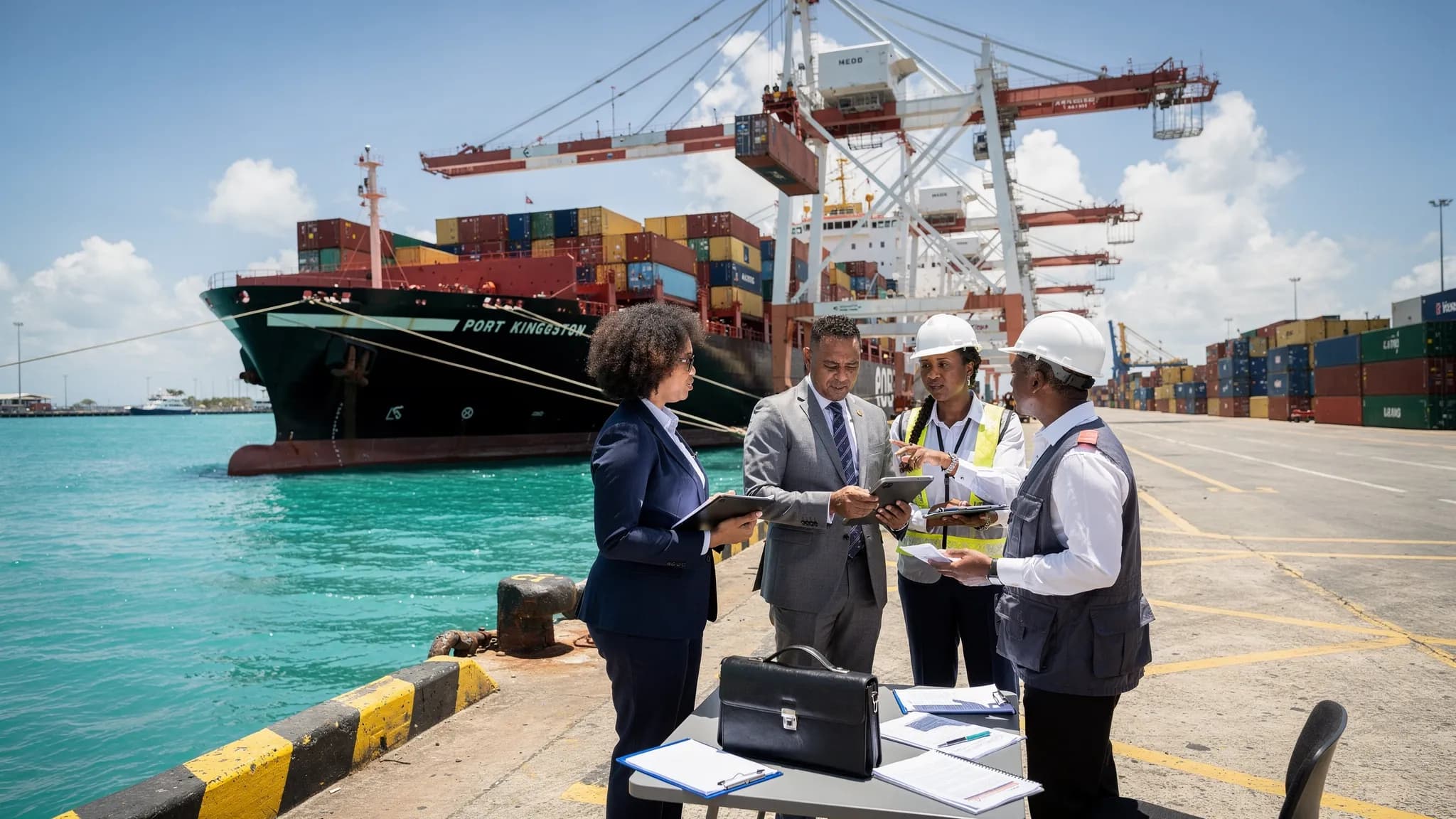
Jamaica sits on some of the world’s busiest sea lanes, with the Port of Kingston playing an important role in regional transshipment and trade. When a vessel, cargo, or marine service dispute goes wrong, the commercial pressure can be immediate: ships keep moving, evidence disperses, and counter-parties may be based overseas.
That is why shipping law in Jamaica often turns on three practical tools and outcomes:
Arrest of a vessel to secure a maritime claim.
Maritime liens and other security interests that can elevate priority in payment.
Claims strategy (in rem, in personam, limitation, arbitration, evidence, and enforcement) to turn a loss into a recoverable result.
Global context matters too. According to UNCTAD, over 80 percent of world merchandise trade by volume is carried by sea, which makes predictable maritime enforcement essential for trade-driven economies and ports like Jamaica’s. See the UNCTAD Review of Maritime Transport.
This article explains how arrests, liens, and claims typically work in practice in Jamaica, what you should prepare before taking action, and where the biggest risks sit.
This is general information, not legal advice. Admiralty procedures and outcomes depend heavily on facts, documentation, and the applicable law.
Shipping disputes in Jamaica: the three questions that drive outcomes
Most shipping matters that escalate to formal action can be triaged quickly by answering three questions.
1) Can you arrest a ship (or a sister ship) to obtain security?
An arrest is often the fastest way to convert a cross-border dispute into a secured position. If a vessel is due to call at a Jamaican port, the window can be short.
2) Do you have a maritime lien (or another claim that ranks highly)?
Priority can determine whether you get paid in full, partially, or not at all, especially if multiple creditors compete against limited sale proceeds.
3) What is the correct claim pathway: in rem, in personam, arbitration, or settlement?
The best technical claim is not always the best commercial move. Shipping losses can involve multiple contracts (bill of lading, charterparty, ship management, P&I cover, terminal terms) and multiple forums.
Key concepts: arrests, in rem claims, and security
What “arrest” means in shipping law
A ship arrest is a court-ordered detention of a vessel. It is not a criminal process. In commercial terms, it is leverage and protection: the vessel is held until security is provided or the claim is resolved.
Arrest is typically used to:
Secure a claim where the counter-party is offshore or asset-light.
Stop the vessel leaving the jurisdiction before security is posted.
Create settlement pressure because delays are expensive (port charges, crew, bunkers, schedule penalties).

In rem vs in personam (why the difference matters)
Shipping disputes often involve two parallel legal “targets”:
In personam: a claim against a person or company (for example, owner, charterer, ship manager, cargo interests).
In rem: a claim against the ship itself (or, depending on the legal basis, a related vessel interest), enforced by arrest and potentially judicial sale.
In rem proceedings are powerful because they can attach to a tangible, valuable asset that is physically within reach.
What counts as “security” to release a vessel
If a vessel is arrested, it is commonly released once acceptable security is provided. Depending on the circumstances and what the parties accept (and what the court orders), security may include:
Cash paid into court.
A bank guarantee.
A P&I Club letter of undertaking (commonly used internationally, but acceptance depends on negotiation and context).
Security is usually tied to an amount that covers the claim value plus a buffer for interest and costs, but the exact approach depends on procedure and the case.
Arresting a vessel in Jamaica: how it typically works in practice
Because time in port is limited, successful arrests usually look “boring”: the claimant’s documents are ready, the evidence is organised, and local counsel can move quickly.
Step 1: Confirm the ship’s call and identify the correct “target”
Before filing anything, you typically verify:
The vessel’s name, IMO number, flag, and ownership structure.
Expected arrival time, berth, and agent.
Whether the claim supports arrest of that specific vessel (or, in some cases, a sister ship).
Mistakes in identification are costly and can expose the claimant to damages risk.
Step 2: Assemble the evidence package (do this before the ship arrives)
Arrest applications move fast when the evidentiary file is tight. Typical documents include:
Contract documents (charterparty, bill of lading, service agreement, terminal receipts).
Invoices and statements of account.
Emails/WhatsApp correspondence confirming orders, performance, complaints, and admissions.
Survey reports, discharge reports, tally records, photos.
A calculation of the claim (principal, interest basis, costs).
A common failure point is proving the link between the debt and the vessel interest you are seeking to arrest.
Step 3: File the claim and apply for an arrest order
In most common-law admiralty systems, the claimant files an admiralty claim and seeks a warrant/order to arrest the vessel. You should assume the court will expect:
A clear statement of the maritime claim.
Evidence supporting a reasonably arguable case.
Proper undertakings where required (including potential exposure if the arrest is later found wrongful).
Step 4: Execution of the arrest and immediate operational consequences
Once the arrest is executed, the ship is typically not free to sail without release.
Operational consequences can include:
Accruing port and agency costs.
Schedule disruption and knock-on contractual disputes (especially under charterparties).
Safety and crew welfare considerations.
Step 5: Release, security negotiations, and the path to resolution
In practice, many arrests resolve quickly once security is posted and the parties agree on a roadmap (negotiation, arbitration, litigation timetable).
The claimant’s objective is usually not to “keep the ship”, it is to secure payment.
Wrongful arrest risk: the leverage has a price
Arrest is powerful precisely because it is disruptive. Courts therefore treat wrongful arrest seriously.
Claimants should factor in:
The legal threshold for arrest and the quality of evidence required.
Potential exposure to damages if the arrest is shown to be improper.
The need for speed without cutting corners on accuracy.
If you are considering arrest in Jamaica, it is usually worth getting local advice early, even before the vessel is in Jamaican waters, so your team is not improvising at the quay.
Maritime liens in Jamaica: what they are and why priority is everything
Maritime lien vs “maritime claim” (not the same thing)
A maritime claim is a broad category of claims connected to a vessel or maritime activity (for example, cargo damage, unpaid hire, crew claims, collision damage).
A maritime lien is narrower and stronger: it is a type of security interest that can attach to the vessel by operation of law and can survive changes of ownership, depending on the governing law and circumstances.
Priority matters most when:
There are multiple creditors.
The vessel is sold judicially and proceeds are distributed.
The owner is insolvent.
Common categories of maritime liens (general principles)
Across common-law admiralty practice, maritime liens commonly arise in areas such as:
Crew wages and certain crew-related claims.
Salvage.
Collision or damage done by a ship.
Some forms of master’s disbursements (fact-specific and jurisdiction-dependent).
The exact categories and ranking can be technical and can differ by jurisdiction and by applicable law, so treat “lien” as a term that must be verified, not assumed.
Other security interests that are not maritime liens (but still matter)
Not every strong shipping claim is a lien. Many claims rely on statutory rights, contractual rights, or other recognised maritime claims that still support arrest or security.
Here is a practical comparison to keep terms straight:
Concept | What it is | Why it matters | Common examples |
Maritime lien | Security interest arising by operation of law, attached to the vessel | Often ranks highly in priority and may survive ownership change | Crew wages, salvage, collision damage (depends on law) |
Statutory lien or right in rem | Security right created by legislation/procedure, often linked to defined claim types | May allow arrest even if not a maritime lien | Some “necessaries” style claims, port/harbour charges (fact-specific) |
Contractual security | Security created by agreement between parties | Enforceability depends on the contract, jurisdiction, and perfection steps | Mortgages, guarantees, assignment of earnings |
Claims that commonly lead to arrests, liens, or urgent steps
The fact patterns that most often trigger urgent shipping law action in Jamaica include:
Cargo loss and cargo damage
These matters often involve layered responsibility: carrier, charterer, freight forwarder, terminal, stevedores, and insurers.
Early claim strength usually depends on:
Condition evidence at load and discharge (clean bills, clausing, surveyor notes).
Temperature logs for reefer cargo.
Tally discrepancies and seal integrity.
Notice timelines and contractual terms.
Unpaid bunkers, supplies, and ship services
Suppliers often face the classic shipping risk: you deliver to a moving asset for a counter-party incorporated elsewhere.
Key documents include:
Purchase order chain and confirmation of who ordered (owner vs charterer vs manager).
Delivery receipts and bunker delivery notes.
Terms and conditions and jurisdiction clauses.
Charterparty disputes: hire, off-hire, demurrage, and performance
Charterparty disputes frequently turn on:
Clause wording and incorporated terms.
Time bars and notice requirements.
Evidence of delays (NOR, SOF, port logs, AIS data).
Collisions, allisions, and port damage
These claims can become evidence-heavy quickly. Preservation steps matter:
Statements from crew and pilots.
VDR data where available.
Photographs, drone imagery, and damage surveys.
Port authority and terminal reports.
Arrest to obtain security for arbitration
Many shipping contracts require arbitration (often outside Jamaica). Even so, arrest and security steps may still be pursued locally to secure the claim, depending on the governing framework and the facts.
Building a strong shipping claim file: what to do in the first 48 hours
If you anticipate a dispute escalating, the first two days are about evidence and control.
Preserve documents and operational data
Shipping disputes are won with contemporaneous records. Prioritise:
Contracts, addenda, and incorporated terms.
Bills of lading, mate’s receipts, delivery orders.
SOF, port logs, pilotage records, bunker records.
Email threads and messaging logs.
Identify all potentially liable parties
Many claims fail commercially because the claimant sues the wrong entity or cannot enforce against the right one.
You typically map:
Registered owner vs beneficial owner.
Charterer(s) and sub-charterers.
Ship manager and technical operator.
Local agents and terminal operators.
Quantify the claim and choose the remedy that matches the goal
A precise claim schedule improves both court credibility and settlement leverage:
Principal amounts.
Interest basis and period.
Costs already incurred and expected costs.
Any mitigation steps taken.
Timing, costs, and settlement strategy: the commercial realities
Arrest is a tool, not an end state
The best arrest outcomes are usually:
Security posted quickly.
The ship released.
The dispute moved into an orderly forum (settlement, arbitration, or court timetable).
Keeping a ship under arrest for a long time can create compounding costs and strategic risk, including arguments about proportionality and damages.
Expect fast-moving negotiations once the vessel is detained
Once the arrest happens, discussions often focus on:
Amount and form of security.
Without prejudice settlement range.
Agreement on jurisdiction or arbitration steps.
A claimant who arrives with a clear evidence pack and a credible quantum analysis is much more likely to obtain satisfactory security promptly.
Choosing the right legal support in Jamaica
Because shipping law disputes are cross-border by nature, the most effective approach is often a coordinated team: local Jamaican admiralty capability plus overseas counsel where the main proceedings (or arbitration) will occur.
When you speak to counsel, the most helpful information to provide upfront is:
The ship’s expected port schedule and agent details.
The contracts and the exact counter-party name.
A one-page chronology and the current loss figure.
What you want (security, payment, injunction-style relief, declaratory outcome).
If you need Jamaica-based support for an admiralty or shipping matter, you can start with Henlin Gibson Henlin, a Jamaica law firm with experience across complex disputes, including shipping-related litigation and strategy.

Practical takeaways for “Shipping Law Jamaica: Arrests, Liens, and Claims”
Speed is a strategic advantage: if a ship is calling in Jamaica, the arrest window can be short.
Terminology affects outcomes: not every maritime claim is a maritime lien, and priority can decide recovery.
Evidence wins: courts and counterparties respond to contemporaneous records, tight quantum, and clear legal theory.
Security is often the real goal: arrests commonly resolve once acceptable security is in place and a forum is agreed.
Handled well, Jamaica’s admiralty tools can turn an offshore shipping dispute into a secured, manageable process. Handled poorly, an arrest can become expensive, slow, and risky. The difference is usually preparation: correct target, correct documents, and a realistic claim strategy aligned with commercial objectives.