
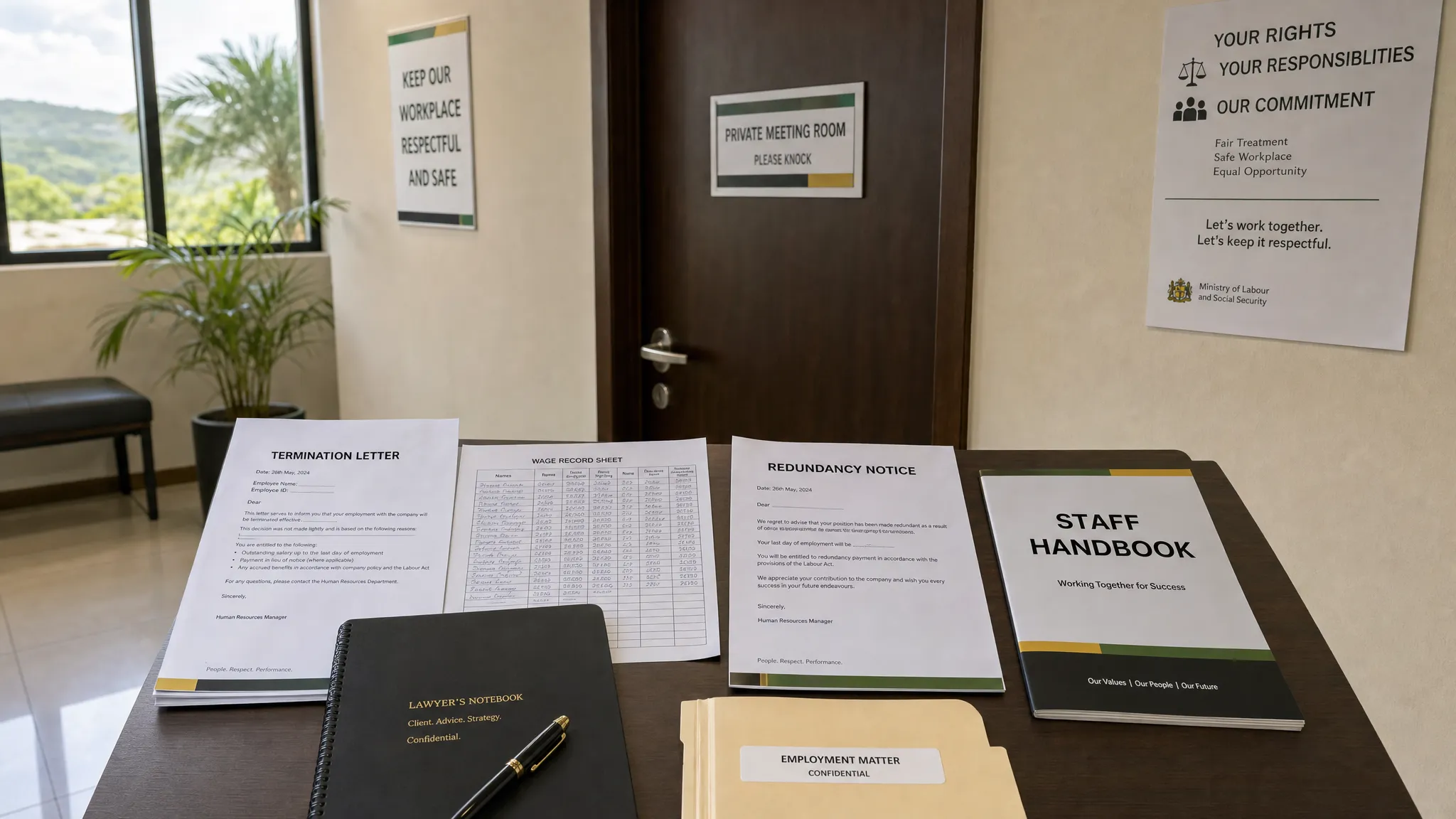
Employment issues often begin as uncomfortable conversations: a warning letter that feels unfair, a dismissal that happens without clear reasons, wages that are delayed, or a redundancy process that seems rushed. Sometimes the problem can be resolved internally. Other times, waiting too long can weaken your position, increase financial exposure, or make a workplace relationship impossible to repair.
Calling an employment disputes lawyer does not always mean you are heading to court. In many cases, early legal guidance helps you understand your rights, assess your risks, preserve evidence, and resolve the matter before it becomes more expensive or public. This is especially important in Jamaica, where employment disputes may involve contracts, statutory entitlements, workplace policies, collective bargaining issues, disciplinary procedures, and claims before labour authorities or tribunals.
Below are the situations where it is wise to seek legal advice early, whether you are an employee, an employer, a director, or an HR decision-maker.
What does an employment disputes lawyer do?
An employment disputes lawyer advises on disagreements arising from the employment relationship. These disputes may involve termination, redundancy, unpaid wages, discrimination, harassment, disciplinary action, breach of contract, restrictive covenants, confidentiality, workplace investigations, or negotiated exits.
For employees, a lawyer can help determine whether the employer followed the law, the contract, and fair process. For employers, legal advice can reduce the risk of claims by ensuring decisions are properly documented, proportionate, and procedurally sound.
In practice, an employment disputes lawyer may assist with:
Reviewing employment contracts, HR policies, warning letters, termination letters, and settlement proposals
Advising on statutory entitlements, contractual rights, and procedural fairness
Drafting correspondence that protects your position without unnecessarily escalating the matter
Preparing for mediation, conciliation, tribunal proceedings, or court litigation
Negotiating a practical outcome where both sides can avoid prolonged uncertainty
If the matter is likely to become a broader civil claim, it may also help to understand how litigation attorneys evaluate disputes and manage evidence, especially where the dispute involves contracts, damages, injunctions, or reputational harm.
Call a lawyer before terminating an employee
For employers, one of the highest-risk moments in the employment relationship is termination. Even where an employer believes there is a good reason to dismiss, the process matters. A rushed or poorly documented dismissal may lead to claims of unfairness, breach of contract, unpaid entitlements, or reputational damage.
Legal advice is particularly important before dismissal where the employee has long service, has recently complained about workplace treatment, is pregnant or recently returned from leave, is part of a unionised environment, has raised health and safety issues, or holds a senior or sensitive role.
A lawyer can review whether the employer has a lawful basis for action, whether progressive discipline is appropriate, what notice or payment may be owed, and whether the employee should be invited to respond before a final decision is made. The goal is not simply to “win” a future dispute. It is to make a defensible decision at the right time, using a fair process.
Employees should also seek advice quickly after receiving a termination letter, especially if the reasons are unclear, the process felt predetermined, or the employer is asking them to sign a release or settlement agreement immediately.
Call a lawyer when redundancy is being considered
Redundancy is not just a business decision. It can create legal exposure if the selection process, consultation, notice, or payments are mishandled. Employers should obtain advice before announcing redundancies, not after employees have already been selected.
A lawyer can assist with planning the process, identifying objective selection criteria, checking contractual and statutory obligations, preparing communications, and reducing the chance that redundancy is later challenged as disguised dismissal or victimisation.
Employees should seek advice if the redundancy appears targeted, if their role still exists under a different title, if they were selected after raising a complaint, or if the employer has not explained how payments were calculated. Even where the business is genuinely restructuring, the employee may still have rights that should be properly assessed.
Call a lawyer if wages, leave, or benefits are disputed
Pay disputes can escalate quickly because they affect daily life and business trust. Common issues include unpaid salary, overtime disagreements, commission disputes, accrued vacation leave, deductions from wages, bonuses, pension-related concerns, or disagreement over whether someone is an employee or an independent contractor.
Classification is especially important. A contract may label a worker as an independent contractor, but the real working relationship may tell a different story. If the business controls how, when, and where the work is done, and the worker is integrated into the organisation, employment rights may still be relevant. Henlin Gibson Henlin has also addressed this issue in its guidance on employment contracts and independent contractor arrangements.
For employers, early advice can prevent a payroll issue from becoming a group claim or a labour complaint. For employees, advice can clarify what documents matter, how to calculate potential arrears, and whether the issue should be raised internally before taking formal action.
Situation | Why legal advice helps | Best time to call |
Termination or suspension | Checks fairness, notice, evidence, and process | Before the decision is final, or immediately after receiving notice |
Redundancy | Reviews consultation, selection, and payment obligations | Before announcements are made or soon after selection |
Unpaid wages or benefits | Clarifies entitlements and supports proper calculation | As soon as arrears or deductions are identified |
Workplace misconduct allegations | Protects due process and evidence handling | Before interviews, disciplinary hearings, or written responses |
Settlement or release agreements | Explains what rights may be waived | Before signing anything |
Call a lawyer when misconduct allegations arise
Workplace misconduct disputes can involve fraud, dishonesty, insubordination, harassment, violence, confidentiality breaches, misuse of company property, or conflict of interest. These matters can affect careers, businesses, licences, and reputations.
Employers should get legal advice before conducting a sensitive investigation, especially if dismissal is possible. The investigation should be fair, appropriately documented, and limited to relevant facts. Mishandling the process can create separate claims, even where the original concern was legitimate.
Employees should call a lawyer if they are accused of serious misconduct, asked to attend a disciplinary hearing, invited to submit a written statement, or suspended pending investigation. What is said early in the process can shape the entire dispute. A lawyer can help the employee respond clearly, preserve documents, and avoid admissions that do not reflect the full context.

Call a lawyer if discrimination, harassment, or victimisation is alleged
Allegations involving discrimination, harassment, sexual harassment, retaliation, or victimisation require careful handling. They are legally sensitive and personally difficult. They may involve internal policies, statutory obligations, confidentiality concerns, witness interviews, medical information, and reputational risk.
Employees should seek advice if they have been mistreated after making a complaint, denied opportunities for reasons that appear discriminatory, subjected to unwanted conduct, or pressured to resign. Employers should seek advice as soon as a complaint is made, even if the complaint appears informal. A poor response can worsen liability and workplace morale.
A lawyer can help identify the correct process, protect confidentiality, and ensure that both complainants and accused persons are treated fairly. Where appropriate, legal guidance can also support mediation or negotiated outcomes without ignoring the seriousness of the complaint.
Call a lawyer before signing a settlement agreement
Settlement agreements can be useful. They may resolve uncertainty, avoid litigation, and allow both sides to move on. However, a settlement usually involves compromise. An employee may be waiving claims. An employer may be paying money or agreeing to terms in exchange for finality.
Before signing, both sides should understand exactly what the agreement covers. Key terms may include payment amounts, tax treatment, references, confidentiality, non-disparagement, return of property, restrictive covenants, resignation wording, and withdrawal of complaints.
An employment disputes lawyer can assess whether the proposed terms are reasonable, whether important protections are missing, and whether the agreement could create unintended consequences. This is particularly important for senior employees, regulated professionals, executives, sales staff, and employees with access to confidential information.
Call a lawyer when the dispute may involve court, tribunal, or mediation
Not every employment dispute needs litigation. In many cases, negotiation, internal grievance procedures, conciliation, mediation, or arbitration may be more practical. However, the right route depends on the legal issue, the evidence, the urgency, and the outcome being sought.
For example, a claim focused on unpaid sums may require a different strategy from a claim involving an injunction to protect confidential information. A dispute involving unionised employees may follow a different path from an executive contract dispute. Where private dispute resolution is an option, it may be useful to compare arbitration and litigation as routes for resolving disputes.
A lawyer can help you choose the forum, prepare documents, calculate potential exposure, and avoid procedural mistakes. This matters because missing deadlines, sending careless emails, or failing to preserve evidence can reduce leverage long before a hearing takes place.
Warning signs you should not wait
Some employment disputes are urgent. If any of the following apply, it is usually sensible to call a lawyer promptly:
You have been asked to sign a termination, resignation, or settlement document under pressure
You received a disciplinary hearing notice involving serious misconduct
You believe redundancy is being used to remove you unfairly
You are an employer facing a complaint from multiple employees
Confidential information, trade secrets, client lists, or company devices are involved
The dispute concerns harassment, discrimination, retaliation, or reputational harm
You have received a demand letter, claim form, or notice from a labour authority
Delay can make it harder to gather evidence, reconstruct events, identify witnesses, or correct procedural errors. Early advice is often less expensive than repairing a flawed process later.
What to prepare before your first call
You do not need a perfect file before contacting a lawyer. Still, a well-organised summary helps the lawyer give more focused advice. Before the consultation, gather the employment contract, job description, staff handbook or relevant policies, warning letters, emails, WhatsApp messages, payslips, leave records, performance reviews, termination or redundancy letters, and any settlement proposal.
Write a short timeline of key events with dates, names, and what was said or done. Avoid editing documents or deleting messages. If you are an employer, preserve investigation notes, payroll records, meeting minutes, and decision-making documents. If you are an employee, keep copies of communications and make a note of witnesses while memories are fresh.
It is also helpful to identify your practical objective. Do you want reinstatement, payment, a reference, withdrawal of allegations, confidentiality, protection from future claims, or a clean exit? Employment disputes are not only legal problems. They are commercial, personal, and reputational problems too.
How early advice can change the outcome
The best time to call an employment disputes lawyer is often before positions harden. A carefully drafted letter may resolve a wage issue. A properly run investigation may prevent a misconduct dispute from becoming a claim. A reviewed redundancy plan may reduce the risk of allegations that selection was unfair. A negotiated settlement may protect both sides from months of uncertainty.
For employers seeking a broader compliance view, it may also be useful to review the firm’s article on key employment law rules for Jamaican employers. For employees and employers alike, the main point is the same: employment disputes are easier to manage when legal strategy is considered early, not after the relationship has broken down completely.
Frequently Asked Questions
Do I need an employment disputes lawyer if I only want advice, not a lawsuit? Yes. Many people call a lawyer to avoid litigation. Early advice can help you understand your rights, respond properly, and resolve the issue through negotiation or an internal process.
When should an employer call a lawyer about an employee dispute? An employer should call before terminating, suspending, making redundancies, responding to harassment complaints, changing major employment terms, or sending sensitive correspondence.
When should an employee call a lawyer after being dismissed? Ideally, the employee should call as soon as possible after receiving notice of dismissal, especially before signing any release, accepting a settlement, or sending a detailed written response.
Can an employment dispute be settled without going to court? Yes. Many disputes are resolved through negotiation, internal grievance procedures, mediation, conciliation, or settlement agreements. The best approach depends on the facts, the documents, and the outcome each side needs.
What should I bring to a consultation with an employment disputes lawyer? Bring your contract, payslips, letters, emails, messages, policies, warning notices, termination documents, and a short timeline of events. If you do not have everything, bring what you can and explain what is missing.
Speak with Henlin Gibson Henlin about an employment dispute
If a workplace issue is becoming difficult to manage, early legal advice can make the difference between a controlled resolution and a costly dispute. Henlin Gibson Henlin provides client-focused legal services in Jamaica, including commercial litigation, civil litigation, compliance, risk, and dispute resolution support.
To discuss an employment dispute, contact Henlin Gibson Henlin and get guidance tailored to the facts, documents, and risks involved. This article is general information and should not be treated as legal advice for any specific situation.