
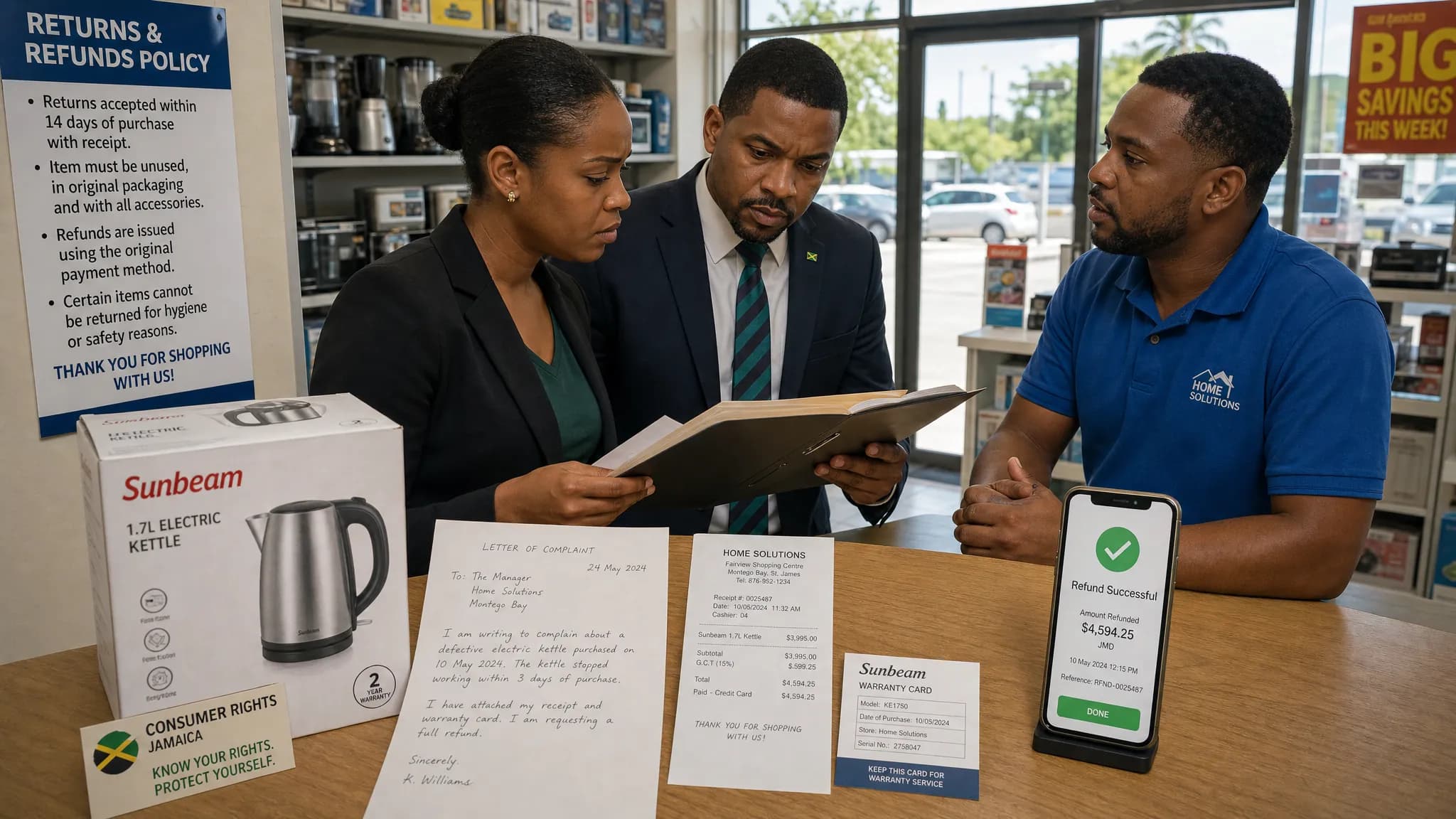
A delayed refund, a defective product, an unexpected charge or a misleading sales pitch can be frustrating. In some cases, the issue is best handled by a direct complaint to the business or the Consumer Affairs Commission. In others, waiting too long can weaken your position, increase your losses or make it harder to preserve evidence.
That is where consumer protection attorneys can help. In Jamaica, a lawyer can assess whether the issue is simply poor customer service, a breach of contract, misleading conduct, negligence, a regulatory complaint or a matter that may require court action. The right time to seek legal advice usually depends on the value of the dispute, the urgency of the harm, the complexity of the contract and the other party’s response.
This article is general information, not legal advice for any specific situation. If you are facing a serious consumer dispute, speak with a qualified Jamaican attorney about your facts and options.
Consumer protection in Jamaica: what it covers
Consumer protection law is designed to promote fair dealing between businesses and consumers. In Jamaica, consumer issues may involve statutes, contracts, common law principles and industry-specific regulations. The Consumer Affairs Commission is an important first point of reference for many consumer complaints, particularly where a consumer needs guidance, mediation or information about rights and obligations.
Common consumer protection issues include:
Defective goods, unsafe products or services that were not performed with reasonable care
Misleading representations about price, quality, origin, warranties or terms
Refusal to honour a refund, repair, replacement or agreed warranty
Unfair pressure tactics, unclear contract terms or unexplained fees
Financial, telecoms, travel, construction, insurance or online purchase disputes
Misuse of consumer data, privacy breaches or unauthorised sharing of personal information
Not every complaint requires a lawyer. If a retailer promptly replaces a faulty item or a service provider corrects a billing error, legal representation may be unnecessary. The question is whether the matter has legal, financial or reputational consequences that justify professional intervention.
When a complaint may be enough
Many consumer disputes start with a simple gap between what was promised and what was delivered. Before hiring an attorney, it is often sensible to gather your records and contact the business in writing. A clear complaint can sometimes resolve the issue quickly, especially if the amount is modest and the facts are straightforward.
A practical first step is to write a short, dated message stating what happened, what you purchased, what was promised, what went wrong and what remedy you want. Attach receipts, invoices, screenshots, warranty documents, photographs and any correspondence. Keep the tone firm but professional.
If the business responds constructively, you may not need to escalate. If it ignores you, delays repeatedly or changes its explanation, that is a sign that legal advice may be useful.
Clear signs it is time to hire consumer protection attorneys
The stronger the legal or financial risk, the earlier you should speak with an attorney. A lawyer does not only become useful when court proceedings begin. In many cases, early advice helps you avoid mistakes, preserve leverage and choose the correct forum for resolving the dispute.
Situation | Why legal advice may help |
The loss is significant | A lawyer can assess remedies, evidence and whether negotiation, a regulator or court action is appropriate. |
The business refuses to respond | An attorney’s letter may clarify the legal issues and push the matter toward resolution. |
The contract is complex | Legal advice can explain cancellation clauses, warranty terms, finance provisions or arbitration requirements. |
There is a risk to health, safety or property | Urgent action may be needed to preserve evidence and prevent further loss. |
Several consumers are affected | The issue may involve broader regulatory, competition or litigation considerations. |
Personal data has been misused | Privacy, data protection and consumer rights may overlap. |
You are being threatened with legal action | Early advice can prevent an avoidable admission or poor settlement. |
High-value purchases and financial loss
The more money at stake, the less you should rely on informal promises. This is particularly true for vehicle purchases, building work, appliances, professional services, travel packages, insurance products, loan-related charges or transactions involving deposits and staged payments.
For example, if a contractor takes a large deposit and fails to perform, the issue may go beyond inconvenience. You may need advice on contract termination, recovery of money paid, damages for loss, evidence of workmanship or whether urgent steps are required to prevent further loss. If a motor vehicle is sold with serious undisclosed defects, the facts may raise questions about representations made before sale, inspection records, warranty terms and whether the seller acted lawfully.
An attorney can help you distinguish between a weak complaint and a viable legal claim. That assessment matters because pursuing the wrong route can waste time and increase costs.
Misleading advertising, unfair terms and pressure sales
Consumers often seek help after discovering that the deal they agreed to is not the deal they were promised. This may involve a promotional price that was not honoured, a “limited time” offer that obscured important conditions, a warranty that is narrower than advertised or a contract term that was not properly explained.
In these situations, the written record is crucial. Save advertisements, brochures, website pages, WhatsApp messages, emails and receipts. If the representation was made orally, write down who said it, when it was said, where it was said and who else was present.
A lawyer can review whether the facts support a claim based on misrepresentation, breach of contract or another legal basis. Legal advice is especially useful where the business insists that the contract wording defeats everything you were told before you signed.
Defective goods, unsafe products and poor services
A defective product is not always a simple refund issue. If the defect caused injury, damaged property or created a safety risk, you should consider legal advice promptly. The same applies where a repair attempt worsens the problem or where the seller insists that the defect is your fault without evidence.
Do not throw away the product, packaging or defective part before seeking advice. Photographs and videos can help, but the item itself may be important evidence. If the matter involves technical issues, such as a vehicle, appliance, medical device, construction defect or electrical problem, an independent expert report may become necessary.
Consumer protection attorneys can also advise on the correct defendant. Depending on the facts, responsibility may rest with the retailer, supplier, manufacturer, contractor, installer or service provider. Identifying the right party early can save time.

Data privacy and digital consumer disputes
Modern consumer disputes often involve data. A retailer, platform, financial institution or service provider may hold identification documents, contact details, payment information, location data or other personal information. If that information is misused, disclosed without authority or handled carelessly, the dispute may involve both consumer protection and data privacy concerns.
In Jamaica, the Data Protection Act has increased the importance of responsible handling of personal data. If your complaint involves identity theft, unauthorised account access, unexplained sharing of information, repeated marketing after withdrawal of consent or a data breach notification, legal advice may help you understand your options.
This is particularly important for businesses as well. A company responding to a consumer complaint about data misuse should avoid casual explanations, incomplete investigations or promises that create further exposure. The legal response may need to consider privacy obligations, contractual duties, regulator expectations and potential litigation risk.
When a regulator is involved
Some consumer matters are best started with a regulator or statutory body. The Consumer Affairs Commission may assist with many marketplace complaints. The Fair Trading Commission deals with competition-related issues and unfair business practices within its mandate. The Office of Utilities Regulation may be relevant for certain utility complaints, while financial services issues may involve sector regulators depending on the institution and product.
A lawyer can help you decide whether to file a complaint, prepare supporting documents, respond to the other party’s defence or use the regulator’s process alongside negotiation. Regulatory complaints and legal claims are not always substitutes for each other. A regulator may help resolve or investigate an issue, but you may still need legal advice if you are seeking compensation, resisting enforcement, protecting your reputation or preparing for litigation.
If the other side has hired a lawyer
Once the business, supplier or service provider instructs attorneys, you should consider doing the same. A letter from the other side may contain legal arguments, settlement language, deadlines or allegations that affect your rights. Responding emotionally or admitting facts without advice can damage your position.
This does not mean every lawyer’s letter should trigger a lawsuit. Often, the best response is a carefully drafted reply that narrows the dispute and proposes a sensible resolution. However, you should understand the consequences before signing a settlement, accepting a partial refund or agreeing not to pursue further claims.
If the matter appears likely to move beyond negotiation, it helps to understand what litigation attorneys do when a dispute becomes formal, including evidence review, pleadings, court strategy and settlement discussions.
When arbitration, mediation or court action may be needed
Not every serious dispute belongs in court. Some contracts include arbitration clauses, and some matters are better suited to mediation or negotiated settlement. The right route depends on the contract, the remedy sought, the urgency, the cost, confidentiality concerns and whether you need an enforceable decision.
Litigation may be appropriate where the other side refuses to engage, the amount is substantial, urgent court orders are needed or there is a serious factual dispute. Mediation may work where both parties want to preserve a business relationship or reach a practical settlement. Arbitration may be required by contract or preferred for confidentiality and specialist decision-making.
Before choosing a route, parties should compare cost, timing, privacy, enforceability and appeal rights. Henlin Gibson Henlin has discussed these issues in more detail in its guide to choosing between arbitration and litigation.
Businesses also need consumer protection advice
Consumer protection is not only for individuals. Businesses in Jamaica should seek advice when they receive repeated consumer complaints, launch promotions, draft refund policies, update online terms, handle warranty claims or respond to regulator inquiries.
A poorly handled complaint can escalate into litigation, adverse publicity, regulatory scrutiny or a pattern of claims. Clear policies and legally reviewed customer communications reduce that risk. For businesses, consumer protection often overlaps with contracts, data privacy, competition law, advertising, financial services and reputational management.
This is why legal support should not be limited to crisis response. Preventive advice can help companies design fair terms, train staff, document customer interactions and resolve complaints before they become expensive disputes. For a broader view of prevention, see how law attorneys support businesses through risk.
What to prepare before meeting an attorney
You will get more value from the first consultation if you arrive with a clear timeline and organised documents. Attorneys need facts, not just frustration. The stronger your records, the easier it is to assess your position.
Prepare the following where available:
Receipts, invoices, contracts, quotations and warranty documents
Emails, letters, WhatsApp messages, screenshots and call notes
Photos, videos, inspection reports or expert assessments
A timeline of key dates, including purchase, delivery, complaint and response dates
Names of people involved, including sales representatives and managers
Copies of any regulator complaint or response from the business
A short summary of the outcome you want, such as refund, repair, replacement, compensation or apology
Be honest about weaknesses in your case. If you signed a document, missed a deadline, altered the product, delayed reporting the issue or accepted a partial remedy, your attorney needs to know. Surprises are easier to manage early than after formal proceedings begin.
How attorneys evaluate a consumer protection claim
A consumer protection attorney will usually look at both the legal merits and the practical outcome. A claim can be legally arguable but commercially unwise if the cost, delay or evidential burden outweighs the likely recovery. Conversely, a modest claim may justify legal action if it involves serious misconduct, ongoing loss or a principle that matters to your business.
Key questions include whether there was a contract, what terms applied, what representations were made, whether the goods or services failed to meet what was promised, what loss can be proven and whether the other party has a viable defence. The attorney will also consider limitation periods, the appropriate forum and whether settlement is realistic.
Good legal advice should help you make a decision, not simply intensify the dispute. Sometimes the best outcome is a negotiated repair or refund. Sometimes it is a formal claim. Sometimes it is walking away because the evidence or economics do not support further action.
Frequently Asked Questions
Do I need a lawyer before contacting the Consumer Affairs Commission? Not always. Many consumers can make an initial complaint themselves. You should consider legal advice first if the loss is substantial, the facts are complex, there is a safety issue, the business has already involved lawyers or you may need compensation beyond a simple refund.
Can consumer protection attorneys help with online purchases in Jamaica? Yes, depending on the facts. Online disputes may involve misleading descriptions, non-delivery, defective goods, payment issues, platform terms, privacy concerns or cross-border complications. An attorney can advise whether the seller, platform, payment provider or another party may be responsible.
Should I accept a partial refund from the business? Be careful. A partial refund may be sensible, but the wording matters. If you sign a release or agree that the payment is in full and final settlement, you may give up the right to pursue the rest of your claim. Get advice if the amount is significant.
What if the contract says there are no refunds? A “no refund” statement does not automatically answer every legal question. The facts, representations, product condition, service quality and applicable law may still matter. An attorney can review whether the term is enforceable in your circumstances.
How quickly should I seek legal advice? Seek advice as soon as the dispute involves major loss, injury, safety concerns, data misuse, legal threats or repeated refusal to resolve the matter. Delay can make evidence harder to collect and may affect your options.
Need guidance on a consumer protection dispute in Jamaica?
If a consumer dispute is becoming costly, complex or difficult to resolve, early legal advice can help you choose the right strategy. Henlin Gibson Henlin provides client-focused legal services across litigation, compliance, risk, data privacy and related commercial matters in Jamaica.
To discuss whether your issue requires legal intervention, visit Henlin Gibson Henlin and seek advice tailored to your circumstances before the dispute escalates further.