
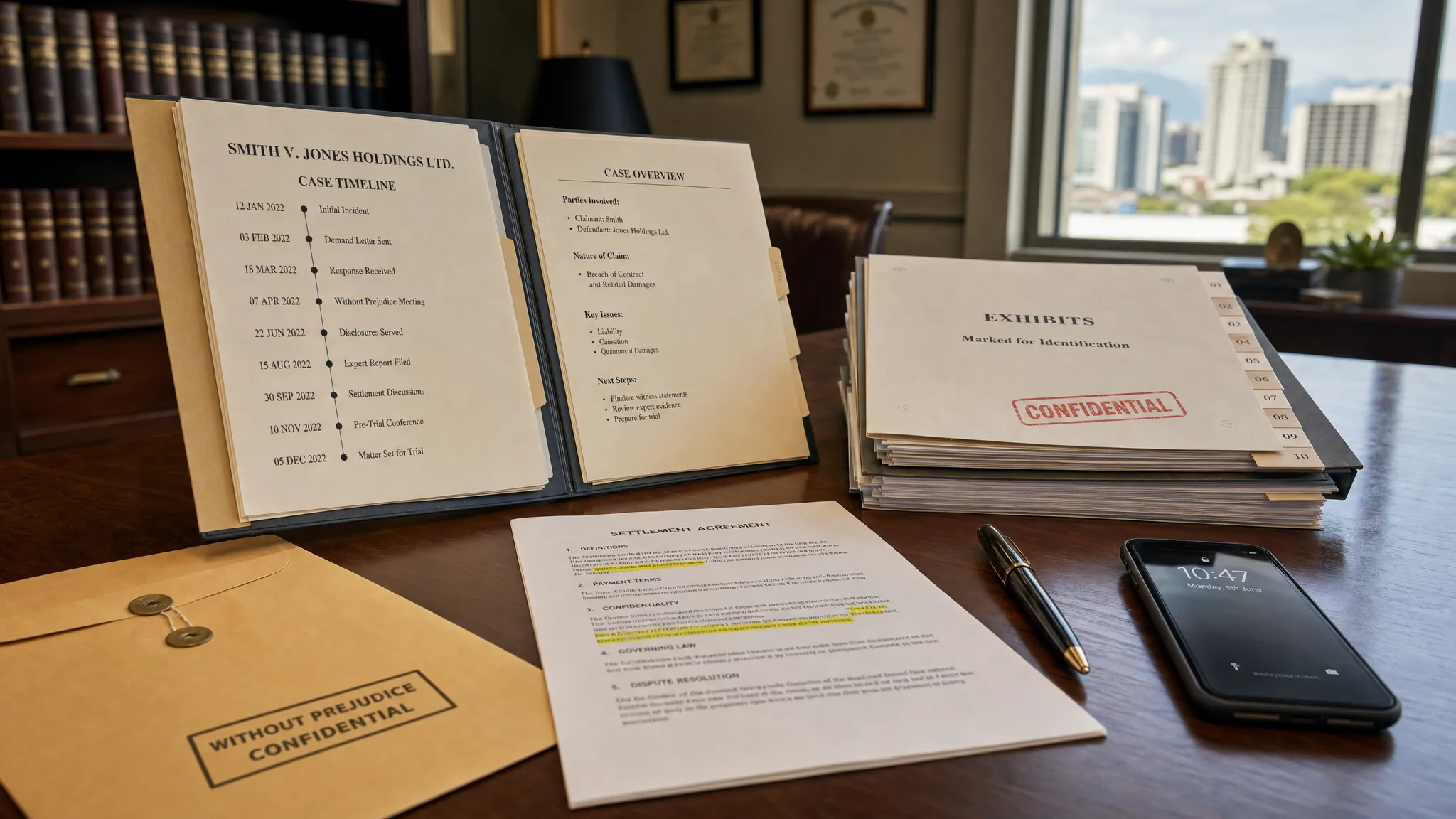
High-stakes legal cases are different from ordinary disputes. The financial exposure may be significant, the facts may be sensitive, the timeline may be compressed, and the outcome may affect a business, a family, a board, a brand, or a public reputation for years.
In those moments, clients do not simply need someone who knows the law. They need partners in law, legal advisers who can help them think clearly, act strategically, and protect their position under pressure.
That phrase should not be understood only as a formal law firm title. In serious matters, a partner in law is a trusted adviser who understands both the legal issues and the practical consequences of each decision. They help clients answer the question that matters most: what is the best course of action, legally, commercially, and reputationally?
What makes a case high-stakes?
A case becomes high-stakes when the consequences go beyond the immediate legal claim. The amount in dispute may be large, but money is only one factor. A matter can also be high-stakes because it involves confidential data, regulatory scrutiny, intellectual property, shipping assets, shareholder control, employment fallout, banking exposure, or the possibility of an appeal.
For businesses in Jamaica, this may include a contract dispute that threatens a key revenue stream, an urgent injunction application, a data privacy incident, a banking claim, a commercial arbitration, or a dispute involving foreign parties. For individuals, it may involve reputation, property, employment status, or personal liability.
Jamaica’s legal system is rooted in the common law tradition, with court procedures, evidentiary rules, and appellate routes that can strongly affect strategy. The Judiciary of Jamaica provides official information on the court system, while Henlin Gibson Henlin’s overview of the Jamaican legal system explains the broader framework.
In high-stakes cases, early choices can shape everything that follows. What you say in correspondence, which forum you choose, how evidence is preserved, and whether you negotiate or litigate immediately can all affect leverage later.
Why partners in law matter from the start
A strong legal partner does more than react to problems. They help frame the matter correctly before positions harden or deadlines are missed.
This is especially important because clients often arrive with symptoms rather than the full legal problem. A business may say that a supplier breached a contract, but the real issue may involve force majeure, payment security, insurance, customs documentation, urgent replacement supply, and reputation with customers. A company may describe a staff dispute as a disciplinary issue, while the deeper risk may involve termination procedures, data handling, whistleblowing, or confidentiality.
The right legal adviser helps identify the real issues, then builds a strategy around the client’s objective. That objective may be winning at trial, securing urgent relief, limiting financial exposure, preserving a commercial relationship, avoiding publicity, or preparing for settlement from a position of strength.
High-stakes issue | Why a legal partner matters |
Commercial or banking dispute | Helps assess liability, evidence, remedies, enforcement risk, and settlement leverage. |
Data privacy incident | Supports legal compliance, regulator-facing strategy, contracts, and reputational risk management. |
Intellectual property conflict | Protects brand value, trade secrets, licensing rights, and market position. |
Admiralty or shipping matter | Coordinates urgent asset, cargo, contract, and jurisdictional considerations. |
Arbitration or mediation | Helps choose process, prepare evidence, and negotiate without weakening legal rights. |
Appeal | Evaluates legal errors, standards of review, record preparation, and procedural timelines. |
The point is simple: when the stakes are high, legal strategy must be built around the whole risk picture, not just the legal claim in isolation.
Strategy comes before action
One of the most valuable things partners in law provide is disciplined thinking before action is taken. In a serious dispute, speed matters, but rushing without strategy can be costly.
Before filing a claim, responding to a demand letter, terminating a contract, suspending an employee, issuing a public statement, or contacting a regulator, counsel should help clarify key questions.
What outcome is realistic, and what outcome is worth the cost of pursuing?
Which facts can be proven with documents, witnesses, expert evidence, or admissions?
Is urgent court relief needed to preserve assets, evidence, confidentiality, or business continuity?
Would arbitration, mediation, negotiation, or litigation provide the best route?
What communications could later be disclosed, challenged, or used against the client?
What deadlines, limitation periods, or procedural requirements must be protected immediately?
This strategic front-end work can make the difference between a case that is controlled and a case that controls the client. It also helps avoid the common mistake of treating every dispute as a fight to be escalated, when some cases require quiet containment and others require decisive action.
For a deeper look at advocacy in serious disputes, see Henlin Gibson Henlin’s article on what an advocate does in complex legal disputes.
Evidence can win or weaken the case
High-stakes cases often turn on evidence. A client may feel confident that the facts are obvious, but courts, tribunals, arbitrators, regulators, and opposing counsel do not decide matters based on confidence. They decide based on admissible evidence, credible witnesses, legal standards, and persuasive argument.
A legal partner helps clients preserve the right material early. That may include contracts, board minutes, emails, WhatsApp messages, invoices, shipping documents, policies, internal reports, access logs, employee records, intellectual property registrations, or expert analyses.
Just as importantly, counsel can help prevent avoidable harm. Poorly worded internal messages, incomplete investigations, accidental deletion of records, uncontrolled media comments, or uncoordinated responses from different departments can create problems that did not previously exist.
In complex matters, evidence management is not merely administrative. It is strategic. Lawyers must understand what the evidence proves, what it does not prove, what gaps exist, and how those gaps may be addressed lawfully.
Confidentiality also matters. Clients should understand how legal privilege, professional duties, and file handling work before sensitive material is shared too widely. Henlin Gibson Henlin has discussed these issues in its article on client confidentiality and file handling.

Complex cases often need more than one legal skill set
High-stakes matters rarely stay inside one neat practice area. A commercial dispute may raise data protection issues. A shareholder disagreement may involve employment, company law, banking covenants, and urgent injunctions. A shipping matter may involve contract interpretation, insurance, customs, and cross-border enforcement. An intellectual property conflict may require litigation strategy, licensing advice, and confidentiality measures.
This is where the idea of partners in law becomes especially valuable. Clients benefit from lawyers who can coordinate across disciplines, identify overlapping risks, and ensure that one legal step does not unintentionally damage another part of the matter.
For example, a business responding to a data privacy incident may need to consider obligations under Jamaica’s data protection framework and the role of the Office of the Information Commissioner. But the same incident may also trigger customer communications, vendor contract reviews, employment questions, cybersecurity evidence, and potential litigation. Treating it only as a compliance issue would be too narrow.
Similarly, arbitration may be commercially sensible where confidentiality, technical expertise, or cross-border enforceability matters. Henlin Gibson Henlin’s discussion of arbitration reform in Jamaica gives useful background on why arbitration can be significant in commercial disputes.
The right forum can change the outcome
Choosing where and how to resolve a dispute is one of the most important strategic decisions in a high-stakes case. The options may include court proceedings, arbitration, mediation, direct negotiation, regulatory engagement, or a combination of these.
Litigation may be necessary where urgent relief is needed, where a binding public determination is required, or where the other side will not engage constructively. Arbitration may be appropriate where the contract requires it or where confidentiality and specialist decision-making are important. Mediation may help preserve business relationships and reduce cost, especially where both parties have an interest in a practical resolution.
A strong legal partner will not assume that the most aggressive route is always the best route. They will consider enforceability, cost, timing, publicity, legal merits, business disruption, and the client’s long-term interests.
This is particularly important in matters with international elements. A Jamaican business dealing with foreign counterparties may need advice on jurisdiction clauses, governing law, service outside the jurisdiction, recognition of foreign judgments or awards, and evidence located abroad. Local knowledge and international awareness both matter.
Clear communication reduces risk under pressure
In high-stakes cases, clients are often making decisions while under pressure. Directors may be concerned about governance duties. Executives may be managing operational disruption. Individuals may be worried about their finances, reputation, or future.
Good legal partners communicate in a way that supports decision-making. They explain options clearly, identify risks honestly, and distinguish between what is legally possible and what is strategically wise.
This means clients should expect more than general reassurance. They should receive practical guidance such as:
The strengths and weaknesses of the case.
The likely next steps and decision points.
The documents and witnesses needed.
The risks of litigation, settlement, delay, or public comment.
The cost and time implications of different routes.
Candour is essential. A lawyer who only tells a client what they want to hear may feel comforting at first, but that approach is dangerous in a serious matter. High-stakes cases require objective advice, even when the advice is difficult.
What to look for in partners in law
Choosing legal representation for a serious case should be deliberate. The best fit is not always the loudest advocate or the firm that promises the fastest result. Clients should look for judgement, experience, responsiveness, discretion, and the ability to explain strategy in practical terms.
What to assess | Strong sign | Warning sign |
Relevant experience | The lawyer can explain similar issues without overpromising. | The lawyer speaks generally but cannot connect experience to your matter. |
Strategy | You receive a clear plan, options, and risk assessment. | The first recommendation is action without understanding the facts. |
Communication | Advice is timely, direct, and understandable. | You leave meetings unsure what happens next. |
Team structure | Roles are clear and the matter has appropriate support. | You do not know who is responsible for key tasks. |
Confidentiality | Sensitive information is handled carefully from the start. | The lawyer is casual about documents, access, or communications. |
Costs | Fees, likely stages, and variables are discussed transparently. | Costs are vague or only addressed after work begins. |
If you are comparing firms, Henlin Gibson Henlin’s guide on law firm selection offers practical questions to ask before making a decision.
Why early legal involvement is often cheaper than late rescue
Many clients wait until a dispute has escalated before seeking legal advice. By then, deadlines may be close, correspondence may have been sent without legal review, evidence may be incomplete, and positions may have become harder to resolve.
Early involvement does not always mean immediate litigation. In many cases, it means preventing escalation, documenting the position properly, preserving rights, and creating a strategy before the other side dictates the pace.
This is especially important in regulated or reputation-sensitive matters. A poorly handled first response can increase exposure. A carefully prepared response can preserve options and create room for resolution.
The same principle applies to appeals. Appellate work often depends on how the matter was presented and preserved earlier. Legal partners who understand the possibility of appeal can help ensure that key arguments, objections, and records are properly managed from the beginning.
The value of judgement when the answer is not obvious
High-stakes cases are rarely simple. If the answer were obvious, the matter would likely have been resolved already. What clients need most is judgement: the ability to weigh law, evidence, timing, cost, leverage, and human behaviour.
That judgement is developed through experience, preparation, and a willingness to ask hard questions. Should the client fight or settle? Should they seek urgent relief or gather more evidence first? Should they speak publicly or remain silent? Should they preserve a relationship or make a decisive break? Should they litigate now or pursue mediation first?
There may be more than one legally available path. The role of a trusted legal partner is to help the client choose the path that best serves the objective while managing risk.
Frequently Asked Questions
What does partners in law mean in a high-stakes case? It means legal advisers who work as strategic partners, not just technical service providers. They help clients assess risk, protect evidence, choose the right forum, and make informed decisions under pressure.
When should I contact a lawyer for a serious dispute? You should seek legal advice as early as possible, especially before sending formal correspondence, terminating an agreement, responding to a claim, speaking publicly, or taking steps that could affect evidence or legal rights.
Does every high-stakes case need to go to court? No. Some matters require litigation, but others may be better resolved through negotiation, mediation, arbitration, or regulatory engagement. The right route depends on the facts, contracts, urgency, and desired outcome.
Why use a law firm rather than one lawyer for a complex matter? A complex case may involve several practice areas, urgent deadlines, large volumes of evidence, and strategic decisions at different stages. A law firm can provide coordinated support across litigation, compliance, commercial, privacy, intellectual property, arbitration, or appellate issues where needed.
How should I prepare for a first consultation on a high-stakes case? Prepare a short timeline, key documents, relevant correspondence, contracts, court papers if any, names of involved parties, and a clear explanation of your desired outcome. Be ready to discuss risks honestly, including facts that may not help your position.
Speak with Henlin Gibson Henlin about serious legal matters
When the outcome matters, legal representation should be strategic, practical, and client-focused. Henlin Gibson Henlin is a leading international law firm in Jamaica with experience across commercial litigation, civil litigation, banking litigation, compliance and risk, data privacy, intellectual property, admiralty and shipping, arbitration and mediation, and appellate matters.
If you are facing a high-stakes case, seeking early advice can help you preserve options and act with confidence. Contact Henlin Gibson Henlin to discuss your matter and the legal strategy that may be appropriate for your circumstances.