
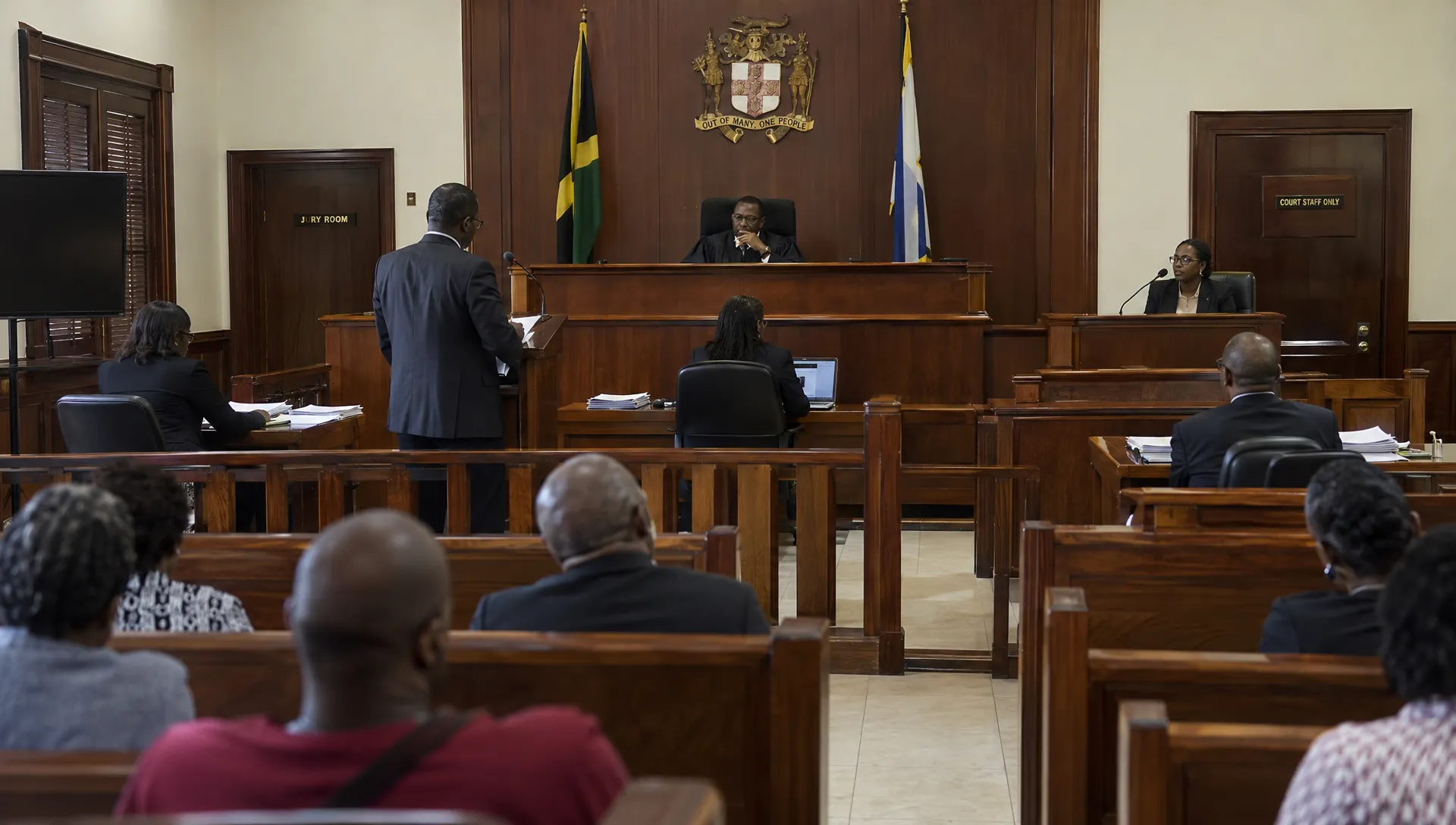
A persuasive account is only the starting point for civil litigation in practice. The real work is turning disputed events into admissible evidence, meeting procedural obligations and testing whether each witness’s account survives scrutiny. Documents that initially appear unhelpful, an overlooked email or a poorly explained calculation can change the assessment of a claim.
For Jamaican businesses and individuals, understanding the journey from disclosure to cross-examination helps clarify what their attorneys need from them, why preparation takes time and where avoidable risks arise.
Establish the rules and the issues before gathering proof
Civil litigation concerns the enforcement of civil rights and obligations, rather than prosecution for a criminal offence. Contract claims, debt recovery, property disputes and negligence claims are common examples. The usual civil standard of proof is the balance of probabilities.
General civil proceedings in Jamaica’s Supreme Court are governed by the Civil Procedure Rules 2002, as amended. Other courts and specialist proceedings have different requirements. The Supreme Court of Jamaica’s website provides a starting point for locating published rules and practice directions, but attorneys must also check amendments and the orders made in the particular case.
Once statements of case identify the allegations, admissions and denials, evidence gathering should focus on what remains disputed. In a hypothetical business-connectivity claim, for example, the central questions might concern the promised installation date, access to the premises and whether an alleged delay caused financial loss.
Disclosure in civil litigation in practice
Disclosure is not simply exchanging the documents each side wants the judge to see. Depending on the applicable obligation and court orders, it can extend to documents that undermine a party’s own position as well as those supporting it.
Under the Jamaican CPR framework, disclosure generally concerns documents within a party’s control. That concept can extend beyond physical possession to documents the party has a right to possess, inspect or copy. The precise scope needs legal assessment, particularly where records sit with related companies or outside service providers.
A sensible first step is to preserve potentially relevant material. Suspend routine deletion where necessary and identify the people, accounts and storage systems likely to hold records. Do not delete an awkward message, rewrite a historic note or replace an original file with an edited version.
Connect each document to a disputed issue
Using the hypothetical installation dispute, a working evidence review might look like this:
Record | Question it may help answer | Limitation to investigate |
Signed agreement | What service and delivery date were agreed? | Later variations may change the obligation |
Access emails | Was entry to the premises available? | The complete conversation may alter the meaning |
Installation logs | What work occurred and when? | Authors, timestamps and missing entries need checking |
Financial records | Was measurable loss suffered? | Revenue changes do not establish causation by themselves |
This issue-by-issue approach makes civil litigation in practice more disciplined: finding a relevant document is only the beginning, not proof that the claim succeeds.
Distinguish disclosure, inspection and privilege
Disclosure identifies documents in accordance with the applicable obligation. Inspection allows another party to examine documents or obtain copies, subject to any valid basis for withholding inspection. Neither step automatically makes a document admissible at trial or proves that its contents are true.
Legal professional privilege requires separate consideration. Confidential communications for legal advice, and qualifying material created for litigation, may attract protection. Copying an attorney into an ordinary business email does not automatically make it privileged.
A party claiming protection should follow the relevant procedure rather than silently omit material. Potentially privileged documents should be segregated for legal review before production because an accidental release can create difficult disputes about their use.
Privacy and commercial sensitivity also need careful handling. Personal data or confidential pricing is not automatically exempt from disclosure. Attorneys may need to seek directions about redaction, restricted access or another protective measure, rather than unilaterally withholding the material.
Keep electronic evidence usable and traceable
Electronic records bring particular challenges to civil litigation in practice. A screenshot may show a message but omit attachments, earlier replies, account details or information needed to establish its origin. Preserve native files where appropriate, alongside complete message threads and relevant metadata.
Keep a record of who collected material, where it came from and any changes made during export or conversion. Avoid passing the only copy of a file through several people without retaining the original. Where records are held overseas, access rights and local restrictions may require additional advice.
The identity of the record holder also matters. In a hypothetical connectivity dispute involving an overseas network, public information such as VitrumNet’s overview of its regional fibre network can provide background about an organisation’s role. It cannot establish which entity contracted with a particular customer or what that contract guaranteed.
If relevant records appear to be missing, attorneys should assess the explanation, the applicable disclosure duty and whether an application for further disclosure is justified. Broad requests untethered to the pleaded issues can increase expense without improving the evidence.
Use case management to narrow what must be proved
Case management gives the court an opportunity to define the route towards trial. Directions may address disclosure, witness statements, expert evidence, agreed facts, trial preparation and the time needed for the hearing.
For clients, civil litigation in practice requires treating those directions as operational deadlines. Someone must locate the records, arrange witness availability and provide instructions while the attorney still has time to review the material. A deadline to file evidence is not the date to begin collecting it.
Missing a deadline can lead to costs consequences, restrictions on evidence or other sanctions. Any application for an extension or relief needs prompt attention; success should never be assumed.
Case management also helps distinguish genuine factual disputes from matters that can be agreed. If both parties accept that an invoice was issued on a particular date, there may be no reason to spend trial time proving that fact. Their disagreement may instead concern whether payment was contractually due.
An application capable of resolving all or part of the proceedings without a full trial may also be appropriate, but the procedural test must be satisfied. It is not enough that one party believes the other side has a weak case.
Turn records into accurate witness evidence
A witness statement should explain what the witness can properly say about relevant events. It should distinguish personal recollection from information obtained through documents or other people. It is not a substitute for legal submissions.
In civil litigation in practice, reliable witness evidence often depends on acknowledging its limits. A witness who cannot remember a meeting should not be encouraged to describe it as though they can. They may be able to identify a contemporaneous note and explain how it was made, subject to the applicable evidence rules.
Documents should be used to test and clarify recollection, not to manufacture it. Differences between accounts need investigation rather than automatic harmonisation. Two employees may honestly remember an event differently because they attended different parts of a discussion.
Preparation should cover the statement’s accuracy, the documents mentioned and the likely subjects of questioning. It must not become coaching a witness to give a preferred answer. Henlin Gibson Henlin’s guidance on managing witnesses in a commercial court case explores the practical coordination involved.
Written witness statements commonly stand as evidence-in-chief where the applicable procedure and directions provide for that. Parties should not assume that omissions can simply be repaired through unrestricted oral evidence at trial.
Use expert evidence for genuinely technical questions
Some issues require specialist knowledge rather than factual recollection. Depending on the dispute, that might include engineering performance, valuation, forensic accounting or the technical cause of a service failure.
Expert evidence is subject to the court’s control and applicable permission requirements. An expert’s duty to assist the court takes priority over the interests of the party instructing or paying them. Their role is not to advocate a client’s preferred conclusion.
Instructions should identify the questions requiring expertise and provide the necessary material, including documents that may undermine an initial opinion. Attorneys should also distinguish between an employee describing work they performed and someone offering an expert opinion about technical causation.
An expert report does not remove the need to prove the underlying facts. A loss calculation based on an unproved assumption about the length of an interruption remains vulnerable.

Prepare a trial bundle that supports clear questioning
A trial bundle should help the court find the material needed to decide the issues. Subject to the court’s directions, useful preparation includes consistent pagination, a clear index, legible documents and reliable references in witness statements and submissions.
Avoid unnecessary duplication. Several copies of the same email can obscure the chronology, particularly if attachments or replies differ. Where versions matter, identify the differences rather than assuming they will be obvious during questioning.
Document status also needs attention. Agreeing that a document belongs in a bundle does not necessarily mean agreeing to its authenticity or the truth of everything it contains. Any agreement should be clear about its scope.
Effective civil litigation in practice connects each important proposition to a witness, document, admission or other permissible evidential foundation. The bundle is an aid to that exercise, not a replacement for it.
Cross-examination tests the account against the evidence
Cross-examination allows an opposing party to challenge a witness’s evidence. It may test perception, memory, consistency, credibility or the basis for an opinion. Its value comes from focused questions, not confrontation for its own sake.
In the hypothetical installation claim, a witness might say that the customer repeatedly refused access. Relevant questioning could examine which dates were offered, who requested access and whether an email shows that an appointment was actually confirmed.
A different line of questioning might concern loss. A manager may accurately describe disruption without being able to establish how much profit was lost. Financial records, alternative causes and steps taken to reduce the impact may need separate examination.
Significant contradictory material should be addressed fairly. Where a party intends to invite the court to reject an account on a particular basis, procedural fairness generally requires giving the witness an appropriate opportunity to respond.
Cross-examination in civil litigation in practice is therefore about testing specific propositions. The court can control irrelevant, repetitive or improper questioning, and an aggressive manner does not make a weak proposition stronger.
What witnesses should do when answering
Witnesses should listen to the complete question and answer truthfully from their own knowledge. If a question is unclear, they should ask for clarification. If they do not know or cannot remember, they should say so rather than guess.
When directed to a document, take time to locate and read the relevant passage. A witness should not accept an inaccurate summary simply because it is put confidently. Equally, they should acknowledge a genuine error instead of defending it unnecessarily.
Re-examination may allow the party who called the witness to clarify matters arising from cross-examination, subject to the court’s control. It is not an unrestricted opportunity to repeat the original evidence or introduce an entirely new case.
Keep judgment, costs and settlement in view
The judge assesses the evidence against the legal requirements of the claim and defence. Proving that something went wrong does not necessarily establish liability, causation and the remedy sought. Each element needs attention.
Costs are another practical consideration. In civil litigation in practice, the amount spent on lawyers and evidence is distinct from any costs recoverable from another party. Costs orders are discretionary and may not reimburse all expenditure. The applicable regime, outcome, conduct and relevant offers can affect the position.
Duration depends on the court, complexity, compliance, applications and witness or expert requirements. A responsible estimate should identify assumptions rather than promise a fixed completion date.
Settlement remains available during proceedings, including after disclosure reveals new strengths or weaknesses. Mediation can help parties negotiate an outcome without a trial determination. Arbitration ordinarily requires a valid arbitration agreement or subsequent agreement; one party cannot simply impose it.
Keep settlement communications separate from evidential records and seek advice about their protection. The rules governing without prejudice communications depend on substance and context, not merely the label added to an email.
Frequently asked questions
Must I disclose documents that damage my case? Potentially, yes. Disclosure can include adverse documents within the applicable scope and your control. Ask your attorney to assess the obligation and any valid privilege claim rather than withholding material yourself.
Can emails and WhatsApp messages be used as evidence? They may be relevant and admissible, depending on the circumstances and evidence rules. Preserve complete conversations and available original records. Authenticity, context and the identity of the sender may still need to be established.
Will every witness have to attend court? Not necessarily. Attendance depends on the evidence relied on, the applicable rules, court directions and any agreement between the parties. Do not assume that submitting a statement removes the need to attend for questioning.
Can a case settle after disclosure or cross-examination? Yes. Parties can negotiate while proceedings continue. Any agreement should address the claims resolved, payment or other obligations, costs and the procedural steps needed to conclude the case.
Discuss the evidence before the next deadline
Understanding civil litigation in practice helps clients give better instructions and make informed decisions about trial or settlement. Preserve original records, identify the next court deadline and raise gaps in the evidence early.
Henlin Gibson Henlin provides civil litigation, commercial litigation, arbitration and mediation services in Jamaica. Seek advice on the rules, evidence and strategic options applicable to your dispute. This article provides general information, not advice on a particular case.