
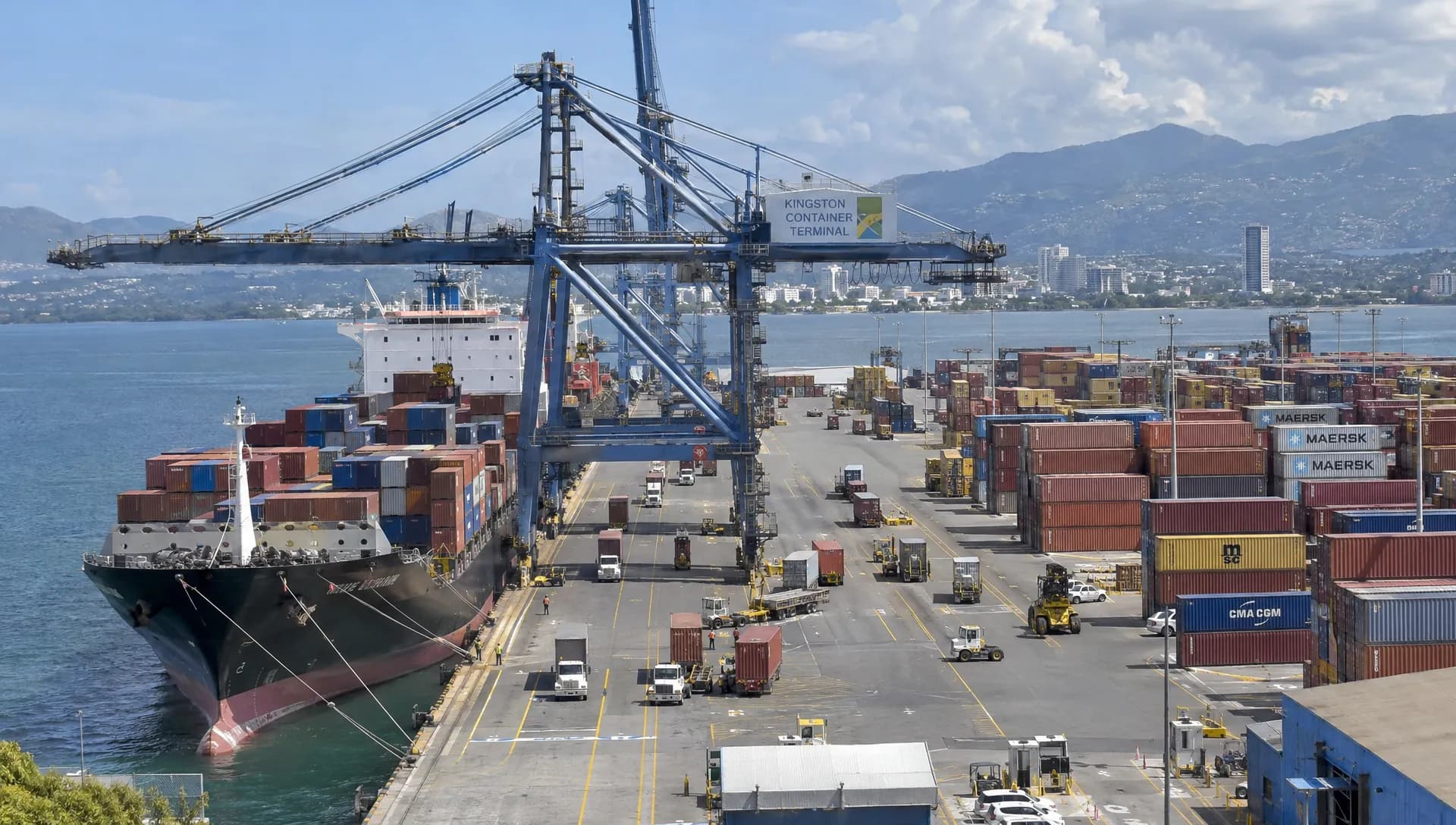
Demurrage and detention charges can turn a delayed container into an expensive problem for a Jamaican importer. The immediate challenge is not simply getting the goods cleared. It is identifying which charging clock is running, what stops it and whether the invoice matches the contract.
For shipments through Kingston or another Jamaican port, customs clearance, shipping line release and terminal collection are separate steps. Completing one does not necessarily complete the others. This guide explains the charges, shows how to check a calculation and outlines practical steps for preventing or disputing an avoidable bill.
What demurrage and detention charges mean
For containerised imports, demurrage generally concerns a shipping line’s container remaining inside the terminal beyond the agreed free period. Detention generally concerns keeping that container outside the terminal beyond the permitted period before returning it empty.
The distinction is useful, but the applicable contract and tariff control the actual charge. Some carriers combine the two periods, while others use different terminology.
Charge | What it generally relates to | What to check |
Demurrage | The carrier’s container remaining at the terminal after free time expires | Start date, free days, collection event and daily rate |
Detention | The carrier’s container remaining outside the terminal beyond the permitted period | Gate-out date, return deadline and accepted empty-return event |
Terminal storage | Space occupied by cargo or a container at the terminal | The terminal’s separate tariff and storage-free period |
Other service charges | Services such as reefer electricity, handling or inspection moves | Whether the service occurred and which tariff authorises it |
Terminal storage and carrier demurrage may appear on the same shipment. That does not automatically mean the importer has been charged twice for the same service, although each item should have a contractual basis.
This article concerns container imports. Demurrage under a voyage charter, usually connected with exceeding agreed loading or discharge time, requires a different contractual analysis.
How free time works, and why the dates matter
“Free time” is the period during which the relevant demurrage or detention charge does not accrue. It does not necessarily mean that storage, handling or other services are free.
Before relying on an advertised allowance, establish whether it applies to your shipment, container type and booking. A negotiated extension should be confirmed in writing, including whether it extends carrier free time, terminal storage-free time or both.
The calculation usually turns on four questions:
When does the clock start? The trigger may be discharge, availability, gate-out or another event specified in the terms.
Which days count? Calendar-day calculations can include weekends and public holidays, unlike working-day calculations.
What stops the clock? Collection, empty return or another defined event may be required, with rules about whether that day is included.
Are the periods separate or combined? Combined free time can leave less time for unloading and return if clearance uses most of the allowance.
Do not assume that a customs inspection, document query or public holiday automatically pauses either clock. A customs release also does not necessarily stop charges if the container remains uncollected.
Ask for the shipment’s last free day and the approved empty-return location. Treat those as operational deadlines, not merely details to check when an invoice arrives.
A worked example of demurrage and detention charges
The following figures are illustrative only. They are not Jamaican market rates or a quotation from a carrier or terminal.
Assume a shipment has separate allowances. Demurrage-free time runs from Day 1 through Day 5, with a flat charge of US$75 per chargeable day afterwards. The container leaves the terminal on Day 8, and the terms count the collection day.
Detention-free time starts the following day and runs from Day 9 through Day 11. The empty container is accepted back on Day 14, and the terms count that return day. The illustrative detention rate is US$50 per day.
Item | Chargeable period | Calculation | Amount |
Demurrage | Days 6, 7 and 8 | 3 × US$75 | US$225 |
Detention | Days 12, 13 and 14 | 3 × US$50 | US$150 |
Combined total | Six chargeable days across separate periods | US$225 + US$150 | US$375 |
This excludes terminal storage, other services, taxes and currency-conversion costs. Actual tariffs may increase the daily rate as the delay continues, making the allocation of days between charging tiers important.
A correct calculation therefore needs more than an arrival date and an invoice total. It needs the applicable terms and the recorded events that start and stop each charge.
Who is responsible for paying?
The party receiving the invoice is not necessarily the only party whose obligations require examination. Start with the bill of lading or sea waybill, booking documents, any container-use undertaking and incorporated tariff. Check how those documents define the shipper, consignee, merchant and other potentially liable parties.
Your sale contract also matters. An Incoterms rule may allocate costs and responsibilities between buyer and seller, but it does not, by itself, determine every obligation owed to a carrier or terminal. An importer might have an obligation under the transport documents and a separate contractual claim against a supplier whose late documents caused the delay.
Likewise, appointing a customs broker or haulier does not automatically transfer all delay costs to that provider. Liability depends on the agreed scope of work, what went wrong and whether the failure caused the charges claimed.
Distinguish the immediate payment demand from any later recovery claim. If goods remain at the terminal while the importer argues with a supplier, further charges may accumulate. Reducing continuing losses can be necessary even when another party may ultimately bear responsibility.
Where terms select foreign law, arbitration or a foreign court, that choice also needs review before deciding how and where to pursue a dispute.
Prevent charges before the container arrives
The most effective controls begin before discharge. Confirm that the commercial invoice, packing list, transport documents and any required permits are consistent and available to the people handling clearance. Use the Jamaica Customs Agency’s official guidance to check relevant procedures, with shipment-specific assistance from your broker.
Assign responsibility for monitoring each release stage. Customs release, the carrier’s delivery authorisation and terminal release may each require different documents or payments. A container can be cleared by Customs but still unavailable for collection.
Keep one shared shipment record showing the expected arrival, confirmed free-time terms, last free day, outstanding requirements and collection arrangements. Update it when dates or instructions change, rather than relying on an earlier arrival estimate.
Plan the return journey as carefully as collection. Before dispatching the haulier, verify the authorised depot, opening hours, appointment requirements and any restrictions affecting that container. Allow enough time for unloading and an unsuccessful return attempt.
For refrigerated cargo, separate the equipment-use calculation from electricity and other service charges. For all containers, obtain the empty-return receipt or equipment interchange record and retain it with the shipment file. An instruction to return the container is not proof that it was accepted.

How to challenge an invoice properly
A useful dispute identifies the precise error, supporting record and correction requested. Simply describing the total as excessive gives the recipient little to investigate and may not stop further charges.
Reconcile the dates and contractual terms
Request an itemised calculation identifying the container number, charging period, free-time allowance, rates and charging tiers. Ask for the tariff version or negotiated terms said to apply to the shipment, rather than assuming the tariff currently online governed an earlier booking.
Compare that calculation with discharge records, availability notices, release confirmations, gate-out records and the accepted empty-return receipt. Check for an omitted extension, an incorrect container category, overlapping billing periods or a return date that differs from the depot’s record.
If you dispute the inclusion of a particular day, explain which contractual provision supports your position. A disagreement over calendar days and working days can materially change the calculation.
Document obstacles outside your control
Preserve evidence of refused returns, changed depot instructions, unavailable appointments, release-system failures or incorrect delivery documentation. Dated emails and records of attempted collection or return are more useful than a general statement that the process was delayed.
Explain how the obstacle prevented performance and what you did to find an alternative. Ask promptly for workable instructions and confirmation of any extension or suspension. Do not assume that a refusal or operational problem automatically cancels the charge; its legal effect depends on the facts and terms.
Keep a distinction between requesting a commercial waiver and asserting that the invoice is contractually wrong. The first asks for discretion. The second requires a reasoned explanation of why the amount is not due.
Avoid assuming that a high charge is an unlawful penalty
A large bill is not automatically unenforceable. Whether a charge raises a penalty issue depends on the governing law, its contractual function and other relevant circumstances. The firm's explanation of liquidated damages and unenforceable penalties provides broader context for that distinction.
An invoice dispute may instead turn on simpler issues: the wrong rate, missing free time, an incorrect return date or terms that do not support the demand against the party invoiced.
What if payment is demanded before release?
If cargo or equipment remains subject to a payment demand, establish who is withholding release and the contractual or legal basis asserted. A carrier’s position may differ from a terminal operator’s, and not every dispute has the same remedy.
Ask whether payment of an undisputed amount, security or another written arrangement could permit release while the balance is reviewed. Any agreement should state what it resolves and whether further charges continue.
If commercial pressure makes payment necessary, obtain advice on documenting the dispute and reserving rights. Writing “paid under protest” does not, on its own, guarantee recovery or undo settlement terms.
Seek advice early where the demand is substantial, cargo is perishable or threatened action could interrupt operations. The firm’s practical guide to admiralty claims in Jamaica explains the wider importance of identifying the contract, responsible party and appropriate claims route. Check contractual notification requirements and time limits rather than waiting for negotiations to finish.
Frequently asked questions
Do demurrage and detention charges stop during a customs inspection? Not automatically. Check the applicable terms and request written confirmation of any concession. An inspection may explain the delay without removing the payment obligation.
Can terminal storage continue after carrier demurrage-free time is extended? Yes, if the extension applies only to the carrier’s charge. Confirm separately whether the terminal has agreed to extend its storage-free period.
Does returning the empty container stop all shipment charges? An accepted return normally ends the relevant equipment-use period under the applicable terms. It does not erase charges already accrued or unrelated service costs. Keep the return receipt and reconcile the final invoice.
Can an importer recover charges from a supplier or logistics provider? Potentially, where a contractual breach or other actionable failure caused the loss. Recovery depends on the evidence, contractual limitations, applicable law and reasonable steps taken to limit further costs.
Get advice before the dispute becomes more expensive
If a disputed invoice is delaying release or charges continue to accrue, assemble the transport documents, applicable tariff, release records, correspondence and a dated chronology. These help separate calculation errors from questions of contractual liability.
Henlin Gibson Henlin provides admiralty and shipping legal services in Jamaica and can advise on the obligations and dispute options relevant to your shipment. This article provides general information, not advice on a particular invoice or contract.