
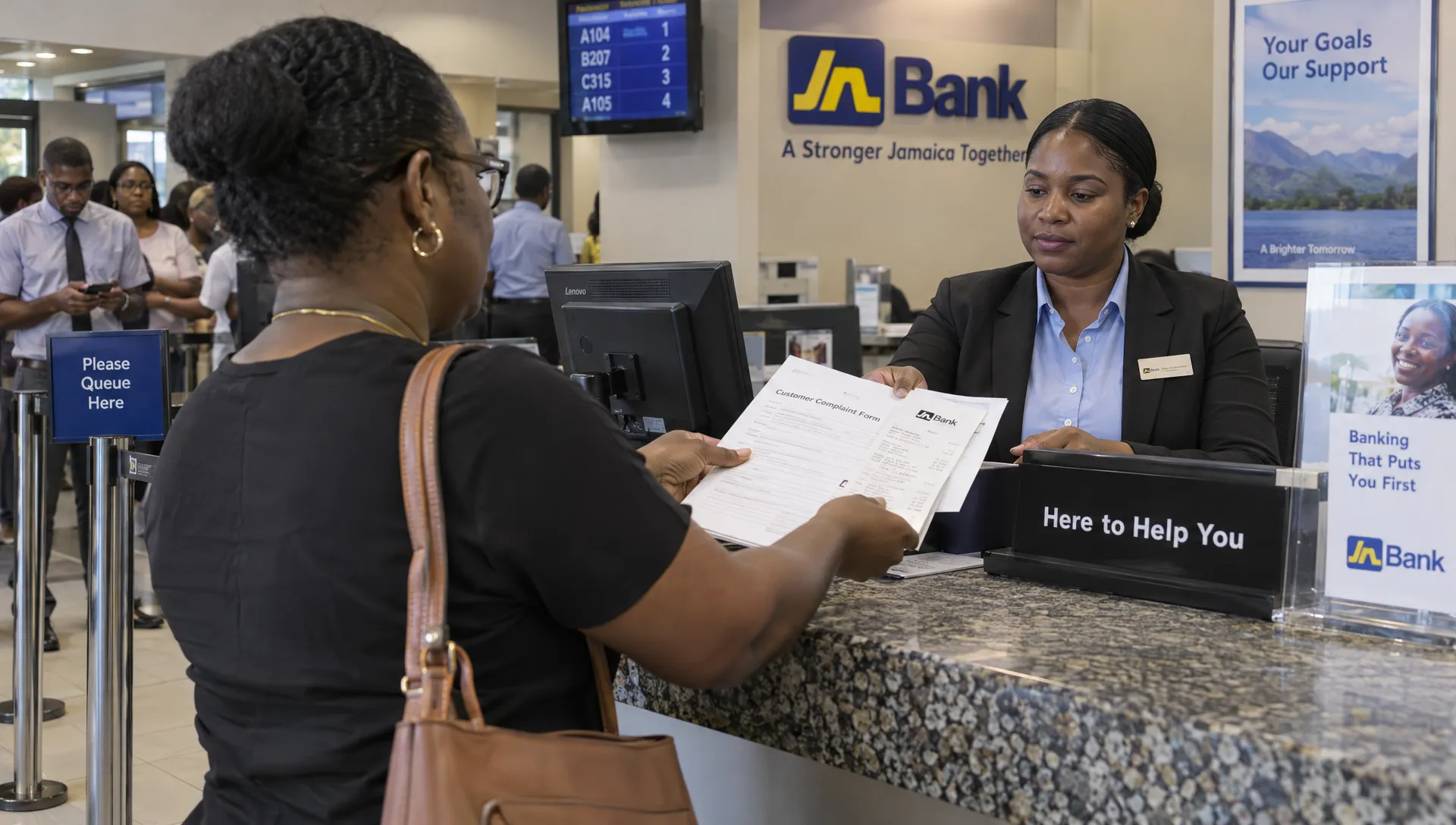
An unfamiliar debit, an ATM withdrawal you did not make or an online transfer to a stranger calls for immediate action. When disputing unauthorised bank transactions in Jamaica, you need to protect the account, report the specific payments and preserve evidence of what happened. A refund is not automatic, but neither should you assume that a payment is beyond challenge simply because the bank’s system recorded a password or one-time code.
This guide explains how to raise a clear dispute, assess the bank’s response and decide when regulatory escalation or legal advice is appropriate.
What counts as an unauthorised bank transaction?
An unauthorised transaction generally involves a payment or withdrawal made without the account holder’s authority. Identifying exactly what happened matters because different transactions involve different evidence and recovery procedures.
Situation | Main issue to investigate |
A card payment you do not recognise | Whether you or an authorised cardholder made it, and whether a merchant uses an unfamiliar billing name |
An ATM withdrawal you did not make | Card access, authentication records and available ATM evidence |
An online transfer initiated by someone else | Account access, device records and payment instructions |
A transfer you personally made after being deceived | Whether fraud induced the payment and what recovery or legal remedies remain available |
A business payment approved outside the account mandate | Whether the bank followed the agreed signing or approval requirements |
A payment induced by a scam is not necessarily treated in the same way as one initiated without your knowledge. If you entered and approved a transfer because someone impersonated a supplier or bank employee, explain that accurately. Do not describe it as a payment you never made.
Check unfamiliar merchant names promptly, but do not delay reporting suspected fraud while trying to resolve every uncertainty.
How to dispute unauthorised bank transactions in Jamaica
Secure the account through a verified channel
Contact the bank using a telephone number from your card, statement or independently accessed official website. Do not use contact details supplied in a suspicious text message, email or incoming call.
Ask the bank to block the affected card or access channel and explain whether additional restrictions are needed. If online banking credentials may be compromised, change them through a trusted device and follow the bank’s security instructions. Secure the linked email account as well. If your mobile service unexpectedly stopped working, contact your telecommunications provider about possible SIM-related fraud.
Record when you first noticed the problem and when you notified the bank. Obtain a complaint or incident reference number.
Request recovery action immediately
Identify each disputed transaction by date, amount, currency and reference. Ask whether the bank can stop a pending payment, initiate a recall or contact the receiving institution through its fraud procedures.
A card transaction may qualify for a chargeback process, depending on the circumstances and applicable card-scheme rules. A bank transfer does not necessarily have the same remedy. Ask which process applies and what evidence and deadlines it requires.
Recovery attempts are time-sensitive, but a recall request is not a guarantee that the money will return. Funds may already have been withdrawn or moved elsewhere.
Report suspected criminal activity
Where theft, impersonation or account compromise is suspected, report the matter through official Jamaica Constabulary Force channels. Keep the report details and provide them to the bank where relevant.
A police report supports the record of the incident but does not replace a bank complaint or establish that the bank must reimburse you. Criminal investigation and civil recovery serve different purposes and may proceed separately.
Preserve evidence before it disappears
Screenshots are useful, but original records often provide more context. Download statements and transaction confirmations, preserve messages and retain any suspicious email in its original format where possible. Do not delete communications or reset a potentially relevant device without considering whether evidence should first be preserved.
Your evidence file should include:
Transaction details: Dates, amounts, currencies, merchant or recipient information and reference numbers.
A timeline: When the account was last used normally, when alerts arrived and when the bank was contacted.
Security communications: Login alerts, password-reset notices, authentication messages and suspicious calls or emails.
Bank correspondence: Complaint references, submitted forms, written responses and notes of telephone conversations.
Account documents: Relevant terms, card conditions and, for business accounts, signing mandates and approval arrangements.
Ask the bank to preserve relevant records, including authentication logs, payment instructions and available ATM footage where applicable. Preservation does not mean the bank must immediately disclose everything; security obligations, confidentiality and legal procedures may affect access.
Send sensitive records only through verified, secure channels. Never provide passwords, PINs or current authentication codes as part of a complaint.
Put your dispute in writing
A telephone report should be followed by a written complaint through the bank’s designated channel. Set out the facts chronologically and identify precisely what you dispute.
For unauthorised bank transactions in Jamaica, a useful complaint separates three requests: securing the account, investigating the payment and explaining the proposed remedy. Avoid making accusations you cannot support.
Adapt wording such as the following only where it accurately describes what happened:
I dispute the transaction of [amount and currency] dated [date], reference [reference], on my account ending [last four digits]. I did not initiate or authorise this payment. I first became aware of it on [date and time] and notified the bank on [date and time], under reference [reference]. Please confirm the protective measures taken, whether recovery action has been initiated and the procedure and deadlines applicable to my dispute. Please also preserve relevant transaction and authentication records and provide a written explanation of your findings and decision.
If you approved a payment because of deception, state that instead and describe the deception. If a business mandate was allegedly breached, identify the approval requirement and explain how the transaction departed from it.
Ask for acknowledgement and an expected response timeframe. Keep a dated record of follow-ups. Any temporary credit should be clarified in writing, including whether it can be reversed after investigation.
Who bears the loss?
Responsibility depends on the facts, Jamaican law, the account agreement and the payment arrangements involved. Relevant questions include who instructed the payment, whether that person had authority and whether the bank complied with its obligations.
Do not assume that a US or UK reimbursement scheme, customer liability limit or complaint deadline applies to a Jamaican account. Equally, a bank’s initial rejection is not necessarily the final legal answer.

Authentication is evidence, not the whole investigation
If the bank says a transaction was completed using valid credentials, ask what that conclusion establishes. A system record showing that a code was entered does not, by itself, resolve every question about who entered it, whether they had authority or whether the bank met its obligations.
Request a transaction-specific explanation. Depending on the dispute, relevant matters may include a newly registered device, a new beneficiary, changes to contact details or compliance with a business account mandate.
The bank may have legitimate limits on what security information it can release. A lawyer can assess whether further records should be requested or sought through legal proceedings.
Disclose security mistakes accurately
If you clicked a phishing link, disclosed a code or allowed remote access to a device, say so. Those facts may affect the bank’s position and the assessment of responsibility, but withholding them can undermine both the investigation and your credibility.
Ask the bank to identify the contractual provision it relies on and explain how it applies to the particular loss. A general statement that customers must protect their credentials should not substitute for understanding the facts and the basis of the decision.
What to do if the bank refuses or delays
Seek an internal review
Request a written decision that addresses each disputed transaction, the evidence considered and the reasons for refusing reimbursement. If the response leaves material questions unanswered, use the bank’s internal complaints escalation process.
Keep the review focused. Identify the disputed conclusion, explain why you challenge it and attach the supporting record. Repeatedly resending the same complaint without addressing the bank’s reasoning is less useful than a clear, evidence-based response.
Consider Bank of Jamaica escalation
If the institution is regulated by the Bank of Jamaica, consult the regulator’s current consumer-complaint guidance after raising the matter with the institution. Check that your institution and complaint fall within the relevant process.
Prepare the original complaint, the bank’s response, a concise timeline and the outcome you are seeking. Regulatory escalation does not itself guarantee compensation and should not be assumed to suspend a deadline for bringing legal proceedings.
Obtain advice on civil recovery
Legal advice may be needed where the loss is substantial, the bank relies on disputed account terms or the evidence suggests a breach of mandate or another actionable failure.
A lawyer can assess potential claims, the correct defendants, available evidence, likely costs and whether recovery is commercially realistic. Where identifiable funds or assets are at immediate risk, urgent court relief may warrant consideration. Such applications require a proper legal and evidential basis and can involve undertakings and costs exposure.
Do not wait indefinitely for a complaint or criminal investigation to finish before checking applicable legal time limits.
Additional issues for Jamaican business accounts
For a company, unauthorised activity may involve compromised employee credentials, false supplier instructions or misuse of genuine authority. Preserve the account mandate, user-permission records, approval logs and the underlying invoice or payment request.
Separate what employees were permitted to do internally from the authority communicated to the bank. An employee’s breach of an internal policy does not automatically establish that the bank acted outside its mandate.
Also investigate how the payment instruction changed. Supplier impersonation may involve a compromised email account rather than compromised online banking. Verify replacement payment details through a previously trusted contact channel before making further payments.
These incidents sit within wider banking litigation risks affecting Jamaican businesses, but the immediate priority is a transaction-specific evidence file and a clear recovery strategy. Notify any relevant insurer promptly in accordance with the policy terms.
Frequently asked questions
Must a Jamaican bank automatically refund an unauthorised transaction? No universal refund promise should be assumed. The outcome depends on the transaction, evidence, applicable law and contractual arrangements. Ask for a reasoned written decision rather than relying on an informal assurance or refusal.
How quickly should I report the transaction? Immediately after discovering it. Account terms and payment schemes may impose notification deadlines, while delay can reduce recovery prospects. Ask the bank which deadlines apply and do not assume that a general legal limitation period replaces a shorter reporting requirement.
Can I dispute a payment if I still have my card? Yes. Possession of the physical card does not rule out misuse of card details. Explain that the card remained with you and ask the bank to investigate how the payment was processed.
Can money be recovered if I sent it to a scammer myself? Recovery may still be possible, but it is not guaranteed and the legal analysis differs from a payment initiated without your authority. Report the deception immediately, request recovery action and preserve the communications that induced the transfer.
Get advice on a disputed bank transaction
Henlin Gibson Henlin provides banking litigation and commercial litigation services. If your bank has rejected a substantial claim, a business mandate is in dispute or urgent recovery measures may be needed, contact Henlin Gibson Henlin about your banking dispute.
Have your transaction records, account terms, complaint correspondence and timeline ready for review. This article provides general information, not advice on the merits or deadlines of an individual claim.