
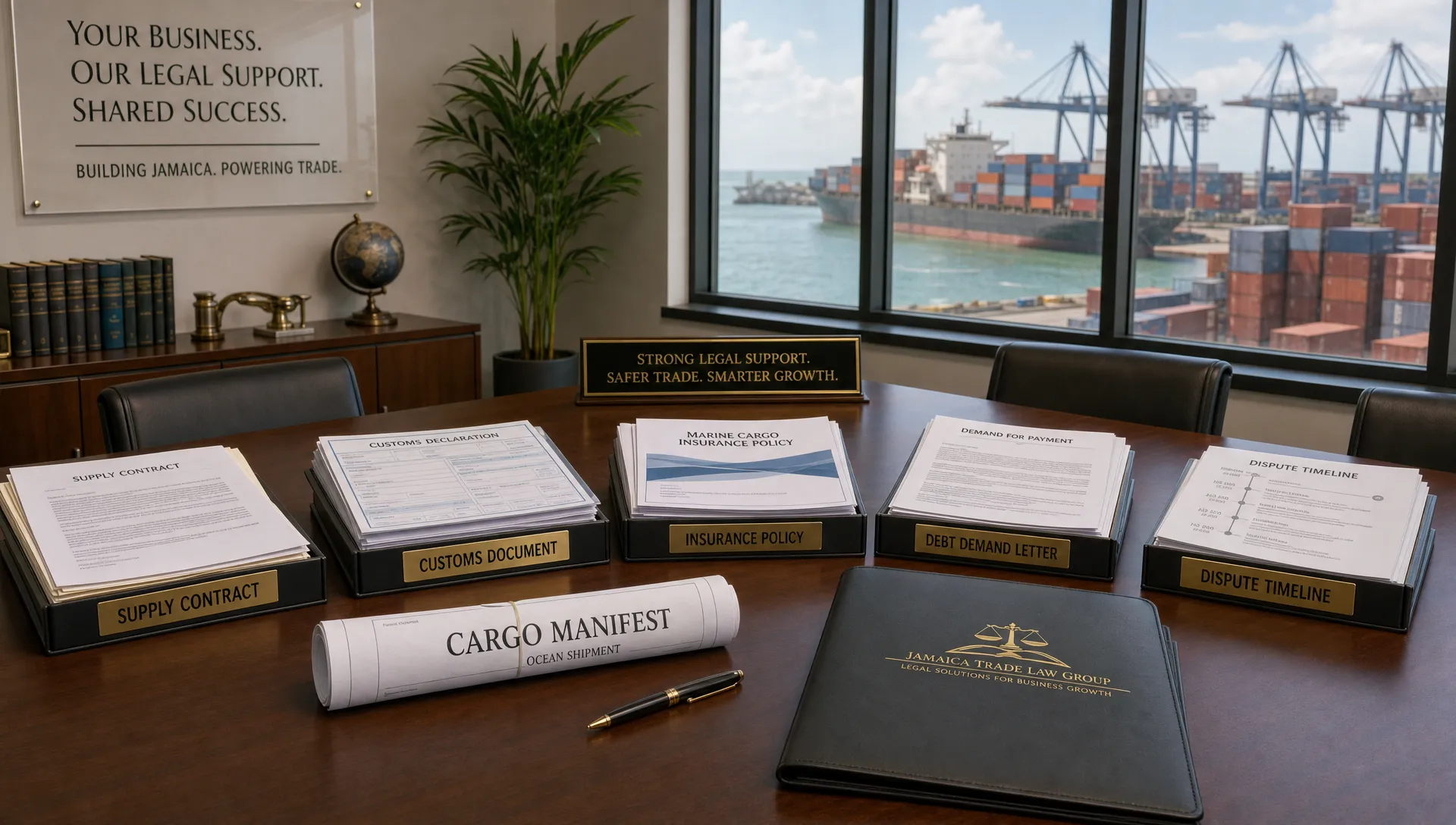
For a growing company, legal needs change quickly. What worked when the business had a handful of customers, a simple supplier arrangement and a small team may no longer protect the company once revenue increases, contracts become larger and decisions carry greater financial or regulatory consequences.
That is why the most valuable law firm services for growing companies are not limited to solving disputes after something has gone wrong. They help leadership make better commercial decisions, protect assets, reduce uncertainty and respond confidently when pressure arrives.
For Jamaican and Caribbean businesses, growth often brings a wider set of relationships: lenders, investors, regulators, employees, distributors, technology vendors, shipping partners and international customers. Each relationship creates opportunity, but each also creates legal exposure. The right legal support helps a company keep momentum without ignoring risk.
Why growing companies need more than occasional legal advice
Many companies first contact lawyers when there is a threatened claim, unpaid invoice, employment issue or contract that must be signed urgently. That kind of support is important, but it is reactive. As the business grows, legal advice becomes more valuable when it is built into planning.
A company that is expanding may need to renegotiate supplier terms, protect confidential information, collect debts, comply with data protection obligations, defend its brand, secure financing or resolve disputes without damaging commercial relationships. These are not isolated issues. They overlap.
For example, a technology-enabled retailer may have contract questions with payment processors, data privacy obligations to customers, intellectual property issues around branding and potential litigation risks if a vendor fails to deliver. A shipping or logistics business may face contract, insurance, customs, admiralty and debt recovery concerns at the same time.
This is where a strong law firm adds value: by seeing the whole picture, not just one document or one dispute. As discussed in Henlin Gibson Henlin’s article on how attorneys practice across complex business matters, business issues often involve overlapping legal risks that must be handled strategically rather than in silos.
The law firm services that matter most during growth
Not every company needs the same legal services at the same stage. A manufacturer, a financial services provider, a digital business and a family-owned trading company will each face different priorities. Still, several categories of legal support consistently matter when companies begin to scale.
Commercial contracts that support expansion
Contracts are the operating system of a growing company. They define who must do what, when payment is due, what happens if performance fails, how disputes are handled and which party carries specific risks.
As deal size increases, informal agreements and recycled templates become dangerous. A contract that seems simple may fail to address limitation of liability, termination rights, confidentiality, late payment, governing law, force majeure, regulatory obligations or intellectual property ownership.
Useful contract support includes drafting, reviewing and negotiating:
Customer agreements, supplier contracts and service-level commitments
Distribution, agency and reseller arrangements
Confidentiality and non-disclosure agreements
Technology, software and licensing agreements
Loan, security and banking documents
The goal is not to make every contract longer. The goal is to make the document commercially clear, enforceable and aligned with the company’s actual risk appetite.
Corporate governance and decision-making support
Growth brings more stakeholders. Founders may bring in investors. Directors may need clearer authority. Shareholders may require better documentation around voting, dividends, exits, share transfers and disputes.
Corporate governance is often overlooked until disagreement occurs. Yet good governance helps prevent uncertainty over who can bind the company, approve major transactions, authorise debt, hire senior executives or dispose of key assets.
In Jamaica, companies should also pay attention to statutory filings and corporate records through the Companies Office of Jamaica. Proper record-keeping is not merely administrative. It helps demonstrate that the company is being run responsibly, especially when dealing with banks, investors, regulators or counterparties in major transactions.
Compliance, risk and data privacy
As a company grows, regulators and customers may hold it to a higher standard. Compliance is no longer only a concern for large financial institutions or heavily regulated sectors. It can affect retailers, technology providers, professional services firms, logistics companies, healthcare-adjacent businesses and any organisation that handles personal information.
Data privacy is a clear example. Businesses that collect, store or use personal data should understand their obligations under Jamaica’s Data Protection Act and follow guidance from the Office of the Information Commissioner. Practical legal support may involve reviewing privacy notices, vendor arrangements, consent practices, internal policies, breach response procedures and employee access controls.
Compliance and risk law also matters where companies face anti-money laundering obligations, procurement rules, sector-specific licensing, consumer protection requirements or internal investigations. Legal advice at this stage helps leadership avoid costly surprises, reputational harm and operational disruption.
Intellectual property protection
A growing company’s value is often tied to intangible assets: its name, logo, product design, confidential processes, software, customer lists, content, trade secrets and goodwill. If these assets are not protected, growth can make the business more vulnerable to imitation or misuse.
Intellectual property support may include trade mark strategy, licensing, IP clauses in employee and contractor agreements, infringement advice, brand enforcement and confidentiality protections. This is especially important for companies expanding online or entering new markets where brand visibility increases.
The key question is simple: if the company’s most recognisable asset were copied, misused or claimed by someone else, would the business be ready to respond?
Employment and leadership transitions
Hiring is one of the clearest signs of growth, but employment decisions can create legal exposure if handled informally. Companies may need contracts for senior employees, policies for workplace conduct, confidentiality obligations, disciplinary procedures, termination advice and guidance on restrictive covenants.
Employment issues also affect reputation and morale. A dispute with one senior employee can distract leadership, unsettle staff and expose sensitive business information. Legal advice helps employers act consistently, document decisions properly and reduce avoidable conflict.
Banking, finance and security arrangements
Growing companies often need capital. That may involve bank financing, secured lending, investor funding, asset purchases, guarantees or restructuring existing obligations. Legal review is essential because finance documents can affect future flexibility.
A company should understand repayment triggers, default clauses, security interests, director guarantees, reporting obligations and restrictions on future borrowing. In banking disputes, early legal advice can also help preserve options before positions harden or litigation becomes unavoidable.
Dispute resolution and commercial litigation
Disputes can threaten cash flow, customer relationships, reputation and management focus. For growing companies, dispute resolution is not only about going to court. It includes negotiation, mediation, arbitration, settlement strategy, evidence gathering and, when needed, litigation.
A dispute may involve unpaid debts, breach of contract, shareholder disagreement, banking issues, intellectual property infringement, regulatory action or a failed commercial partnership. The best approach depends on the company’s objective. Sometimes that objective is swift recovery. Sometimes it is preserving a relationship. Sometimes it is setting a firm precedent.
Companies benefit when litigation strategy is considered early, even before a claim is filed. Evidence, correspondence and timing can materially affect outcomes. This is why businesses should seek legal services before problems escalate, particularly where the issue could become public, expensive or commercially disruptive.
Matching legal services to the company’s growth trigger
A practical way to decide which legal support matters most is to look at the business event that is driving the need. Growth creates triggers, and each trigger points to a different legal priority.
Growth trigger | Legal risk created | Law firm services to consider |
Signing larger customers or suppliers | Unclear liability, payment disputes, weak termination rights | Contract drafting, negotiation and dispute clauses |
Hiring senior staff or expanding teams | Employment disputes, confidentiality risks, inconsistent policies | Employment contracts, workplace policies and termination advice |
Launching digital services or collecting customer data | Privacy, cybersecurity and vendor risk | Data privacy review, compliance policies and breach response planning |
Seeking bank finance or investment | Restrictive covenants, guarantees and governance issues | Banking documentation review, security advice and shareholder arrangements |
Expanding regionally or internationally | Cross-border contracts, jurisdiction issues and enforcement risk | Commercial contract review, arbitration clauses and regulatory advice |
Importing, exporting or shipping goods | Cargo disputes, insurance issues and maritime claims | Admiralty, shipping, insurance and commercial litigation support |
Facing unpaid invoices or contract breach | Cash flow pressure and evidence gaps | Debt recovery, negotiation, mediation or litigation |
Building a recognised brand | Copying, misuse or ownership disputes | Trade mark, licensing and intellectual property enforcement |
This type of mapping helps a business avoid a common mistake: treating legal work as a single emergency service rather than a set of tools that support specific commercial decisions.

Preventive legal support is usually less disruptive than crisis response
A legal crisis rarely appears out of nowhere. There are often early signs: a vague contract, a slow-paying customer, an investor misunderstanding, a regulator’s request, a data incident, a director disagreement or a supplier who is no longer performing.
Preventive legal advice helps a company identify these issues while there is still room to choose the response. For example, a lawyer may help the company send a carefully framed demand letter, preserve evidence, adjust contract terms, update privacy practices or negotiate a settlement before litigation becomes necessary.
This is not about being overly cautious. Growing businesses must take risks. The point is to take informed risks, with a clear understanding of what could happen if the transaction, relationship or strategy does not go as planned.
What to look for in law firm services for a growing company
Choosing legal support should not be based only on who can respond fastest to a single issue. Growing companies need counsel that can understand the business model, identify commercial priorities and explain legal options in a way decision-makers can use.
Look for a law firm that brings:
Relevant experience in commercial, regulatory and dispute-related matters
Clear communication about options, risks and likely next steps
Strategic judgement, especially where legal, financial and reputational issues overlap
Ability to support both preventive advice and contested matters
Familiarity with local law and the realities of cross-border business
The relationship also matters. A good legal adviser should be able to challenge assumptions without slowing the business unnecessarily. They should know when a matter calls for a practical negotiated solution and when the company needs a firmer litigation posture.
If your leadership team is evaluating external counsel, Henlin Gibson Henlin’s guidance on choosing trusted legal support for your business offers a useful framework for matching legal expertise to the actual business problem.
When disputes become high-stakes
Not every disagreement needs aggressive litigation. But some matters require immediate, strategic intervention. These include injunction risks, major contract breaches, regulatory investigations, shareholder conflicts, banking disputes, intellectual property threats and claims that could damage public confidence.
In high-stakes matters, early decisions can affect evidence, leverage, timing and forum. A poorly worded email, delayed response or informal admission can create problems later. Conversely, a well-planned response can preserve options, narrow the dispute and improve the company’s negotiating position.
Alternative dispute resolution also matters. Arbitration and mediation can offer privacy, speed or commercial flexibility depending on the circumstances. The right dispute strategy should be built around the company’s objective, not simply around the most combative option.
Frequently Asked Questions
What law firm services should a growing company prioritise first? Most growing companies should start with contracts, governance, compliance, data privacy, employment documentation and dispute prevention. The exact priority depends on the company’s industry, transaction size, regulatory exposure and growth plans.
When should a company involve a lawyer in a commercial deal? Ideally, legal advice should be sought before key terms are finalised. Early input can help shape payment terms, liability limits, termination rights, confidentiality obligations, dispute clauses and enforcement options.
Do small but growing businesses need data privacy advice? Yes, if they collect, store or use personal information about customers, employees, suppliers or users. Data privacy obligations can apply before a business becomes large, especially if it operates online or uses third-party technology vendors.
Is litigation always the best way to resolve a business dispute? No. Negotiation, mediation and arbitration may be better in some cases. Litigation may be necessary where rights must be enforced firmly, urgent relief is required or the other side will not engage reasonably.
How often should a growing company review its legal documents? Important documents should be reviewed when the business changes materially, such as entering new markets, hiring senior staff, taking financing, launching digital services or signing larger contracts. An annual legal review is also a useful practice.
Build legal support into the growth strategy
The law firm services that matter most to growing companies are the ones that protect momentum. Strong contracts, clear governance, compliance planning, IP protection and dispute strategy all help leadership act with confidence.
For companies operating in Jamaica and across the region, Henlin Gibson Henlin provides legal support across areas including commercial litigation, data privacy, compliance and risk, intellectual property, arbitration, banking litigation, shipping and appellate matters. To discuss the legal needs connected to your company’s next stage of growth, visit Henlin Gibson Henlin.