
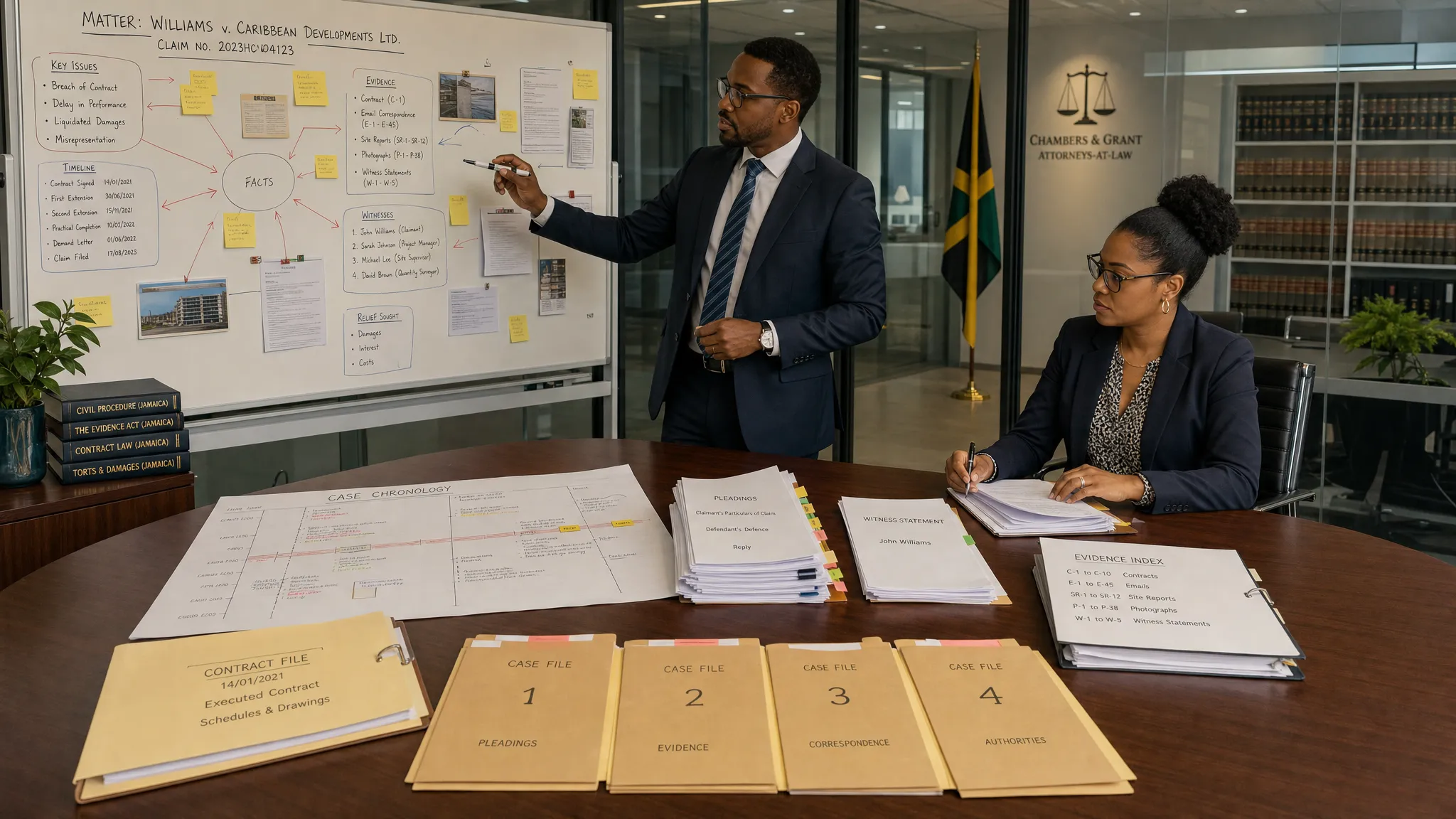
Complex cases rarely turn on one clever argument alone. They are built through disciplined preparation, coordinated judgment, and a legal team that knows how to convert uncertainty into a practical path forward.
For businesses, institutions, shipowners, innovators, directors, and individuals facing high-value disputes, the question is not simply “Who will appear in court?” A better question is: who is shaping the strategy before the first major decision is made?
In complex matters, the legal team behind the case must understand the law, the commercial context, the personalities involved, the documents, the risks, and the client’s wider objectives. The strongest strategies are not improvised at the courthouse door. They are developed early, tested repeatedly, and adjusted as the case evolves.
Why complex case strategy depends on the legal team
A complex case may involve multiple parties, technical evidence, cross-border elements, urgent applications, regulatory issues, reputational risk, or parallel negotiations. One lawyer may lead the advocacy, but the work behind that advocacy is usually broader.
The legal team must identify what is truly in dispute, what evidence is available, what evidence is missing, which forum is best suited to the matter, and whether the client’s goal is trial, settlement, interim relief, appeal, enforcement, or risk containment.
This is why teamwork matters. A well-coordinated team can challenge assumptions before they become weaknesses. It can spot procedural risks early. It can manage large volumes of information without losing sight of the central theory of the case. Most importantly, it can give the client a strategy that is legally sound and commercially realistic.
Henlin Gibson Henlin’s work across commercial litigation, civil disputes, appellate matters, arbitration, mediation, data privacy, compliance, intellectual property, admiralty and shipping, banking litigation, and competition law reflects the kind of multidisciplinary thinking that complex matters often require.
The lead strategist: turning facts into a theory of the case
Every serious dispute needs a central theory. This is the disciplined answer to three essential questions:
What happened?
Why does the law support our position?
What should the court, tribunal, regulator, or opposing party do about it?
The lead strategist, often the advocate with overall responsibility for the matter, must bring structure to scattered facts. This involves more than reading pleadings and statutes. It requires judgment about what facts matter, what themes will be persuasive, and what risks must be addressed honestly.
In a commercial dispute, the strongest point may not be the most emotional one. In a shipping matter, timing and documentation may carry more weight than broad allegations. In a data privacy or compliance matter, the chronology of decisions and internal controls may be central. In appellate work, the question may narrow to whether a court made an error of law, misapplied a principle, or reached a conclusion unsupported by the record.
A strong lead strategist does not simply ask, “Can we argue this?” The better question is, “Will this argument advance the client’s objective, and can it survive scrutiny?”
For a closer look at how advocacy functions in difficult disputes, Henlin Gibson Henlin has also examined what an advocate does in complex legal disputes.
The evidence team: building the case from the record up
In complex litigation, evidence is often where strategy succeeds or fails. The legal theory must be supported by documents, correspondence, witness accounts, expert material, financial records, contracts, policies, transaction histories, or technical reports.
The evidence-focused members of the legal team help determine what must be collected, preserved, reviewed, and presented. This work is careful and often time-sensitive. Missing documents, incomplete instructions, or inconsistent witness accounts can weaken an otherwise promising claim or defence.
Good evidence management includes identifying the documents that help, the documents that hurt, and the gaps that need explanation. It also requires a realistic assessment of admissibility, privilege, confidentiality, and disclosure obligations.
This is particularly important in commercial and banking litigation, where a case may turn on contractual terms, notices, loan documents, payment records, board minutes, emails, or financial statements. It is equally important in intellectual property and technology-related disputes, where ownership records, licensing terms, source materials, digital evidence, and timelines may become decisive.
The procedural team: protecting the client from avoidable risk
Procedure is not a technical afterthought. In litigation and arbitration, procedure can affect timing, leverage, cost, admissibility, and outcome.
The procedural team focuses on deadlines, applications, pleadings, disclosure, witness statements, expert reports, interim remedies, forum selection, enforcement, and appeal windows. In Jamaica, as in many common law jurisdictions, procedural rules can shape how quickly a dispute moves and how issues are narrowed for determination.
A client may have a strong substantive position, but a missed deadline or poorly framed application can create unnecessary pressure. Conversely, a well-timed procedural move can preserve assets, secure evidence, narrow the dispute, or encourage settlement.
The best procedural planning is proactive. It asks what may happen next and prepares before the issue becomes urgent.
Strategic function | Why it matters in complex cases | Common risk if overlooked |
Issue identification | Keeps the case focused on what the decision-maker must resolve | Time and cost are spent on weak or irrelevant points |
Evidence planning | Connects legal arguments to the record | Key documents or witnesses are missed |
Procedural control | Protects deadlines, applications, and forum choices | The client loses leverage or faces avoidable sanctions |
Risk assessment | Helps the client make informed business decisions | Strategy becomes too aggressive or too cautious |
Client communication | Keeps instructions aligned with changing developments | Decisions are delayed or based on incomplete understanding |
The client liaison: keeping strategy connected to reality
A legal strategy is only useful if it reflects the client’s real position. In complex matters, the client liaison role is vital because legal decisions often interact with commercial, operational, personal, or reputational concerns.
The client may need to know whether a claim could affect customer relationships, regulatory obligations, financing arrangements, confidentiality duties, board reporting, insurance coverage, or settlement posture. The legal team must therefore communicate clearly and regularly, not only when something dramatic happens.
Good communication is not a flood of legal jargon. It is the translation of legal developments into practical decisions. What happened? Why does it matter? What are the options? What are the risks? What decision is needed now?
This is especially important when a matter involves senior management, multiple stakeholders, or cross-border interests. In those circumstances, the legal team may need to provide concise advice that can support board-level or executive decision-making.

The negotiation and dispute resolution team: knowing when to fight and when to resolve
Complex case strategy is not always about pushing every dispute to trial. Sometimes the right approach is firm litigation. Sometimes it is arbitration. Sometimes it is mediation, structured negotiation, or a carefully timed settlement proposal.
The dispute resolution members of the legal team evaluate where leverage exists and how it should be used. They consider the strength of the legal position, the commercial value of time, the cost of continued proceedings, confidentiality concerns, enforceability, and the client’s appetite for risk.
A legal team that understands both advocacy and negotiation can prepare for trial while still keeping resolution options open. This matters because settlement discussions are most effective when they are grounded in a credible litigation strategy. A weak case posture rarely produces strong negotiation results.
Arbitration and mediation also require different skills from court litigation. Arbitration may place greater emphasis on tribunal selection, procedural timetable, confidentiality, and enforceability. Mediation requires preparation for persuasion in a less formal environment, where practical problem-solving may matter as much as legal argument.
The appellate perspective: planning beyond the first decision
In high-stakes matters, the legal team should think about appeal risk early, not only after judgment. This does not mean treating every case as though it will certainly be appealed. It means preserving the record, framing legal issues carefully, and ensuring that important objections, submissions, and evidentiary points are properly addressed.
An appellate mindset can improve strategy at first instance. It encourages precision. It helps the team separate factual disputes from legal questions. It also forces careful attention to the reasons a decision-maker is likely to give.
For clients, this perspective is valuable because it allows more informed decisions. If the case is lost, is there a realistic basis for appeal? If the case is won, what arguments might the other side raise? If settlement is available, how should appeal risk affect the decision?
How the legal team pressure-tests a case strategy
A complex strategy should not remain unchallenged until it meets the other side’s strongest attack. Before that point, the legal team should test the case internally.
This process may involve asking uncomfortable questions. What is the best argument against us? Which document creates the most difficulty? Which witness may be challenged? Are we asking the court or tribunal for a remedy it can realistically grant? Have we chosen the right forum? Is there a business solution that better serves the client than a purely legal victory?
Pressure-testing is not pessimism. It is disciplined preparation. It helps avoid surprises, refine pleadings, strengthen witness preparation, and ensure that advice to the client is balanced rather than overconfident.
This is also where experience matters. Lawyers who have handled contentious, technical, and urgent matters are better placed to recognise patterns, anticipate procedural moves, and distinguish between a serious risk and a tactical threat.
What clients should expect from a strategy-focused legal team
Clients should expect more than legal activity. They should expect direction. In a complex case, a good legal team should provide a structured process from the beginning of the engagement through resolution.
That process usually includes:
A clear understanding of the client’s objectives and constraints
Early identification of the key legal and factual issues
A realistic assessment of strengths, weaknesses, costs, and timing
A plan for evidence collection and preservation
Regular communication about developments and decisions
Strategic advice on litigation, arbitration, mediation, settlement, or appeal
The relationship works best when the client is also prepared to engage actively. Timely instructions, full disclosure of relevant facts, and access to documents help the legal team develop the strongest possible strategy.
For clients considering representation in significant disputes, it may also be useful to review what distinguishes trusted legal partners in high-stakes cases.
Why multidisciplinary experience matters
Many complex disputes do not fit neatly into one category. A commercial claim may involve data privacy issues. A banking dispute may raise questions of regulatory compliance. An intellectual property matter may include urgent injunctive relief. A shipping dispute may involve contract interpretation, insurance, enforcement, and cross-border evidence.
A legal team with experience across practice areas can identify these intersections earlier. That does not mean every lawyer does everything. It means the team knows when to bring the right perspective into the strategy.
For example, a compliance lawyer may help identify regulatory exposure before a pleading is filed. An intellectual property lawyer may clarify ownership issues in a commercial dispute involving branding or technology. A litigator may assess whether a threatened claim is likely to succeed in court. An appellate lawyer may help refine legal arguments that could later become decisive.
This collaborative approach supports better decision-making because the client receives advice shaped by the full legal context, not by a narrow view of the dispute.
The human side of complex case strategy
Complex matters can be stressful. They may affect finances, reputation, business continuity, professional relationships, or personal peace of mind. The legal team’s role is not only technical. It is also to bring order to pressure.
Clients often need calm, candid advice. They need to know when a risk is serious, when an opponent is posturing, when urgent action is required, and when patience is strategically wiser. They need a team that can advocate firmly without losing judgment.
The legal team behind complex case strategy should therefore combine analytical discipline with practical empathy. A client-centric approach does not mean telling clients only what they want to hear. It means giving advice that is clear, honest, and aligned with the client’s best interests.
Frequently Asked Questions
What does the legal team do in a complex case? The legal team investigates the facts, identifies legal issues, manages evidence, develops strategy, handles procedure, advises on risk, communicates with the client, and advocates in the appropriate forum.
Why is complex case strategy different from ordinary litigation? Complex strategy often involves multiple legal issues, extensive documents, urgent deadlines, technical evidence, reputational concerns, or parallel settlement and enforcement considerations.
When should a client involve a legal team? A client should seek legal advice as early as possible when a dispute is likely, documents must be preserved, urgent relief may be needed, or commercial decisions could affect legal rights.
Can a complex case be resolved without going to trial? Yes. Depending on the facts and objectives, arbitration, mediation, negotiation, or settlement may provide a practical resolution. A strong litigation strategy can also improve settlement leverage.
How should clients prepare before meeting the legal team? Clients should gather relevant contracts, correspondence, notices, timelines, policies, financial records, and names of key witnesses. They should also be ready to explain their goals and concerns clearly.
Speak with a legal team built for complex matters
When the stakes are high, strategy should begin before the dispute controls the timetable. The right legal team can help you understand your position, protect your interests, and choose a practical path through litigation, arbitration, mediation, compliance issues, appeals, or commercial risk.
Henlin Gibson Henlin provides client-focused legal services in Jamaica across a wide range of contentious and advisory practice areas. If you are facing a complex legal issue and need clear strategic guidance, visit Henlin Gibson Henlin to learn more about the firm’s approach and practice areas.