
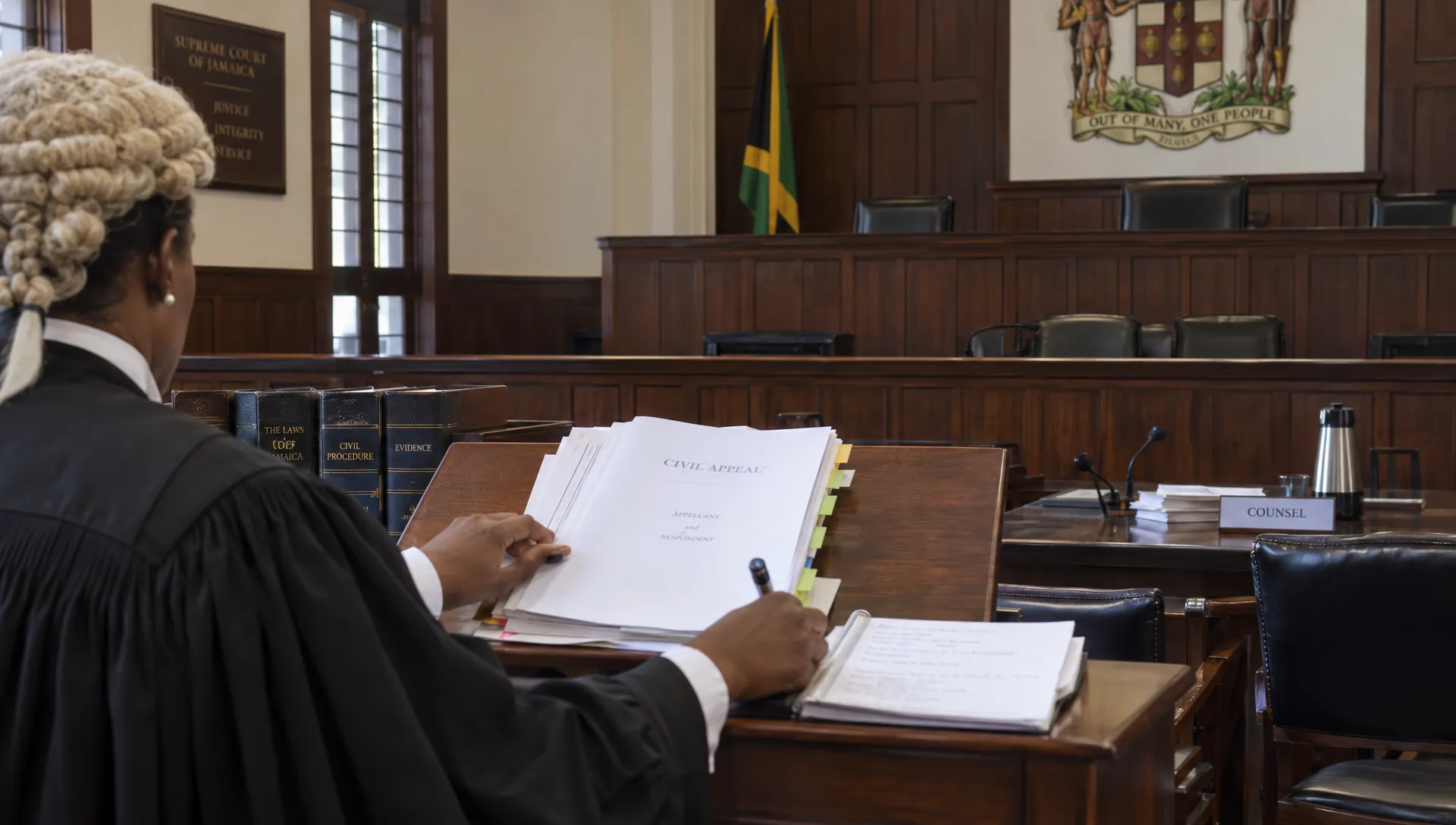
Taking a Jamaican civil appeal to the Privy Council requires more than disagreeing with the Court of Appeal’s decision. You must identify the legal route for bringing the appeal, meet the relevant deadlines and prepare grounds that justify intervention by Jamaica’s final appellate tribunal. Obtaining leave to appeal and winning the appeal are separate questions.
For businesses and individuals, the first practical task is to establish whether an appeal lies as of right, requires the Court of Appeal’s permission or needs special leave from the Judicial Committee of the Privy Council (JCPC). This guide explains those routes, the preparation involved and the financial considerations. It provides general information, not advice on a particular judgment.
Can you bring a Jamaican civil appeal to the Privy Council?
In ordinary Jamaican civil litigation, a Privy Council appeal proceeds from a decision of the Court of Appeal. It is not generally a way to bypass the domestic appeal process after losing in the Supreme Court. Understanding Jamaica’s court hierarchy helps distinguish a first appeal from this further appellate stage.
The principal constitutional framework is section 110 of Jamaica’s Constitution. It provides different routes, with different requirements.
Route | Main question | Practical consequence |
Appeal as of right | Does the decision fall within a qualifying constitutional category? | Establish the entitlement and comply with the leave and filing procedure. |
Leave from the Court of Appeal | Does the case involve a question of great general or public importance, or otherwise warrant consideration by the Privy Council? | Explain why the issue justifies a further appeal. |
Special leave from the Privy Council | Should the Board exercise its power to permit the appeal? | Make a properly supported application directly to the JCPC. |
These are not interchangeable routes. Counsel should identify the correct basis before drafting the application.
Appeals as of right
Section 110(1)(a) concerns final decisions in civil proceedings where the matter in dispute on appeal, or the relevant property or right, meets the constitutional value requirement. The provision states a threshold of J$1,000, but satisfying that figure alone does not establish entitlement.
The decision must also meet the applicable requirements, including finality. The relevant value concerns what remains in dispute on the proposed appeal, not necessarily the amount originally claimed. A substantial claim can still present difficulties if the proposed appeal concerns only a procedural ruling.
Other constitutional categories can provide an appeal as of right, including qualifying final decisions on questions concerning interpretation of the Constitution. Merely describing a complaint as constitutional does not establish that it falls within that category.
An appeal as of right also does not mean that paperwork can be omitted. The entitlement must be established through the applicable procedure.
Leave from the Court of Appeal
Under section 110(2), the Court of Appeal can grant leave in civil proceedings where the question involved is of great general or public importance, or otherwise ought to be submitted to the Privy Council.
A persuasive application identifies the legal question precisely. For example, a dispute may raise an unsettled issue of statutory interpretation with consequences beyond the parties. The application should explain those consequences rather than simply asserting that the case is important.
The financial significance of litigation to one business or family is not, by itself, the same as general or public importance. Equally, public importance is not the only consideration expressed in the constitutional provision.
Special leave from the Privy Council
Section 110(3) preserves the Privy Council’s power to grant special leave. Where the Court of Appeal refuses leave, an application to the Board may therefore remain available.
Special leave is discretionary. Refusal below does not automatically secure another appeal, and repeating the same arguments without addressing the reasons for refusal is unlikely to strengthen the application.
The proposed grounds should identify the alleged legal error, explain its significance and show why the case warrants the Board’s consideration. Counsel must also check the applicable filing deadline and supporting-document requirements.
Protect the deadlines immediately
Deadline management should begin when the Court of Appeal gives its decision, not when the client has finished considering the commercial implications.
Under the Jamaican leave procedure, an application to the Court of Appeal is ordinarily required within 21 days of the judgment. Counsel should verify the applicable provision, the relevant judgment date and any order affecting the application. Do not assume that receiving written reasons later automatically restarts time.
There are separate procedural requirements for seeking permission directly from the JCPC and for bringing an appeal after permission has been obtained. Compliance with the Jamaican application deadline does not satisfy every later deadline.
The legal team should consult the Court of Appeal of Jamaica for the applicable local procedural materials and the JCPC’s official procedural guidance for the current Board rules, practice directions and filing requirements.
Prepare a written timetable covering the leave application, any conditions imposed, the next filing step and responsibility for each task. Extensions are discretionary and should not be treated as part of the ordinary plan.
Understand conditional leave and final leave
In the Jamaican procedure, obtaining conditional leave may not complete the process. The Court of Appeal can impose requirements that must be satisfied before final leave is granted.
These can include security for the respondent’s costs, steps towards preparing the record and other conditions specified in the order. The actual order matters: an assumption based on another case is not a reliable guide to the obligations in yours.
Conditional leave is not the same as a completed appeal. The legal team must monitor compliance, obtain any necessary further order and complete the appropriate JCPC filing steps.
Clients should ask for a short written explanation of what the leave order requires, when each condition must be satisfied and what happens if it is not. Where compliance becomes difficult, counsel should address that difficulty promptly rather than wait until the deadline has passed.
Prepare the appeal around an identifiable error
A Privy Council appeal is not ordinarily a fresh trial. The Board considers whether the decision under appeal should stand, using the relevant record and the issues properly before it.
Strong preparation starts with the Court of Appeal’s reasoning. Counsel should identify the proposition challenged, the applicable legal principle and the effect of the alleged error on the outcome. A successful criticism of one passage will not necessarily change the result if another independent basis supports the decision.
Distinguish legal issues from factual disagreement
Potential appellate issues can include an incorrect interpretation of legislation, use of the wrong legal test or a material procedural unfairness. Each must be tied to what actually occurred in the proceedings.
A complaint that the trial judge should have believed a different witness presents a different challenge. The Board generally exercises particular restraint where the trial court and Court of Appeal have reached concurrent findings of fact. Exceptional circumstances can justify intervention, but an appellant needs more than an alternative reading of the evidence.
Advice should therefore explain both the proposed ground and the standard of appellate review. That distinction often determines whether further proceedings are proportionate.
Identify the remedy sought
The grounds should connect to a practical result. Depending on the issues, the appellant may seek reversal of the decision, variation of an order or remission of the matter for further consideration.
If a ground succeeds only on a limited issue, the benefit may be narrower than the client expects. Counsel should explain the realistic range of outcomes before substantial expenditure is incurred.
Assemble a focused and reliable appeal record
The appeal record allows the Board to examine the decisions and materials relevant to the grounds. It should be accurate, organised and prepared in accordance with the governing directions.
The materials needed will depend on the case, but commonly include:
Judgments and orders: The relevant decisions of the trial court and Court of Appeal, including the leave decisions.
Pleadings and applications: Documents defining the dispute and the issues decided below.
Relevant evidence: The exhibits, affidavits or transcript passages necessary to understand the proposed grounds.
Procedural documents: The notices, grounds and other documents required for the appeal.
Authorities: The legislation and decisions supporting the legal arguments, presented in the required form.
A large record is not necessarily a useful one. Irrelevant documents increase preparation costs and make the decisive material harder to find.
Before filing, reconcile document versions, check references against the judgments and confirm that the material relied upon was before the relevant court. An appeal should not be planned on the assumption that missing evidence can simply be added later. Admission of fresh evidence requires a separate legal basis and is exceptional.

Budget for the entire process, not just the application
The cost of seeking leave is only one part of the financial commitment. A sensible budget separates the permission stage from the substantive appeal and identifies expenses that may arise between them.
Those expenses can include attorneys’ fees, court fees, transcript preparation, record production and any additional representation required for the proceedings. Security for costs may also require funds to be provided before the appeal progresses.
Security for costs and legal fees are different obligations. Security protects against a potential costs liability; it does not pay for preparing and presenting your own case.
An unsuccessful appellant may face an order to pay the respondent’s costs as well as their own expenditure. Conversely, winning does not necessarily mean recovering every amount spent.
Ask for a staged estimate, with assumptions explained. Compare the likely cost and adverse-costs exposure against the amount realistically recoverable, the importance of the legal issue and the respondent’s ability to satisfy any eventual judgment. Settlement can remain commercially sensible even where there is an arguable appeal.
Decide whether a stay of execution is needed
Taking steps towards an appeal does not automatically suspend enforcement of the judgment. A respondent may still be able to enforce unless the appropriate court grants a stay or another effective arrangement is in place.
The need for interim protection should be considered separately from the merits of the appeal. Relevant concerns can include whether enforcement would undermine the practical value of a successful appeal and what protection the respondent should receive during the delay.
For the local application and supporting evidence, see the firm’s explanation of applying for a stay of execution pending appeal.
If a stay already exists, check its wording and duration. It may not necessarily continue through every stage of seeking leave or pursuing a Privy Council appeal. Compliance with any conditions remains essential.
What happens after the appeal is admitted?
Once the appeal is properly before the JCPC, the parties must comply with directions governing the record, written submissions, authorities and hearing arrangements. Obtaining permission does not remove the need for disciplined case preparation.
The written case should explain the relevant facts, procedural history, issues and legal submissions without turning into a repetition of everything argued below. The respondent will have an opportunity to answer the appeal, and oral submissions may be heard according to the Board’s directions.
The Board can dismiss the appeal or allow it, with the resulting orders depending on the case. A successful appeal may still require further proceedings in Jamaica, particularly where an issue is remitted for determination.
Following the decision, counsel should explain the consequences for enforcement, costs and any outstanding proceedings. The judgment’s practical effect matters as much as the finding that the appeal succeeded or failed.
Questions to resolve before authorising the appeal
Before committing to the next stage, obtain clear advice on four points:
Jurisdiction: Which route permits the appeal, and what requirements must be established?
Merits: What material error is alleged, and how would correcting it change the outcome?
Procedure: What is the next deadline, and are leave conditions or interim protection required?
Proportionality: What are the likely costs, financial risks and realistic benefits?
These questions help separate a legally available appeal from one that is worth pursuing. They also give the client a basis for deciding whether to proceed, narrow the dispute or explore settlement.
Frequently asked questions
Does every unsuccessful civil litigant have a right to appeal to the Privy Council? No. The decision must fall within an applicable appeal route. An appeal as of right depends on the constitutional requirements; other cases require leave from the Court of Appeal or special leave from the Board.
Can I apply to the Privy Council after the Court of Appeal refuses leave? An application for special leave may be available. It is a separate, discretionary application with its own procedural requirements and deadline. The refusal does not itself authorise a substantive appeal.
Must I personally travel to London? Do not assume that personal attendance is required. Counsel should confirm the hearing arrangements, who must attend and whether any remote participation is permitted under the Board’s directions. Travel should not be booked before those arrangements are clear.
Can I introduce new evidence on appeal? Not as a matter of course. The appeal ordinarily proceeds on the existing record. Any attempt to introduce fresh evidence requires a properly supported application and satisfaction of the applicable legal test.
Does applying for leave stop the judgment being enforced? No. A stay or other effective protection must be addressed separately. Check whether an existing stay covers the proposed Privy Council proceedings and whether its conditions remain satisfied.
Obtain advice before the next deadline
Henlin Gibson Henlin provides appellate legal services and civil litigation support. If you are considering a further appeal, contact Henlin Gibson Henlin to discuss the Court of Appeal’s judgment, the available route and the steps required to protect your position. Have the judgment, relevant orders and decision dates ready so that the procedural timetable can be assessed promptly.