
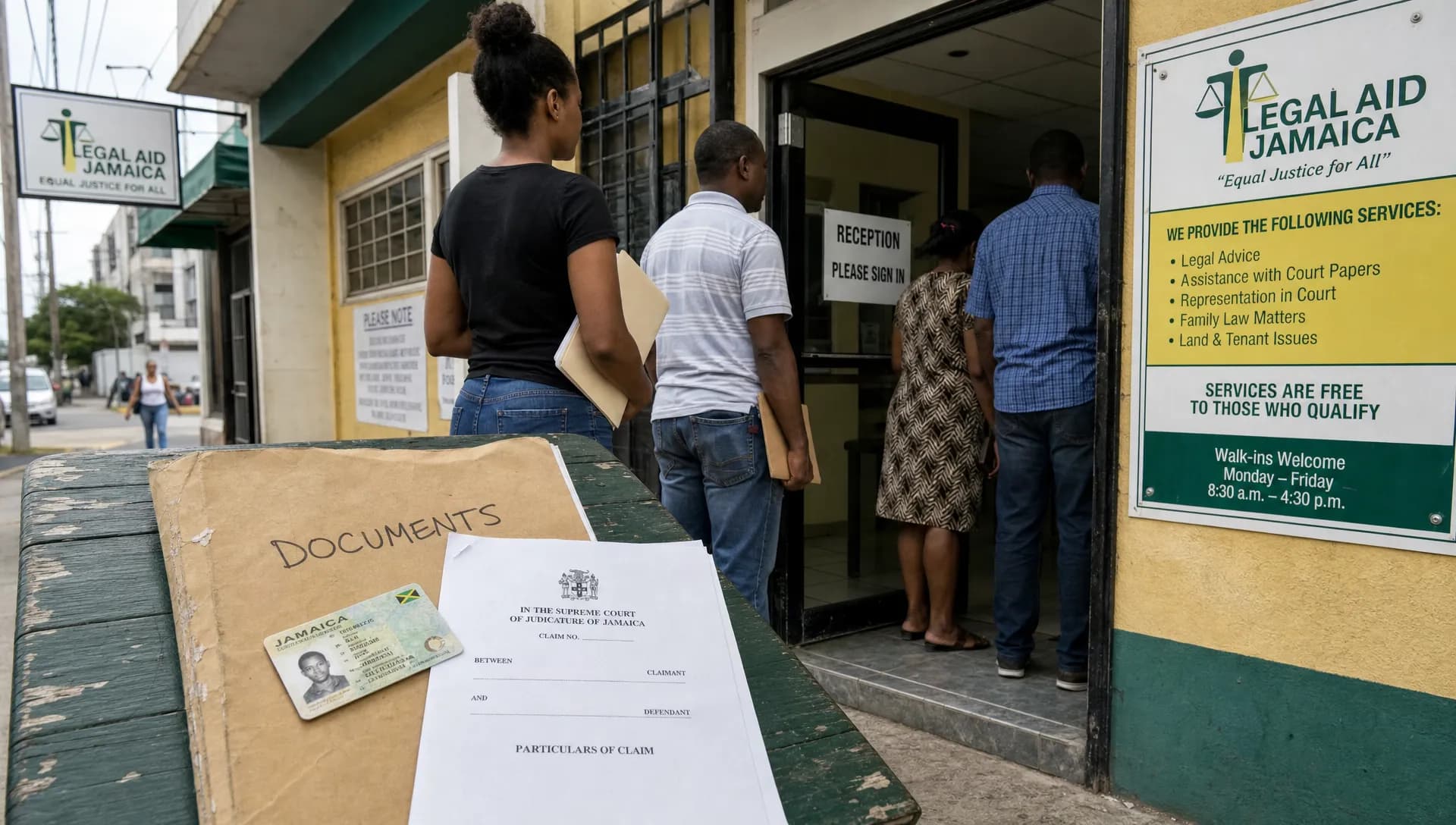
Finding affordable legal help can feel stressful, especially when a court date, police matter, family dispute, employment issue, or debt claim is already moving quickly. Many people search for a legal aid law firm in Jamaica because they need a lawyer but are unsure whether they can afford private representation.
The first thing to know is that “legal aid law firm” can mean different things. In Jamaica, legal aid is often connected to official legal aid services, assigned counsel, legal clinics, or attorneys who accept certain matters at reduced cost. A private law firm may also offer consultations or flexible arrangements, but that does not automatically mean it is part of a legal aid programme.
This guide explains how to look for legal aid properly, how to avoid choosing the wrong lawyer in a rush, and what to ask before you agree to representation.
Start by identifying the type of legal problem you have
Before searching for a lawyer, define the legal issue as clearly as possible. Legal aid availability often depends on the type of matter, the urgency, and whether the case falls within the scope of a particular programme.
Common categories include:
Criminal matters: Arrests, charges, bail applications, police station interviews, court appearances, and sentencing issues.
Family matters: Custody, maintenance, domestic violence, divorce, and guardianship concerns.
Civil disputes: Contract disputes, debt claims, property disagreements, negligence claims, and claims for damages.
Employment issues: Wrongful dismissal, workplace discipline, redundancy, discrimination, or unpaid wages.
Immigration matters: Visas, residency, work permits, deportation concerns, and citizenship issues.
Business or commercial disputes: Shareholder conflicts, unpaid invoices, regulatory issues, banking disputes, and commercial litigation.
This matters because the lawyer who is right for a criminal charge may not be the right fit for a land dispute or an employment claim. If you are unsure how to frame the issue, write a short summary with the key dates, names, documents, and what outcome you need.
Understand the main routes to legal aid in Jamaica
A person looking for a legal aid law firm in Jamaica usually has a few possible routes. The right route depends on eligibility, the type of case, and whether the matter is urgent.
Route | Best for | What to check |
Official legal aid services | People who may qualify based on income, matter type, or statutory criteria | Eligibility, documents required, scope of assistance, and whether counsel will be assigned |
Duty counsel or court-connected assistance | Urgent criminal matters, police station matters, or first court appearances | Whether help is available immediately and what representation covers |
University or community legal clinics | Some lower-cost advice and public interest matters | Clinic scope, appointment availability, and whether they can appear in court |
Private law firms | Complex civil, commercial, appellate, employment, or urgent strategic matters | Fees, practice area experience, availability, and whether any reduced-fee options exist |
Pro bono or reduced-fee attorneys | Matters with strong merit or significant hardship | Whether the attorney accepts that type of matter and what costs may still apply |
The Legal Aid Council of Jamaica is a key official starting point for people seeking legal aid information. Because eligibility rules, office locations, and available services can change, always confirm current requirements directly with the official body rather than relying only on second-hand information.
Check whether your matter is urgent
Some legal issues can wait a few days while you gather documents and compare options. Others cannot. If you have been arrested, served with court papers, received a deadline, or are facing an injunction, seizure, eviction, deportation issue, or limitation period, you should treat the matter as urgent.
Urgency affects how you search. In a time-sensitive criminal matter, for example, you may need to ask immediately about legal aid or duty counsel at the police station or court. In a civil matter, a missed deadline can lead to default judgment, lost rights, or a weaker negotiating position.
If your issue involves a claim, defence, property dispute, debt, contract, or court filing, it may help to understand when to hire attorneys for civil matters in Jamaica before assuming the matter can be handled informally.
Verify the lawyer’s standing and suitability
Affordability is important, but it should not be the only factor. Whether the lawyer is assigned through legal aid, recommended by someone, or found online, you still need to confirm that the person is properly qualified and suitable for your matter.
In Jamaica, the General Legal Council plays an important role in the legal profession. When choosing a lawyer, you can look for signs that the attorney is admitted to practise, is in good professional standing, and has relevant experience in the area you need.
Suitability is not the same as popularity. A well-known attorney may not handle your type of matter. A nearby attorney may not have the right experience. A low-cost option may become expensive if the matter is mishandled early.
Ask practical questions such as:
Do you handle this type of case regularly? The answer should relate to your legal issue, not just general experience.
Will you personally handle the matter or will another attorney do so? This affects communication and accountability.
What are the likely next steps? A lawyer should be able to explain the process in plain language.
What costs should I expect? Even where legal aid is available, you should ask whether filing fees, expert reports, transportation, or other expenses may arise.
What documents do you need from me? A prepared client helps the attorney assess the matter faster.

Prepare before contacting a legal aid office or law firm
Many people lose valuable time because they contact a lawyer without the basic facts. You do not need to know the law before seeking help, but you should be ready to explain what happened.
Prepare a simple case folder with:
Your full name, contact information, and identification.
Court documents, summonses, claim forms, police papers, letters, contracts, receipts, messages, or notices.
A timeline of key events in date order.
The names of the other parties, witnesses, police officers, employers, landlords, business partners, or agencies involved.
Any deadlines, court dates, hearing dates, payment dates, or notice periods.
A short statement of what you want, such as bail, defence, payment, settlement, custody, compensation, or advice.
This preparation helps legal aid staff or a law firm decide whether they can assist, whether there is a conflict of interest, and how urgent the matter is.
Know the difference between legal advice and general information
When money is tight, it is tempting to rely on friends, social media comments, or people who “know somebody at court.” That can be risky. General information may help you understand the system, but it is not the same as legal advice based on your facts.
For example, two people may both have “land problems,” but one may need to file a claim, another may need probate advice, another may face fraud, and another may need an injunction. The correct advice depends on documents, dates, ownership history, limitation issues, and the remedy being sought.
A good legal aid provider or law firm should ask questions before giving a firm view. Be cautious of anyone who promises a result before reading the documents.
Use attorney lists carefully
Online searches can be useful, but they can also produce a long list of names without telling you who is right for your problem. Search results may show firms based on marketing, location, or broad practice descriptions, not necessarily legal aid availability or subject-matter fit.
If you are using directories or lists, narrow them by practice area, court experience, location, availability, and whether the attorney accepts legal aid, pro bono, or reduced-fee work. The same principle applies if you are asking relatives or friends for referrals. A recommendation is helpful, but it is only a starting point.
For a more structured approach, see this guide on using a list of attorneys in Jamaica to find the right fit, especially if you are comparing several names and do not know how to shortlist them.
Ask about fees without embarrassment
Many clients hesitate to discuss fees because they feel uncomfortable. You should not. A professional lawyer expects fee questions, and clear fee discussions protect both sides.
Ask whether the lawyer charges a consultation fee, fixed fee, hourly rate, retainer, staged payment, or another arrangement. If the lawyer is assisting under legal aid, ask what legal aid covers and what it does not cover. If the matter is pro bono or reduced-fee, ask for written clarity so there is no misunderstanding later.
You should also ask about disbursements. These are out-of-pocket expenses that may be separate from legal fees. Depending on the case, disbursements could include filing fees, process server fees, transcript costs, valuation reports, expert reports, courier charges, company searches, or travel expenses.
A lawyer who is transparent about cost is often easier to work with than one who avoids the topic.
Be careful with “guaranteed outcome” promises
Legal matters involve facts, evidence, judges, opposing parties, procedural rules, and risks. No responsible attorney should guarantee a court result. A lawyer can explain strengths, weaknesses, strategy, likely timelines, and possible outcomes, but certainty is rare.
Warning signs include:
A promise that the case is “sure to win” before documents are reviewed.
Pressure to pay immediately without explaining the scope of work.
No written engagement letter or fee confirmation.
Poor communication about who is handling the matter.
Advice to hide facts, alter documents, or ignore court papers.
Legal aid clients deserve competent, ethical representation just as much as private-paying clients. If something feels wrong, ask questions before proceeding.
When a private law firm may be the better route
Legal aid is essential, but it may not cover every legal need. Some matters are too specialised, too commercial, too document-heavy, or outside the scope of a particular programme. In those cases, a private law firm may be necessary, even if you still need to discuss costs carefully.
This is especially true for complex business disputes, commercial litigation, banking disputes, intellectual property issues, shipping matters, arbitration, appellate work, data privacy, compliance, or high-value civil claims. These matters often require strategic planning, detailed pleadings, regulatory knowledge, and careful evidence management.
If your issue requires broader advocacy or litigation strategy, it may be useful to consider how to choose the right advocate law firm rather than focusing only on the lowest upfront cost.
A practical step-by-step search plan
Here is a sensible order for finding help without wasting time:
Write down the legal issue in one paragraph: Include what happened, when it happened, who is involved, and what you need.
Check whether the matter is urgent: If there is an arrest, charge, court date, deadline, eviction threat, injunction, or service of documents, seek help immediately.
Contact official legal aid resources first if affordability is the main concern: Ask about eligibility, required documents, and whether your matter is covered.
Prepare your documents before the first meeting: Bring identification, court papers, contracts, notices, letters, messages, receipts, and a timeline.
Verify the attorney’s suitability: Ask about relevant experience, communication, fees, and who will handle the matter.
Get the arrangement in writing: Whether legal aid, reduced-fee, or private representation, confirm the scope of work and expected costs.
Act early and follow instructions: Delays, missing documents, and missed court dates can damage even a strong case.
Frequently Asked Questions
Is a legal aid law firm the same as a private law firm? Not always. Legal aid may be provided through official programmes, assigned attorneys, duty counsel, clinics, or lawyers who accept certain reduced-fee or pro bono matters. A private law firm may offer legal services but may not be part of a legal aid programme.
How do I know if I qualify for legal aid in Jamaica? Eligibility depends on the applicable legal aid rules, the type of case, financial circumstances, and sometimes the merits or urgency of the matter. Contact the Legal Aid Council or another official provider for current requirements.
Can legal aid help with civil cases? It depends on the type of civil matter and the legal aid service available. Some civil issues may fall outside the scope of legal aid, so you should confirm coverage early and ask whether other low-cost options exist.
What should I bring when meeting a legal aid attorney? Bring identification, court papers, police documents, contracts, notices, letters, messages, receipts, photographs, names of witnesses, and a timeline of events. The more organised you are, the easier it is for the lawyer to assess your case.
Should I choose the cheapest lawyer I can find? Not necessarily. Cost matters, but so do competence, ethics, experience, communication, and fit for your specific legal problem. The wrong lawyer can cost more in the long run if deadlines are missed or the matter is mishandled.
Finding the right help starts with the right questions
Searching for a legal aid law firm in Jamaica is not just about finding the nearest name online. It is about understanding your legal problem, checking whether you qualify for official assistance, preparing your documents, and choosing a lawyer who can handle the matter properly.
If your matter falls outside legal aid or requires experienced representation in civil litigation, commercial disputes, appellate work, arbitration, intellectual property, data privacy, compliance, or related areas, Henlin Gibson Henlin offers client-focused legal support in Jamaica. For urgent matters, do not wait until a deadline has passed. Get advice early, ask clear questions, and make sure the lawyer you choose is the right fit for the problem you need solved.