
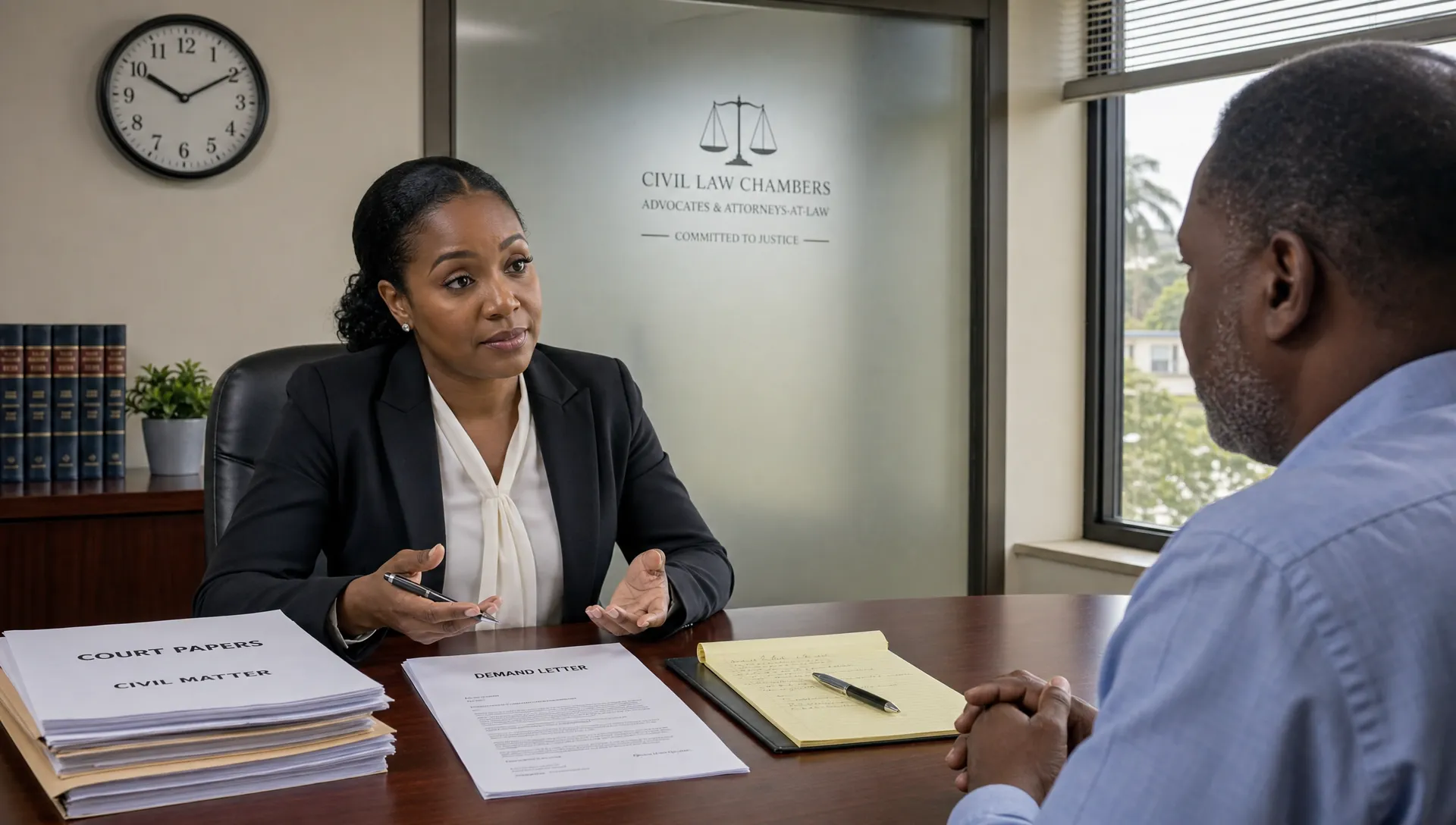
Many civil disputes in Jamaica begin as something that seems manageable: an unpaid invoice, a neighbour disagreement, a contract that is not being honoured, or a letter demanding payment. The problem is that civil matters can move from uncomfortable to costly very quickly, especially when deadlines, evidence, property rights, or business relationships are involved.
Knowing when to hire attorneys for civil matters is not just about deciding whether to sue. It is about understanding your legal position early enough to protect your options, avoid missteps, and choose a practical route toward resolution. Sometimes that route is negotiation. Sometimes it is mediation or arbitration. Sometimes litigation is necessary.
This guide explains the main warning signs that you should seek legal advice in Jamaica, what a civil attorney can do, and how to prepare for the first conversation. It is general information only and should not be treated as legal advice for your specific situation.
What Counts as a Civil Matter in Jamaica?
A civil matter is a legal dispute between individuals, businesses, organisations, or other private parties. Unlike a criminal case, the issue is usually not whether someone should be punished by the state. Instead, the focus is on rights, obligations, compensation, enforcement, or a court order requiring someone to do or stop doing something.
Common civil matters in Jamaica include contract disputes, debt recovery, property and land disagreements, negligence claims, shareholder or partnership disputes, employment-related claims, landlord and tenant issues, professional disputes, defamation, and disputes involving estates or commercial relationships.
If you are still trying to understand whether your issue is civil, criminal, regulatory, or a mix of several areas, this overview of civil matters for businesses and individuals in Jamaica is a useful starting point.
You Should Speak With an Attorney Before the Dispute Escalates
One of the most common mistakes people make is waiting until a matter has already become urgent. By then, important evidence may have disappeared, limitation issues may be approaching, negotiations may have become hostile, or documents may have been signed without fully understanding their effect.
Early advice does not always mean filing a claim. In many cases, an attorney can help you assess whether the dispute is worth pursuing, whether settlement is realistic, what evidence is missing, and what risks you may face if the other side responds aggressively.
For a business, early legal input can also protect commercial relationships. A lawyer may be able to frame a demand in a firm but constructive way, preserve your rights under a contract, and avoid statements that could weaken your position later.
For an individual, early advice can provide clarity. You may learn that your claim is stronger than you thought, that another remedy is more appropriate, or that the cost and stress of litigation may not be proportionate to the likely outcome.
Clear Signs It Is Time to Hire Attorneys for Civil Matters
Not every disagreement requires a lawyer immediately. However, certain warning signs strongly suggest that you should seek advice before taking another step.
Situation | Why Legal Advice Matters |
You received a demand letter, claim form, or court document | There may be strict deadlines and procedural requirements. Ignoring the document can seriously affect your position. |
The dispute involves land, property, or business assets | Mistakes can have long-term financial consequences and may affect ownership or control. |
A contract is being terminated or breached | An attorney can assess remedies, notice requirements, damages, and negotiation strategy. |
The other side has hired an attorney | You may be at a disadvantage if you respond without understanding the legal implications. |
Evidence may be lost or destroyed | Early action can help preserve documents, messages, records, photographs, and witness accounts. |
The matter could affect your reputation or licence | Legal strategy should account for commercial, regulatory, and public-facing risks. |
You need urgent relief | Some situations may require an injunction or other time-sensitive court application. |
Settlement is being discussed | A settlement agreement can affect future rights, so it should be reviewed before signing. |
When You Receive Court Papers or a Formal Legal Letter
If you are served with court documents, do not put them aside. Civil procedure in Jamaica can involve filing deadlines, required responses, evidential rules, and consequences for failing to act. Even where you believe the claim is exaggerated or unfounded, the court process still needs to be handled properly.
A demand letter also deserves careful attention. It may be an opening move in a negotiation, but it may also signal that the other party is preparing to sue. An attorney can help you decide whether to respond, deny liability, make a counterproposal, request documents, preserve your rights, or prepare for proceedings.
The same applies before sending a formal demand of your own. A poorly drafted letter can create problems. It may say too much, concede something unintentionally, use the wrong legal basis, or set a tone that makes settlement harder.
When Money, Property, or Contract Rights Are at Stake
Civil disputes often become legal problems when the practical stakes are high. If a debt is significant, a contract is central to your business, or property rights are uncertain, advice from attorneys for civil matters can help you make decisions based on risk rather than frustration.
For example, a supplier dispute may involve more than one unpaid invoice. It may raise questions about breach of contract, defective performance, set-off, termination rights, interest, costs, and whether future deliveries should continue. A land dispute may involve title documents, boundaries, possession, family arrangements, leases, restrictive covenants, or equitable interests.
In these situations, the right legal strategy depends on facts and documents. An attorney can review the record, identify the strongest legal arguments, and advise on a proportionate path forward.
When the Matter Is Urgent
Some civil matters cannot wait. If the other side is about to sell property, move assets, disclose confidential information, interfere with business operations, or take steps that could cause irreversible harm, urgent legal advice is critical.
In appropriate cases, a court may be asked to grant interim relief, such as an injunction. These applications require careful preparation because the court will expect evidence, legal grounds, and full and frank disclosure where applicable. Delay can weaken an urgent application, so time matters.
Urgency is not limited to court applications. It may also involve preserving electronic evidence, notifying insurers, responding to a regulatory issue, or stopping a commercial relationship from deteriorating further.
What an Attorney Can Actually Do in a Civil Matter
A civil attorney does more than appear in court. The work usually starts with assessment: identifying the legal issues, reviewing evidence, estimating risk, and helping the client decide what outcome is realistic.
From there, an attorney may draft correspondence, prepare pleadings, advise on settlement, represent you in mediation, negotiate with the other side, file applications, manage disclosure, prepare witness statements, and advocate at hearings or trial. Where the dispute is complex, the attorney may also coordinate with experts, accountants, surveyors, valuers, or other professionals.
If litigation becomes necessary, strategy matters from the beginning. The way a claim or defence is framed can influence settlement leverage, procedural options, and the issues the court will ultimately decide. For a fuller explanation of the litigation role, see this guide on what litigation attorneys do and when to hire one.

Jamaica-Specific Factors That Can Affect Your Decision
Civil matters in Jamaica may be handled in different forums depending on the nature, value, and remedy involved. The appropriate forum may depend on whether the matter concerns a small claim, a higher-value commercial dispute, an urgent injunction, an appeal, or a specialised area such as arbitration.
The Jamaican Judiciary provides public information about the court system, but choosing the correct forum and procedure is not always straightforward. Filing in the wrong place, using the wrong process, or misunderstanding a deadline can add cost and delay.
Several Jamaica-specific issues can make legal advice especially important.
Limitation periods can affect whether a claim may still be brought. These periods vary depending on the type of claim, so you should not assume you have plenty of time.
Court rules can affect how documents are filed, served, amended, and supported by evidence. Procedural errors can weaken even a strong case.
Costs are also a practical consideration. Litigation can be expensive and time-consuming, so an attorney should help you weigh likely benefit against likely cost.
Alternative dispute resolution may be available or advisable. Mediation or arbitration can sometimes resolve disputes more efficiently than trial, but the choice depends on the contract, the relationship between the parties, and the remedy needed.
When Businesses Should Seek Civil Legal Advice
Businesses should consider early legal advice whenever a civil dispute could affect cash flow, operations, reputation, licences, customer relationships, or long-term commercial strategy.
Examples include unpaid commercial debts, disputes with suppliers, breach of distribution or service agreements, shareholder disagreements, director disputes, lease issues, professional negligence claims, misuse of confidential information, intellectual property conflicts, and claims by customers or competitors.
For companies, civil matters often overlap with compliance, employment, data privacy, competition, or regulatory issues. A dispute that appears to be about money may also expose weaknesses in contracts, internal processes, customer communications, or document retention practices.
An attorney can help a business decide whether to negotiate, suspend performance, terminate a contract, issue a demand, protect confidential material, file a claim, or defend proceedings. Just as importantly, legal advice can help management avoid emotional decisions that create additional liability.
When Individuals Should Seek Civil Legal Advice
Individuals often delay seeking advice because they assume lawyers are only needed once a lawsuit has started. In reality, legal advice may be most valuable before a step is taken.
You should consider speaking with an attorney if a family property dispute is becoming contentious, someone owes you a significant sum, you are being blamed for damage or loss, your landlord or tenant relationship has broken down, your reputation has been harmed, or you are being pressured to sign a settlement or release.
Legal advice is also important when there is an imbalance of power. If the other party is a company, insurer, bank, employer, professional, landlord, or represented party, you may need help understanding the documents, identifying leverage, and responding without prejudicing your rights.
Can Mediation or Arbitration Avoid Court?
Yes, in some cases. Civil disputes do not always need to end in a trial. Mediation can help parties reach a negotiated settlement, especially where preserving a relationship matters. Arbitration may be required by contract or chosen because the parties prefer a private decision-making process.
However, alternative dispute resolution works best when you understand your legal position first. Entering mediation without knowing the strengths and weaknesses of your case can lead to an unfair settlement. Similarly, agreeing to arbitration without understanding the clause, procedure, costs, and finality of the process can be risky.
An attorney can help you prepare for ADR by clarifying your objectives, assessing likely outcomes, preparing a settlement range, and ensuring any agreement is properly documented.
How to Prepare for the First Consultation
The first consultation is most useful when you arrive organised. You do not need to know the law, but you should be ready to explain what happened clearly and provide the documents that support your account.
Bring or prepare the following where available:
Contracts, invoices, receipts, letters, notices, emails, WhatsApp messages, and photographs.
A short timeline of key events, including dates, names, meetings, payments, and promises made.
Any court documents, demand letters, settlement offers, or formal notices received.
A list of witnesses or people who may have relevant information.
Your preferred outcome, such as payment, return of property, performance of a contract, an apology, confidentiality, or an urgent order.
Be honest about weak points. Your attorney can only assess risk properly if they know the full picture, including facts that may help the other side.
What to Look For in Attorneys for Civil Matters
The right attorney should understand the type of dispute, communicate clearly, and help you think strategically. Civil matters are not only about legal rules. They also involve timing, leverage, evidence, cost, commercial reality, and the emotional burden of conflict.
Look for someone who can explain your options in plain language, identify likely risks, discuss possible routes to resolution, and tell you what information is needed next. If the case may involve litigation, you should also understand who will handle the matter, how communication will work, and what the immediate next steps are.
If you are comparing firms, this guide on choosing the right advocate law firm in Jamaica can help you evaluate fit beyond name recognition alone.
Frequently Asked Questions
Do I need an attorney for every civil matter in Jamaica? No. Some low-value or straightforward disputes may be resolved through direct negotiation. However, you should seek advice if the matter involves court documents, significant money, property, business risk, urgent harm, unclear legal rights, or pressure to sign a settlement.
What should I do if I receive court papers? Take note of the date you received them, keep every document, avoid ignoring the matter, and speak with an attorney promptly. Court documents may require a response within a specific time, and delay can seriously affect your options.
Can attorneys for civil matters help me settle without going to court? Yes. A civil attorney can assess your position, draft correspondence, negotiate terms, prepare settlement agreements, and represent you in mediation. Many disputes are resolved without a full trial.
When should a business hire a civil attorney? A business should seek advice early when a dispute may affect contracts, cash flow, operations, reputation, confidential information, regulatory exposure, or long-term relationships. Early advice can often reduce cost and disruption.
What documents should I bring to a consultation? Bring contracts, invoices, receipts, correspondence, court documents, photographs, notes of meetings, payment records, and a timeline of events. If you are unsure whether something matters, bring it anyway.
Need Guidance on a Civil Matter in Jamaica?
If a disagreement is becoming difficult to manage, waiting can reduce your options. A timely legal assessment can help you understand your rights, preserve evidence, manage risk, and choose the best route toward resolution.
Henlin Gibson Henlin provides client-focused legal support across civil litigation, commercial disputes, arbitration, mediation, compliance, and related practice areas. To discuss a civil matter and the next steps available to you, contact Henlin Gibson Henlin.