
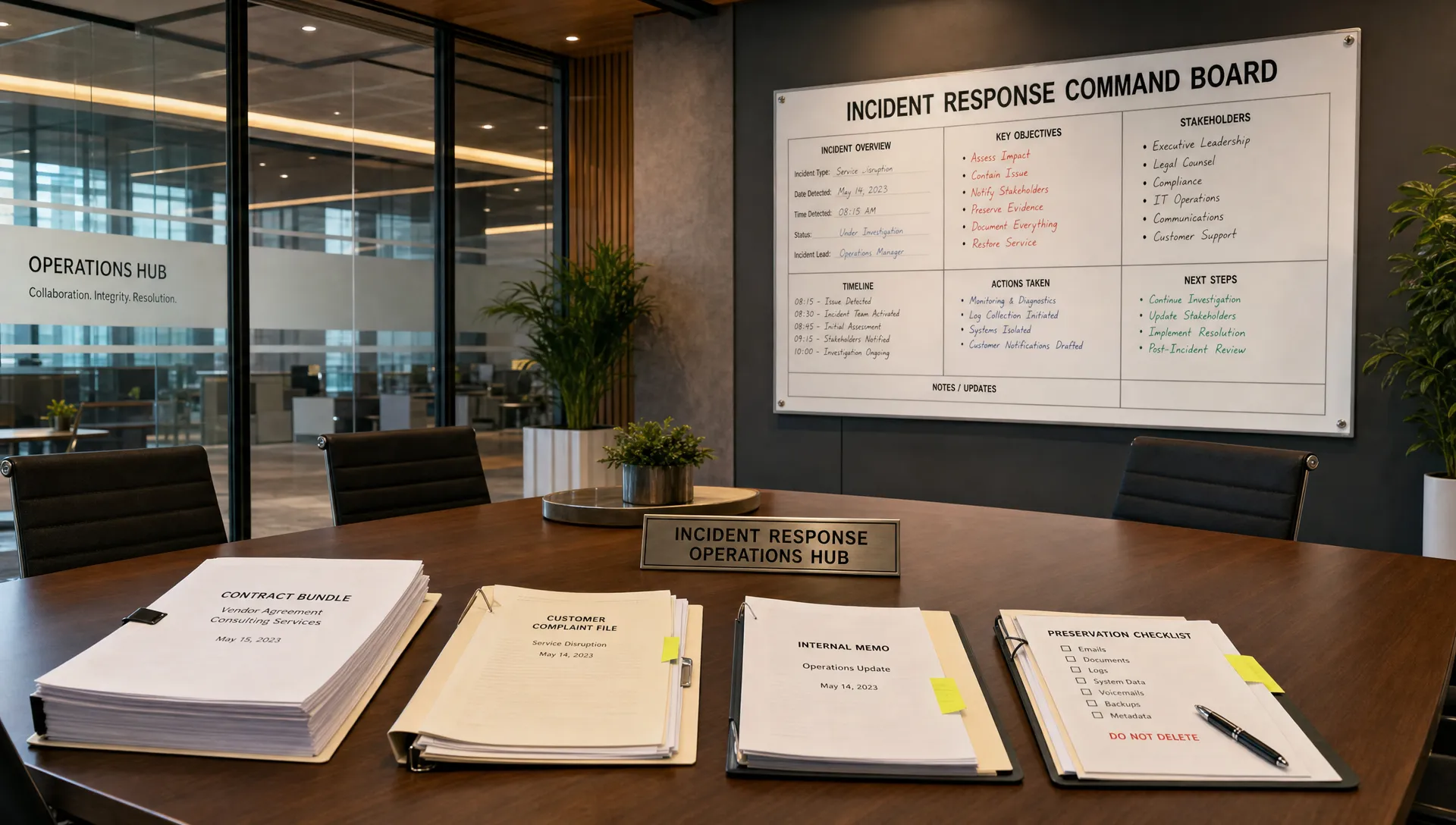
A business crisis rarely stays neatly within one department. A customer complaint can become a regulatory inquiry. A supplier dispute can trigger cash flow pressure. A data incident can affect contracts, reputation, employees, and directors all at once.
That is why the question is not only whether your company needs a lawyer. The real question is when to call in law counsel so the business can make fast decisions without creating avoidable legal exposure.
For many Jamaican businesses, the instinct is to wait until there is a formal lawsuit, a letter from a regulator, or a clear financial loss. By then, critical evidence may be scattered, communications may already be inconsistent, and deadlines may be running. Early legal input does not mean every crisis becomes litigation. It means the company can respond with discipline, protect its position, and reduce the chance that a difficult situation becomes a damaging one.
If the matter is already urgent, it may also help to review when companies should be contacting legal counsel for an urgent business matter. This article takes a broader crisis management view, focusing on the triggers, timing, and internal process for involving counsel during a business disruption.
What makes a business crisis legally significant?
Not every operational problem requires immediate legal intervention. A delayed shipment, a difficult customer, or an internal disagreement may be manageable through ordinary business channels.
A matter becomes legally significant when the company’s response could affect rights, obligations, evidence, liability, regulatory compliance, or reputation. In practical terms, if the business is about to make a decision that may be challenged later, counsel should be involved before that decision is made.
The size of the company is not the deciding factor. A small business facing a major employment allegation may need immediate legal guidance. A large company dealing with a public data incident may need legal, technical, and communications support within hours. The issue is the potential consequence, not the headcount.
Crisis signal | Why law counsel should be involved |
Court papers, demand letters, or threats of legal action | Deadlines, admissions, and evidence handling can affect the entire case. |
Regulator, ministry, or enforcement contact | Responses must be accurate, complete, and strategically managed. |
Data breach or suspected cyber incident | Privacy obligations, customer communications, and evidence preservation may arise quickly. |
Serious contract breakdown | Termination, payment, force majeure, and damages issues may overlap. |
Employee misconduct, harassment, or dismissal risk | Poor process can create additional liability even where the business has valid concerns. |
Public reputational crisis | Statements made to customers, media, or staff can become evidence. |
Director, shareholder, or partner deadlock | Governance decisions may affect control, authority, and future claims. |
Safety, shipping, banking, or financial disruption | Specialist legal obligations may apply depending on the sector and transaction. |
A useful rule is this: if the company would be uncomfortable seeing an email, memo, or public statement examined in court, reviewed by a regulator, or reported in the media, legal counsel should be part of the response.
When to call in law counsel: the decision triggers
The safest time to call counsel is before the business takes irreversible action. In a crisis, speed matters, but sequence matters just as much. A rushed termination, poorly worded notice, deleted message, unreviewed press statement, or informal settlement offer can create problems that are difficult to unwind.
Call counsel when facts are incomplete but risk is high
Business leaders sometimes wait because they do not yet know exactly what happened. That can be a mistake. Counsel does not need perfect facts to help the company preserve evidence, identify legal obligations, set an investigation structure, and decide who should communicate externally.
Early advice can also help separate facts from assumptions. In a crisis, people often fill gaps with speculation. Counsel can help ensure that internal records remain factual, measured, and useful.
Call counsel before responding to third parties
A business should be cautious before replying to a demand letter, regulator, insurer, lender, major customer, landlord, employee representative, or media contact. Even a short reply can affect the company’s position.
This does not mean the business should go silent. It means responses should be coordinated. Counsel can help the company acknowledge receipt, avoid unnecessary admissions, preserve goodwill, and reserve legal rights where appropriate.
Call counsel before discipline, termination, or suspension
Employment decisions made during a crisis are often time sensitive. They are also high risk. A company may need to remove an employee from a sensitive role, investigate misconduct, deal with whistleblowing, or respond to alleged harassment or discrimination.
The legal issue is not only whether the employer has a reason to act. It is whether the process is fair, documented, and consistent with the relevant contract, workplace policy, and law. Businesses dealing with workplace risk can also benefit from understanding when employment law attorneys can protect your business before a personnel matter escalates.
Call counsel when directors or owners disagree
A crisis can expose governance weaknesses. Directors may disagree on disclosure, funding, settlement, suspension of employees, or whether to notify authorities. Shareholders or partners may begin protecting their own positions.
Counsel can help clarify authority, board process, duties, conflicts, meeting records, and decision making. This is especially important where a later claim may allege that directors failed to act properly or placed personal interests above the company’s interests.
Why early legal involvement changes the outcome
Legal counsel is not only useful after a dispute has crystallised. In a crisis, counsel helps shape the response while the facts are still developing. That can make the difference between controlled exposure and a preventable escalation.
First, counsel helps preserve evidence. Emails, contracts, chat messages, access logs, board minutes, invoices, CCTV, shipping records, and customer notices can become important. If employees continue deleting routine messages or editing documents without guidance, the company may face questions later about what was lost and why.
Second, counsel helps protect sensitive communications where legal professional privilege may apply. Privilege rules can be complex and context dependent, but involving counsel early can help the company structure requests for legal advice appropriately and avoid careless circulation of sensitive analysis.
Third, counsel helps manage deadlines. Crisis deadlines may come from court rules, contracts, insurance policies, regulatory notices, employment procedures, finance documents, or settlement terms. Missing a deadline can narrow the company’s options.
Fourth, counsel helps align legal strategy with business reality. A technically strong legal position may still be commercially unattractive if it damages a key customer relationship, triggers a lender concern, or harms public trust. Good crisis advice weighs the law, leverage, timing, cost, and reputational consequences together.
The first hour, first day, and first week
A business crisis needs structure. Without structure, teams often overcommunicate, underdocument, or act in different directions. The following timeline is a practical way to think about when to call in law counsel and what counsel can help coordinate.
The first hour: stabilise and preserve
The immediate priority is to stop ongoing harm where possible. That may mean securing systems, pausing a transaction, separating employees, holding a shipment, restricting access to records, or acknowledging receipt of a formal notice.
In this first hour, the business should identify a small response group and avoid broad speculation. Counsel should be contacted where the matter involves legal exposure, third party rights, regulatory attention, safety concerns, or reputational risk.
The first 24 hours: assess and decide
Within the first day, the company should have a clearer picture of the known facts, missing facts, key documents, decision makers, and immediate obligations. Counsel can help determine whether notices must be given, whether external experts are needed, whether insurers should be contacted, and whether public or internal statements should be reviewed.
This is also when the business should consider whether the issue may result in litigation. If so, it is important to assess litigation issues before they escalate, including evidence, stakeholders, possible claims, defences, and settlement posture.
The first week: move from reaction to strategy
After the initial response, the business needs a sustainable strategy. That may include negotiations, internal investigation, customer remediation, regulator engagement, board updates, employment action, contract enforcement, or preparation for court proceedings.
Counsel’s role at this stage is to help the company avoid reactive decisions. The question becomes: what outcome is the business trying to achieve, what legal risks stand in the way, and what steps will preserve the company’s position if the matter later becomes contested?

Common business crisis scenarios where counsel should be involved
Different crises call for different legal tools. The common thread is that counsel should be involved when the company’s next step may affect liability, regulatory obligations, commercial leverage, or reputation.
Data breach or suspected cyber incident
If personal data, confidential business information, customer records, payment information, employee records, or trade secrets may have been accessed or lost, counsel should be contacted promptly. The company may need to preserve forensic evidence, manage communications, consider notification obligations, and coordinate with technical specialists.
In Jamaica, data protection issues are increasingly important for organisations that collect or process personal information. The Office of the Information Commissioner Jamaica is a key public resource for data protection guidance. Legal counsel can help interpret obligations in the context of the specific incident, especially where the facts are incomplete.
Contract failure, supplier disruption, or payment crisis
A contract dispute can become a business crisis when it affects revenue, supply, financing, customer delivery, or market confidence. Before terminating, withholding payment, making a public accusation, or sourcing replacements, the company should understand its contractual rights and risks.
Counsel can review termination clauses, notice requirements, dispute resolution provisions, limitation of liability language, indemnities, governing law, and evidence of breach. In some cases, the right legal letter can preserve leverage. In other cases, negotiation or mediation may protect the business better than immediate litigation.
Regulatory inquiry or inspection
When a regulator, ministry, licensing body, or enforcement authority contacts the business, the response should be deliberate. Staff should know who is authorised to respond and what documents can be provided. The business should avoid informal explanations that have not been checked against the records.
Counsel can help manage the scope of the request, ensure accurate production of documents, prepare personnel for interviews where appropriate, and track deadlines. The goal is not obstruction. It is lawful, accurate, and controlled cooperation.
Employment misconduct or workplace conflict
Workplace crises often move quickly because emotions are high and operational disruption is immediate. Allegations may involve fraud, harassment, discrimination, violence, confidentiality breaches, conflicts of interest, or misuse of company property.
Counsel can help design a fair investigation process, review suspension or termination risk, protect confidentiality, and ensure the company’s actions are proportionate. This is especially important where multiple employees are involved or where the allegation could attract public attention.
Shareholder, director, or partnership dispute
Internal disputes can paralyse a company. Decisions about bank mandates, signing authority, board meetings, dividend policy, capital calls, or access to company records can become urgent. Counsel should be involved early when control, authority, or fiduciary duties are in question.
A well documented process matters. Even if the dispute is later resolved, records of meetings, notices, resolutions, conflicts, and advice can help show that the company acted responsibly.
Reputational crisis or media attention
Public statements can calm a crisis, but they can also create admissions, contradictions, or new obligations. Before issuing a press release, customer notice, staff memo, or social media statement, the business should consider legal review.
Counsel can work with leadership and communications advisers to ensure messaging is accurate, measured, and consistent with the evidence. The best crisis statements usually say enough to maintain trust without speculating about facts still under investigation.
What to prepare before calling counsel
You do not need a complete file before calling. In fact, waiting to assemble everything may waste valuable time. But a concise summary helps counsel assess urgency and advise quickly.
If possible, prepare the following:
A short timeline of what happened and when it was discovered.
The names and roles of people involved, including decision makers and witnesses.
Key documents, such as contracts, policies, letters, notices, invoices, board minutes, or emails.
Any deadlines, hearing dates, response dates, payment dates, or regulatory timeframes.
Copies of communications already sent or received.
A list of actions already taken by the business.
Any insurance policies that may respond to the incident.
The company’s preferred business outcome, if leadership has already discussed it.
The summary should be factual. Avoid dramatic language, blame, or assumptions. If something is not yet known, say so. Clear uncertainty is better than confident speculation.
How law counsel fits into the crisis team
A serious crisis may require several advisers. Lawyers do not replace management, IT, accountants, insurers, HR professionals, forensic specialists, or communications consultants. Instead, counsel helps coordinate the legal dimensions of their work.
For example, in a cyber incident, technical experts may determine what happened, while counsel helps assess legal obligations and communication risk. In a financial dispute, accountants may quantify loss, while counsel frames claims, defences, and negotiation strategy. In an employment crisis, HR may manage workplace logistics, while counsel helps reduce procedural and liability risk.
This coordination is especially valuable in complex matters that cross practice areas. A single crisis may involve commercial litigation, data privacy, compliance and risk, intellectual property, banking issues, arbitration, or appellate considerations. When counsel can see the whole picture, the business is less likely to solve one problem while creating another.
Mistakes that make a crisis worse
Many damaging crisis decisions are made before counsel is called. The most common mistakes are understandable, but they are also avoidable.
Mistake | Better approach |
Waiting until all facts are known | Call early so counsel can help preserve evidence and structure the investigation. |
Sending quick emotional replies | Use factual, reviewed communications that preserve rights. |
Deleting or editing records | Implement a document hold and keep original records intact. |
Treating the matter as only a PR problem | Align public messaging with legal strategy and known facts. |
Making promises to customers or employees too soon | Confirm authority, contract terms, and legal consequences first. |
Allowing too many people to speak externally | Appoint authorised spokespersons and centralise communications. |
Ignoring insurance | Review notice requirements promptly, since late notice can create coverage issues. |
The underlying lesson is simple. A crisis response should be fast, but it should not be casual.
Building a law-ready crisis plan before the next incident
The best time to decide when to call in law counsel is before the crisis. A simple plan can reduce confusion and help the business act quickly.
A law-ready crisis plan should identify who can contact counsel, who can speak for the company, where key contracts and policies are stored, how evidence will be preserved, and which regulators, insurers, lenders, or major customers may need to be considered. It should also include an escalation matrix so managers know which issues require legal input immediately.
This plan does not need to be complicated. For many businesses, a two page internal protocol is better than a detailed manual nobody uses. What matters is that the plan is known, practical, and tested through occasional review.
The plan should also reflect the company’s sector. A financial services business, shipping company, technology provider, hospitality group, manufacturer, and professional services firm may face very different crisis triggers. Legal readiness should match the real risks of the business.
Frequently Asked Questions
Should I call counsel even if I am not sure there is a legal issue? Yes, if the situation could affect contracts, employees, regulators, customers, money, evidence, or reputation. Early advice can be limited and practical. It does not mean the matter must become formal litigation.
What is the biggest sign that a business crisis needs legal input? The biggest sign is that the company is about to make a decision it may need to defend later. Examples include termination, public statements, regulatory responses, settlement offers, contract cancellation, or document production.
Can legal counsel help without slowing down the business response? Yes. Effective crisis counsel should help the business move faster by clarifying priorities, deadlines, authority, and risk. The purpose is not to add bureaucracy, but to prevent rushed decisions that create avoidable exposure.
Who inside the company should contact law counsel during a crisis? Ideally, the board, managing director, CEO, general manager, company secretary, head of risk, or another authorised senior person should make contact. The company should decide this in advance so there is no confusion during an urgent event.
Is a public statement safe if it does not admit fault? Not always. A statement can create problems even without a direct admission if it is inaccurate, inconsistent with later facts, or promises action the company cannot deliver. Legal review is advisable where reputational and legal risks overlap.
Facing a business crisis? Get timely legal guidance
During a crisis, the costliest legal mistake is often delay. If your business is facing a serious dispute, data incident, regulatory concern, employment crisis, contract breakdown, or reputational threat, early legal advice can help you preserve options and respond with confidence.
Henlin Gibson Henlin supports businesses in Jamaica with client focused legal services across areas including commercial litigation, data privacy, compliance and risk, intellectual property, banking litigation, arbitration and mediation, admiralty and shipping, civil litigation, and appellate matters. To discuss a business crisis or high risk legal issue, you can speak with Henlin Gibson Henlin about the appropriate next step.
This article is general information only and is not a substitute for legal advice on your specific circumstances.